When it comes to playing crypto casino games, the coin is only the payment layer. Bitcoin, Litecoin, Ethereum, or Tether may change how money enters and leaves an account, but the round still
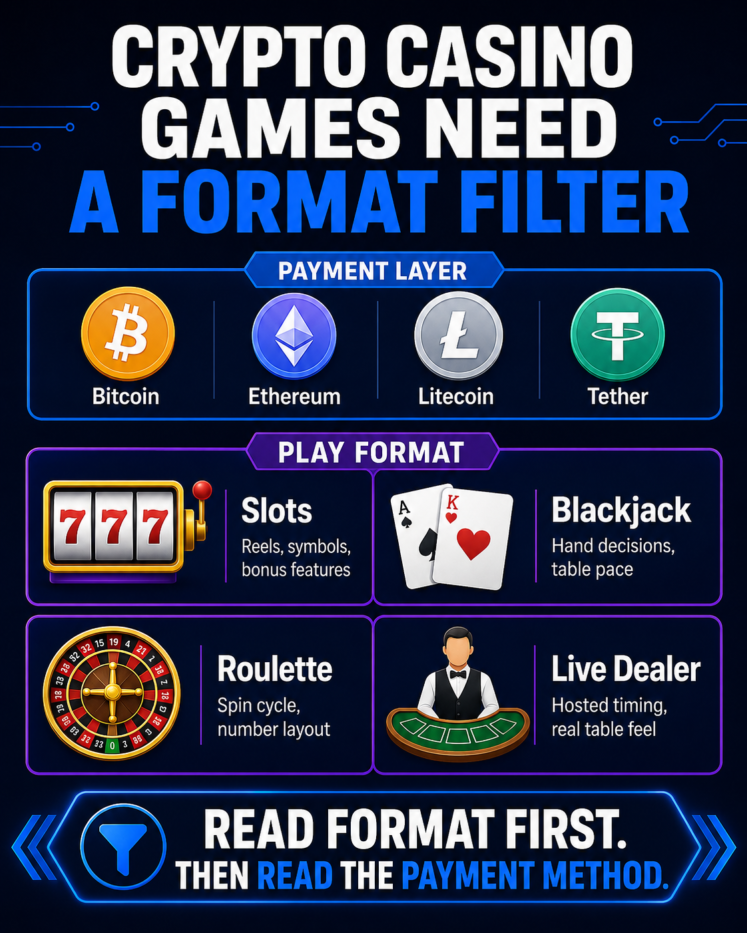
When it comes to playing crypto casino games, the coin is only the payment layer. Bitcoin, Litecoin, Ethereum, or Tether may change how money enters and leaves an account, but the round still belongs to the game format. A slot asks the eye to follow reels, symbols, and feature triggers. Blackjack asks for hand decisions. Roulette turns attention toward a spin. Live dealer games add table timing and human pace. That is the cleaner way to read crypto casino games before comparing platforms. The same coin can sit behind a calm table game, a quick slot, or a live round with a completely different sense of pace and attention from the player.
A useful lens comes from attention research, where game features such as aesthetics, storyline, feedback, and rewards can change how people stay engaged with a task. The findings in this Frontiers in Psychology study on game features and attention are not about casino play, but they help explain why mechanics and presentation matter. Two games can accept the same coin and still ask for very different kinds of focus.
The easiest mistake in crypto casino coverage is treating the coin as if it explains the game. It explains the payment context, not the play experience. Once a reader separates those two layers, the useful question changes. Instead of asking only which coins are supported, they can ask what kind of format they are entering, how quickly rounds move, what the player is expected to watch, and whether the game is built around symbols, cards, numbers, or a live table.
That format-first reading is where Bovada Casino online becomes a practical reference point. The casino page brings several common online casino formats into one setting, including online slots, Hot Drop Jackpots, table games, blackjack games, roulette games, live dealer play, and more. It also describes crypto deposits through Bitcoin, Litecoin, Ethereum, Bitcoin Cash, Bitcoin Lightning, and Tether, which keeps the payment layer visible without letting it dominate the whole conversation.
For a reader trying to understand crypto casino games, the useful detail is the separation between access and format. Slots are built around reels, symbols, payout lines, bonus triggers, and short feedback loops. Blackjack brings the focus back to hand value, dealer position, and table pace. Roulette creates a different rhythm through the wheel, number layout, and spin cycle. Live dealer games add hosted timing, so the session feels closer to a table environment than a purely digital round. Crypto may shape how the account is funded, but the format still shapes what the player actually does once the game begins.
A narrower example appears in this crypto games piece. Read as a slot-format walkthrough, it shows how individual games signal their rhythm before a player even starts engaging. Cai Fu Dai Panda is described through a 5-reel, 4-row setup, 50 payout lines, and feature games that can expand the reel area. Yin Yang Twins uses Sticky Wilds, Scatters, and retrigger chances. Phở Sho leans on food symbols, Hold & Win mechanics, and Food Scatter triggers. Da Hong Bao points to Wilds, Lucky Spins, Fortune Spins, and Dragon Spins. Nine Tailed Fortune centers on Free Spins, Feature Spins, and Wilds. Those details turn the theme into something more readable. A slot’s artwork gives the first impression, but its feature language tells the reader how the game is likely to move.
A coin-first view can flatten the whole category. If three games accept Bitcoin, that says something about payment compatibility. It says very little about pace. A crypto slot and a crypto blackjack game do not become similar because they share a deposit method.
Slots usually have the shortest cycle. The player reads the screen quickly, then looks for symbols, reels, lines, sounds, and feature cues. Some slots are simple, with a familiar spin-and-resolve pattern. Others are built around bonus rounds, expanded rows, multipliers, hold-style features, or retrigger mechanics. This is where the difference between theme and format matters. A food-themed slot, a fox-themed slot, and a Chinese-inspired slot may all look different, but their mechanics decide how the play actually moves.
Table games slow the read down. Blackjack has a visible hand state. The player follows totals, dealer position, and available actions. Roulette has a different kind of suspense, with the layout and wheel carrying the rhythm. Specialty games may be simpler still, often built around one repeated mechanic.
Live dealer games sit in their own lane. The rules may resemble familiar table games, but the timing comes from a hosted environment. The pause before a card, the pace of a spin, and the dealer-led rhythm make the experience feel less like clicking through a digital round and more like joining a table already underway.
Beginner Questions That Actually Help
A beginner does not need to memorize every feature name before playing. A better habit is to ask what the format expects. Is the game fast or slow? Does it ask for decisions, or mainly for attention to symbols? Are the main moments tied to cards, reels, numbers, or a live table? Does the theme change the feel, or does it only decorate a familiar mechanic?
These questions keep crypto in the right place. Payment choice can affect convenience, privacy preferences, and withdrawal flow, but it does not explain the game by itself. A crypto slot is still judged by its reels, bonus features, volatility feel, and pace. A crypto blackjack game still depends on the structure of the hand. A live dealer game still depends on table rhythm.
The cleanest order is format first, features second, payment third. Start with the kind of attention the game asks for. Then read the feature language. Then look at the supported coins, wallet steps, and payment details.
The post Crypto Casino Game Types Explained for Beginners appeared first on Blockonomi.