U.S. Senator Elizabeth Warren has emerged as the expected next chair of the Senate Banking Committee following Democratic victories in the midterm elections, placing the longtime cryptocurren
U.S. Senator Elizabeth Warren has emerged as the expected next chair of the Senate Banking Committee following Democratic victories in the midterm elections, placing the longtime cryptocurrency industry critic in line for greater congressional oversight powers beginning in January 2027.
Summary
- Elizabeth Warren is expected to lead Senate Banking following Democrats’ election victories, pending leadership arrangements.
- Her potential committee agenda includes cryptocurrency consumer protection, prediction markets, and Trump-related financial investigations.
- Warren previously sought stronger ethics restrictions in crypto legislation involving senior officials and family businesses.
- Bitcoin traded around $75,500 as Ethereum, XRP, and Solana recorded losses exceeding six percent.
- Crypto derivatives liquidations exceeded $1 billion during November 5’s selloff, primarily affecting leveraged long positions.
The Wall Street Journal reported that Warren could lead the committee when the new Congress convenes, although the appointment has not been finalized. The Massachusetts Democrat currently serves as the panel’s ranking member, with Republican Senator Tim Scott holding the chairmanship.
Her possible appointment follows Democrats winning control of both chambers of Congress in the November 3 elections. The change would give the party greater control over congressional hearings, investigations and legislation involving financial institutions.
You might also like: U.S. crypto regulation: What could Democrats change in 2027?
Elizabeth Warren could lead Senate Banking crypto oversight
Warren’s expected leadership position would give her authority to set the Banking Committee’s agenda, conduct hearings and pursue investigations involving banks, financial regulators and cryptocurrency companies.
The committee oversees matters involving the Federal Reserve, banking institutions, securities markets and digital assets. Its responsibilities include examining the activities of cryptocurrency exchanges, stablecoin issuers, custodians and other financial intermediaries.
According to the Journal, Warren’s possible priorities include investigating suspected insider trading in prediction markets, reviewing cryptocurrency consumer protections and examining potential conflicts involving President Donald Trump and his family.
She would gain access to committee subpoena procedures, which lawmakers can use to seek documents and testimony during investigations. However, her selection as chair remains subject to the Senate’s leadership arrangements for the next Congress.
Warren has previously questioned the financial industry’s regulatory practices and called for investigations involving banking executives. Her earlier proposals have covered private equity, consumer lending and financial misconduct.
Warren previously challenged Trump-linked crypto businesses
Warren has repeatedly raised concerns about President Trump’s financial relationships with cryptocurrency companies, particularly World Liberty Financial.
In January, she asked banking regulators to suspend consideration of a bank charter application involving the Trump-linked company until potential conflicts of interest received further examination.
Her requests concerned the relationship between presidential authority over financial regulation and business interests associated with members of Trump’s family. The allegations remain disputed, and the inquiries do not establish wrongdoing.
Warren subsequently called for stronger restrictions on cryptocurrency holdings and businesses involving senior government officials during negotiations over the CLARITY Act.
“This is corruption, plain and simple,” Warren said in a July statement concerning the proposed legislation and officials’ financial interests.
Trump has previously rejected criticism concerning his cryptocurrency ventures and maintained that his activities have not violated the law.
Following the elections, Warren said the new Democratic majority should pursue legislation addressing household costs and government ethics.
“If Donald Trump wants to be Mr. Veto, let’s test that out,” she wrote on X, referring to the president’s ability to reject legislation passed by Congress.
Prediction markets and crypto legislation face scrutiny
Warren’s concerns about prediction markets predate the latest election results.
In March, she joined more than 40 lawmakers in requesting that the Commodity Futures Trading Commission and Office of Government Ethics address the possible use of nonpublic government information for prediction-market trading.
“We ask that the CFTC and OGE issue guidance,” the lawmakers wrote, seeking clarification of existing restrictions on federal employees using confidential information for personal profit.
Meanwhile, the request followed reports of unusually timed bets involving major political and geopolitical developments. The lawmakers sought information on possible investigations and the agencies’ efforts to detect prohibited trading activity.
The Democrats’ election victories have prompted renewed discussions about cryptocurrency market structure legislation. As crypto.news reported this week, House Democrats are considering proposals involving stronger investor protections and additional Securities and Exchange Commission oversight.
The discussions include provisions previously proposed by Representative Maxine Waters, who is expected to seek leadership of the House Financial Services Committee.
Bitcoin falls toward $75,500 as crypto liquidations climb
Cryptocurrency prices fell during the same period as investors assessed the election results and losses across U.S. technology stocks.
Bitcoin traded around $75,531 on November 6, down approximately 6.1% over 24 hours, according to the crypto.news price data. Ethereum fell 8.3% to $2,223, while XRP traded near $1.20 after an 8.4% decline. Solana lost roughly 7% to $89.18.
The selling followed a brief post-election recovery that had carried Bitcoin above $80,000 on November 5.
According to CoinGlass, more than 239,000 traders were liquidated over the past 24 hours, with total crypto derivatives liquidations reaching $1.25 billion. Long positions accounted for most of the losses as Bitcoin fell toward $75,500.
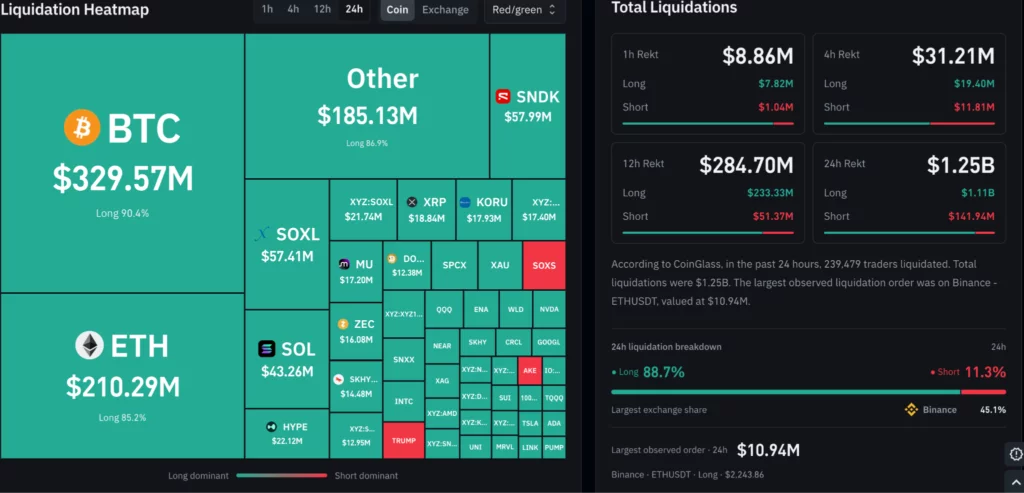
Crypto liquidations, source: CoinGlass
At the time, Bitcoin had fallen below $76,000, while Coinbase, Strategy and several cryptocurrency mining companies recorded substantial share-price losses.
An earlier review of ETF flows showed U.S. spot Bitcoin funds receiving $74.6 million on November 4 following three consecutive sessions of net withdrawals.
Read more: Can Ethereum make rollups feel like one network?