Key Insights Crypto news centered on Nasdaq’s planned 23-hour stock trading schedule. Overnight trading would run from 9 p.m. to 4 a.m. New protections would target volatility during thinner
Key Insights
- Crypto news centered on Nasdaq’s planned 23-hour stock trading schedule.
- Overnight trading would run from 9 p.m. to 4 a.m.
- New protections would target volatility during thinner overnight liquidity.
Nasdaq is moving closer to 23-hour U.S. equity trading as market infrastructure prepares for a December rollout. The crypto news angle stems from investors increasingly expecting access beyond traditional exchange hours.
The Night Session will narrow the operating-hours gap between equities and continuously traded crypto markets. However, Nasdaq will retain a daily maintenance break and existing U.S. securities-market infrastructure.
Crypto News: Nasdaq Adds 9 P.M. Night Session
Nasdaq Trader said the new Night Session would run from 9 p.m. to 4 a.m. Eastern Time. Existing pre-market, regular, and post-market sessions would continue under the new structure. Trading would pause between 8 p.m. and 9 p.m. for processing and trade-date transition.
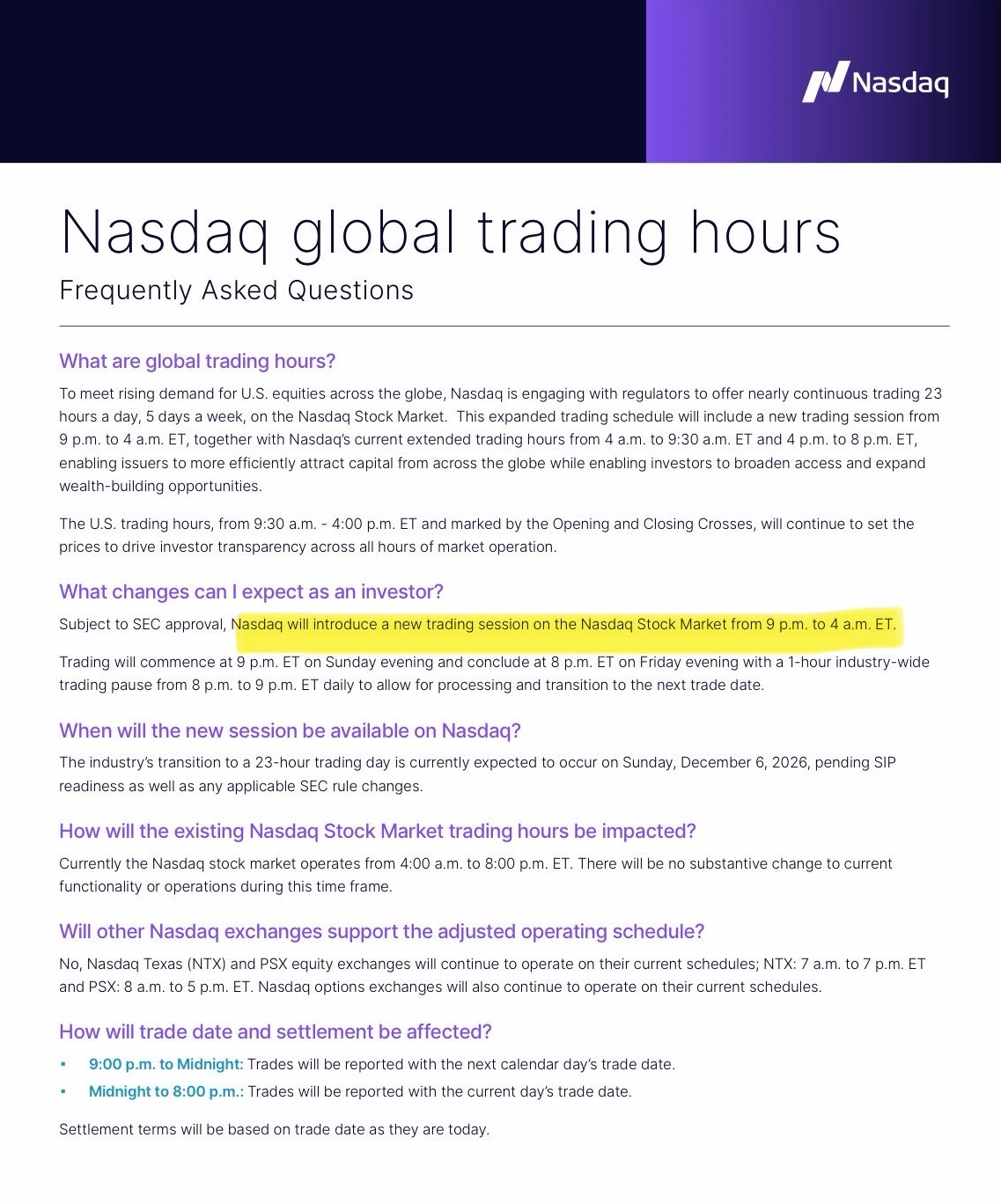
Source: Nasdaq
The Securities and Exchange Commission approved Nasdaq’s 23-hour trading rule on April 10, 2026. The approval covered amendments under file SR-NASDAQ-2025-109. That action removed a regulatory barrier before Nasdaq announced its December operating date.
Nasdaq’s Global Trading Hours material described the Night Session as part of a 23-hour market. The exchange said the framework targeted broader access while preserving current U.S. market protections. That positioning also placed the Nasdaq crypto discussion beside continuous digital-asset trading models.
Nasdaq Crypto Link Centers on Market Access
Nasdaq has not said stocks will trade on crypto blockchains under this rollout. The new session remains part of the regulated Nasdaq Stock Market infrastructure. Claims that the December move automatically creates blockchain-based stock trading go beyond Nasdaq’s announcement.
Still, Nasdaq previously connected extended trading with investor expectations around continuous markets. Its 2025 annual filing also discussed tokenized equity initiatives alongside broader market modernization plans. Those separate efforts explain why crypto news accounts framed the schedule against always-open digital-asset venues.
The distinction matters for investors comparing execution models. Crypto venues can operate continuously because their market structure differs from U.S. national securities exchanges. Nasdaq would retain a daily maintenance pause and existing regular session.
Nasdaq’s rulebook also said orders outstanding at 4 a.m. would be canceled. New pre-market orders could then enter under the existing morning session. Orders remaining at 8 p.m. would also be canceled before the Night Session starts.
Nasdaq also kept its Opening and Closing Crosses tied to regular market hours. Those auctions remain key reference points for listed securities. Overnight trading therefore expands access without replacing the main session’s price-setting functions.
Crypto News Focus Shifts to Overnight Risk Controls
The Unlisted Trading Privileges Securities Information Processor said its extended schedule would start Dec. 6. Operations would begin Sunday evening and continue through Friday evening. The processor also scheduled user testing from October before production launch.
The processor said new overnight price-protection messages would accompany the extended hours. These controls resemble the existing Limit Up-Limit Down framework used during regular trading. Listing markets would distribute protection levels through the consolidated data system.
An SEC order dated Aug. 5 approved the first phase of overnight protections. The framework sets protected hours from 9 p.m. through 4 a.m. Eastern Time. Primary listing exchanges would calculate upper and lower price bands before overnight trading begins.
The order set general overnight bands 20% around specified reference prices. It also said exchanges could impose regulatory halts when price discovery became impaired. Automatic regular-session trading pauses would not apply in the same form overnight.
These safeguards addressed thinner liquidity outside normal U.S. trading hours. The SEC said the protections aimed to limit extraordinary volatility during reduced-liquidity periods. That issue remains central to the Nasdaq crypto comparison because continuous access does not guarantee equal liquidity.
Nasdaq Crypto Rollout Faces September Market Structure Review
The SEC scheduled a Sept. 17 roundtable on preparations for 24-hour U.S. equity trading. Chairman Paul Atkins said regulators were examining overnight operations, resilience, and investor protections. The meeting will occur before Nasdaq’s planned December launch.
The next operational milestone arrives in October, when industry testing begins for extended Securities Information Processor hours. Nasdaq still targets Dec. 6 for production trading under the approved framework. That date will test how closely U.S. equities can approach crypto-style access without adopting crypto market structure.
The rollout would also mark the first Sunday-night opening for Nasdaq-listed U.S. equities under the exchange’s new approved trading schedule.
The post Crypto News: Nasdaq Takes on Crypto With 23-Hour Stock Trading appeared first on The Coin Republic.