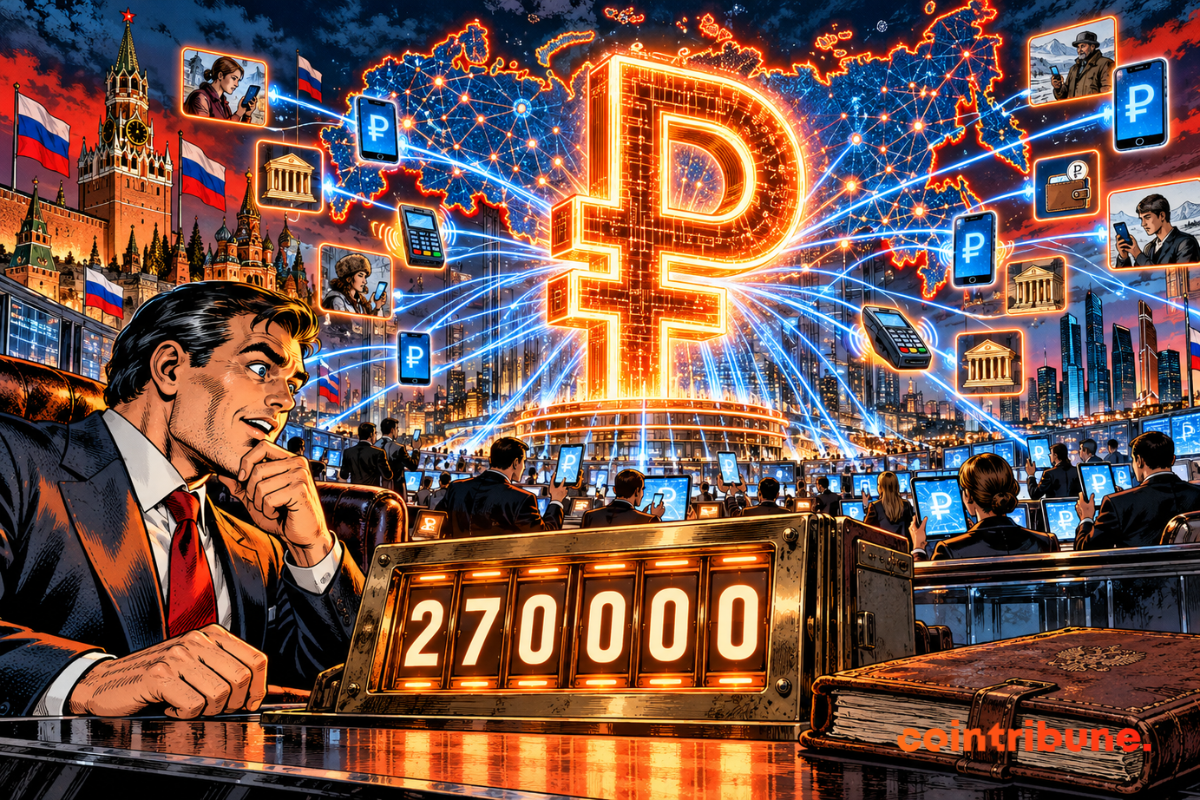
Russia now has 270,000 accounts in digital rubles, less than two months after the national launch of its central bank digital currency (CBDC). Elvira Nabiullina revealed this figure on Octobe
Russia now has 270,000 accounts in digital rubles, less than two months after the national launch of its central bank digital currency (CBDC). Elvira Nabiullina revealed this figure on October 23, specifying that demand exceeded expectations. Moscow is already preparing new services, including recurring payments from November and offline transactions in 2027. However, the number of actually active users remains unknown.
In brief
- Russia reaches 270,000 accounts in digital rubles since September 1.
- About 15,000 accounts concern companies and individual entrepreneurs.
- Moscow is preparing recurring payments and offline transactions.
The digital ruble exceeds Russia’s expectations
The start is fast. On September 11, the Bank of Russia already announced 87,000 accounts opened and more than 50,000 transactions. Only ten days after the national launch, the first figures exceeded the regulator’s forecasts.
Since then, openings have almost tripled. The central bank had already presented the first results of the national deployment of the digital ruble in mid-September. The project, tested since August 2023, is now accessible to individuals through participating banking apps.
Elvira Nabiullina acknowledges that interest has been significantly higher than the institution’s initial expectations. Of the 270,000 registered accounts, about 15,000 concern legal entities and individual entrepreneurs. Small and medium-sized enterprises are among the categories showing the most interest.
The progress is visible. However, it still does not allow measuring the actual use of the currency. The regulator did not communicate new numbers of transactions, volume transferred, or active accounts during this announcement.
Your 1st cryptos with BinanceThis link uses an affiliate program.
Moscow prepares offline payments for 2027
The digital ruble will gradually receive new features. By the end of November, the Bank of Russia plans to launch a recurring payments service. Users could thus authorize certain periodic payments, notably for subscriptions.
Next year, Moscow also wants to test offline payments. This feature would allow certain operations without a permanent Internet connection. The precise technical details still need to be specified.
Development also affects salaries. In early October, employees of the Russian Ministry of Finance had already received their remuneration in digital rubles. This option remains voluntary for workers. Authorities are also considering facilitating cash withdrawals directly from digital ruble accounts at ATMs.
For individuals, transfers and payments are free. They can top up their digital account up to 300,000 rubles per month from their traditional bank accounts.
Companies benefit from a free period until the end of 2026. Fees are then expected to come into effect in 2027. The system aims notably to reduce payment costs and simplify transfers between individuals, companies, and administrations.
The digital ruble still needs to convince Russians
The 270,000 accounts represent a first result. For a population exceeding 140 million inhabitants, the deployment is still in its early stages. The Russian digital currency operates differently from Bitcoin or private stablecoins.
It represents a third form of the ruble, alongside cash and money held in bank accounts. It is issued by the Bank of Russia, which directly controls its platform. Each user accesses their wallet through a participating bank. Opening an account remains optional for individuals.
Banks and merchants concerned must, however, progressively integrate the infrastructure. The largest institutions began on September 1, 2026. Other establishments will join the system in 2027 and 2028.
This obligation also explains why service availability should not be confused with spontaneous adoption by the entire population. Commercial banks are also not unanimously convinced. Sberbank has already expressed reservations about public demand and possible consequences for bank deposits.
Moscow is simultaneously pursuing its financial market transformation. The largest Russian bank notably plans to accept Bitcoin, Ethereum, and USDT as loan collateral. However, the digital ruble belongs to another category than these crypto assets. The Bank of Russia will now have to transform account openings into regular payments. The next transaction figures will show if users really follow through.