Crypto spot trading recovered in September for the second month in a row. On centralized exchanges, increased spot activity showed a return of both retail and whale orders. Spot trading on ce
Crypto spot trading recovered in September for the second month in a row. On centralized exchanges, increased spot activity showed a return of both retail and whale orders.
Spot trading on centralized markets recovered further in September, after positive gains in August, based on Cryptorank data. The growth affects centralized exchanges, but Cryptopolitan also reported on a pickup in DEX activity for RWA spot markets.
Spot trading activity expanded to $973B in September, with the biggest share still happening on Binance. August was the first month of rebounds for spot trading, coinciding with the early recovery of BTC and ETH.
Spot trading recovery also coincided with a rise in new crypto listings, up 47% for Q3 compared to the previous quarter, with 517 new assets for the period. Mexc and OKX showed traders still had an appetite for tokens, while tokenized assets also drove new listings.
Crypto spot trading slowed down in Q3
The whole of Q3 shows a different pattern – for the whole period, spot trading was down by 14% compared to Q2. For the past four quarters, spot trading has been in decline, with only occasional monthly recoveries. The recent September results are seen as a potential early signal of a trend reversal.
For the year to date, spot activity is already below the levels seen in 2025. Some of the reasons include a clear shift to perpetual futures trading. Additionally, some of the spot activity shifted from centralized markets to DEX.
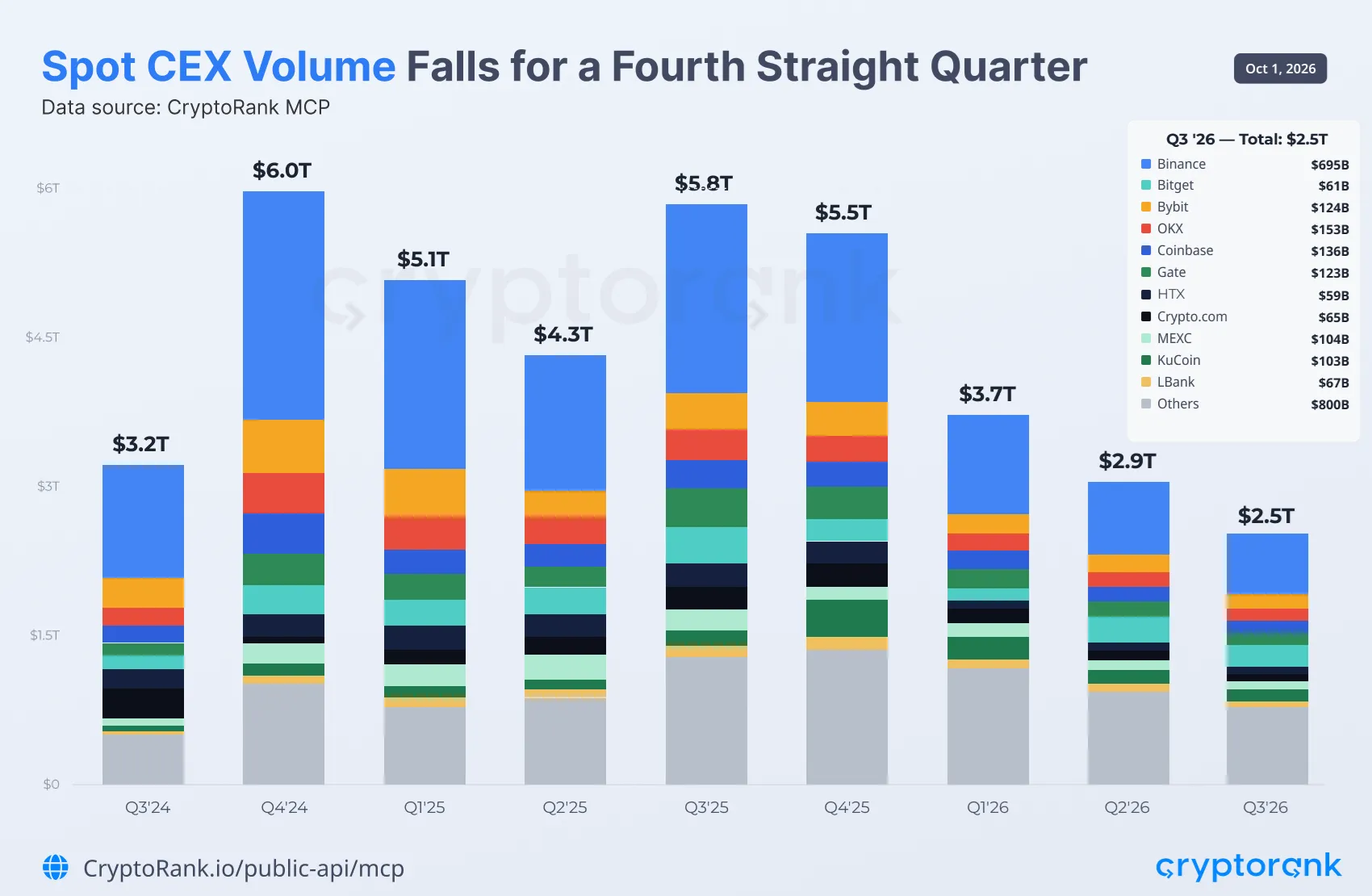
Spot CEX volume expanded in September for the third month in a row, though Q3 remained the weakest quarter in 2026 to date. | Source:
Cryptorank
As of October 6, around 24.6% of spot trading is happening on decentralized markets. The shift shows there is demand for spot trading, but some crypto users stay away from centralized exchanges.
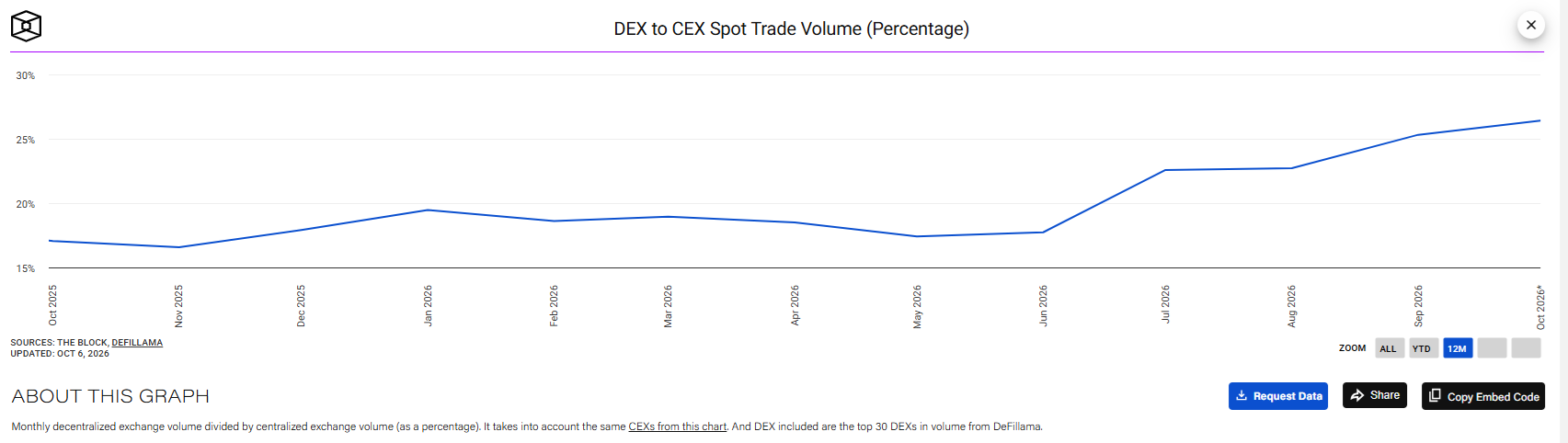
Crypto spot volumes switched to decentralized markets, leaving CEX with slower trading growth in September. | Source:
The Block
Binance is one exception, processing $695B from September’s trading volumes. The exchange increased its share to 27.9% from 25.4% in Q2. Other top 10 centralized exchanges had minimal changes in their market share.
Centralized exchanges shift to futures trading
Centralized exchanges have captured the recovery in perpetual futures trading. For September, perpetual futures were still far above spot volumes at a total of $4.56T, up 3% from August.
For the third consecutive month, futures markets expanded, led by growth on Gate and Mexc. Binance only added 4% to its futures volumes, retaining around 36% of the market.
The shift to centralized markets took some of the volumes from perpetual futures DEXs. Volumes fell to $1.71T, down 7% from Q2. For the past quarter, perpetual futures markets had another net decline, losing around 23% of volumes.
For now, compared to spot or centralized futures markets, perpetual futures DEXs had the smallest slowdown in Q3. The resilience of Hyperliquid showed traders were ready to stick around even during times of low crypto sentiment.
One of the drivers of perpetual futures volumes was the expanding RWA trading, including highly active contracts on equities, oil, and precious metals.
Hyperliquid remained dominant, carrying $621B of the quarterly traffic, for a market share of around 36%. Binance’s Aster still holds around 9% of perpetual futures trading, while Lighter comes in third with 8%. No other smaller exchanges have managed to attack the leading position of Hyperliquid.
On a monthly basis, perpetual futures volume was up by 13% month-on-month, once again serving as a signal for crypto market recovery. This is the third consecutive month of gains, coming from both Hyperliquid growth and challengers like Aster and Lighter.
If you're reading this, you’re already ahead. Stay there with our newsletter.