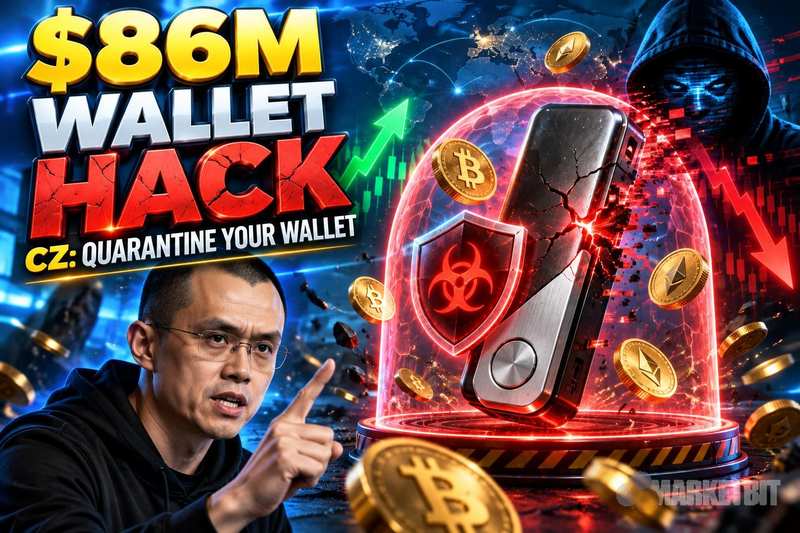
Binance founder Changpeng Zhao, known as CZ, issued a public warning urging crypto holders to quarantine wallets potentially linked to a reported $86 million Ledger reseller hack, advising us
Binance founder Changpeng Zhao, known as CZ, issued a public warning urging crypto holders to quarantine wallets potentially linked to a reported $86 million Ledger reseller hack, advising users to halt activity on exposed addresses until the scope of the breach is confirmed.
What to Know About the Reported $86 Million Ledger Reseller Hack
Reports indicate an alleged $86 million loss tied to a Ledger hardware wallet reseller, not Ledger's own infrastructure, according to U.Today reporting on CZ's warning. The distinction matters operationally: a reseller compromise suggests tampered or counterfeit devices rather than a vulnerability in Ledger's firmware at the manufacturer level. For related coverage, see Ethereum (ETH) Sees Liquidations Among Large Holders.
Details remain unverified at publication. The attack vector, affected user count, and asset composition have not been independently confirmed. Users who purchased Ledger devices through third-party resellers carry the highest exposure risk under the reported scenario; those who sourced devices directly from Ledger's official channels fall outside the primary risk surface as currently reported.
Why CZ Is Urging Users to Quarantine Wallets
Wallet quarantine is a containment protocol: stop all outbound transactions from a potentially compromised address until its integrity is established. CZ's warning targets users who may hold seed phrases or private keys generated on a device of uncertain origin, separating precautionary guidance from confirmed technical findings.
The advisory is not a confirmation of compromise. A quarantine recommendation means the risk surface is unknown and activity on the wallet could trigger a loss event if an attacker already holds the seed phrase. This risk dynamic is comparable to the exposure patterns seen when Ethereum reserves on Binance fell as withdrawals increased, where self-custody transitions amplified individual key-management risk.
Stop using any wallet whose device provenance is uncertain. Do not initiate transfers, sign transactions, or connect to dApps from a potentially exposed address until the device's origin is verified; sharing seed phrases or approving unknown signing requests under these conditions is a zero-recovery failure mode.
If funds must be moved, transfer only to a fresh wallet generated on a device sourced directly from the manufacturer. A reseller compromise implies the attacker may already hold a copy of the mnemonic generated at device setup, making wallet migration the only effective remediation. The irreversibility of on-chain settlements means a key-compromise event carries similar finality to the $1.4 billion in crypto liquidations recorded in a single 24-hour window: once confirmed, funds cannot be recalled.
Seed phrase security remains the single control point in self-custody architecture. Users who recently acquired Ledger hardware through secondary markets or resellers should treat wallet isolation as a non-negotiable first step, independent of whether their specific device is confirmed affected. For context on broader exchange-level security dynamics, the pattern of declining exchange reserves driven by withdrawals shows the scale of assets now held in self-custody wallets, making reseller-supply-chain risk a systemic concern, not an edge case.
Transaction monitoring across affected address ranges is ongoing. Users holding assets on hardware wallets sourced via resellers should also review activity on ledger-based payment networks for any unauthorized outflows, and cross-reference wallet addresses against published compromise indicators as they become available.
Disclaimer: This article is for informational purposes only and does not constitute financial or investment advice. Cryptocurrency and digital asset markets carry significant risk. Always do your own research before making decisions.
Read original article on marketbit.net