Bitwise Asset Management's CEO has said the underperformance of the firm's Dogecoin ETF product exposes a structural divide between institutional and retail investors who access crypto throug
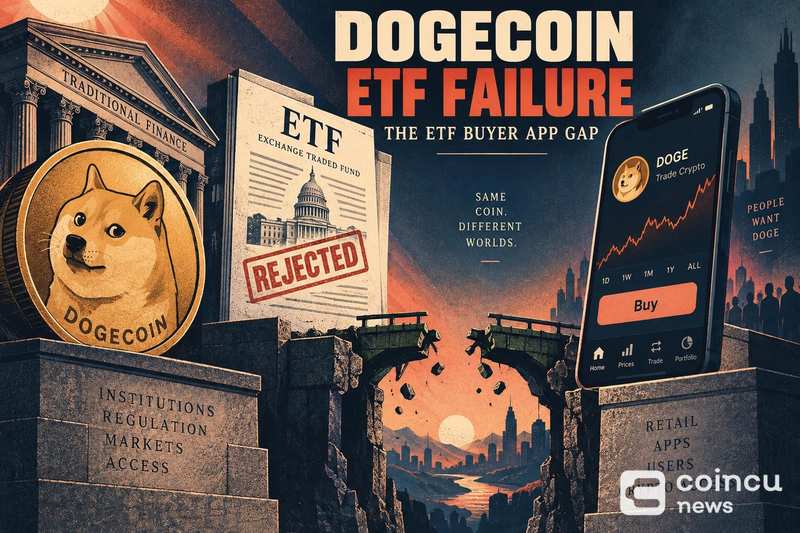
Bitwise Asset Management's CEO has said the underperformance of the firm's Dogecoin ETF product exposes a structural divide between institutional and retail investors who access crypto through brokerage wrappers and the direct users who engage with the asset through crypto-native apps, a distinction that carries real implications for how issuers gauge demand before bringing altcoin ETFs to market.
The observation, attributed to Bitwise's chief executive, frames the Bitwise Dogecoin ETF's closure not as a failure of Dogecoin itself but as a mismatch between product format and audience. ETF buyers, who access crypto through traditional brokerage accounts, represent a different behavioral cohort than the self-custody holders and app traders who drove Dogecoin's community-driven rallies. For related coverage, see El Salvador Bitcoin Holdings Reach 7,798 BTC, $643M+.
ETF Access vs. App Ownership: Two Distinct User Behaviors
An ETF buyer acquires exposure to Dogecoin's price without holding the asset, without interacting with wallet infrastructure, and without participating in the social dynamics of the Dogecoin network. The product is designed for convenience within regulated brokerage channels, appealing to investors who want price participation without the operational friction of managing private keys or exchange accounts. For related coverage, see UK Sanctions TokenSpot Over $950M Crypto Transfers.
Crypto app users operate differently: they hold DOGE directly, move it between wallets, tip on platforms, and engage with the speculative and community dimensions of the token. This group has historically driven Dogecoin's price action through retail-coordinated buying, making app engagement a more direct measure of actual demand than ETF inflows. For related coverage, see Japan Finance Ministry's 3 Tokenized Bond Models.
The CEO's framing implies that ETF demand for a meme asset may not map onto the underlying community's activity, and that issuers who use app engagement as a demand signal before launching products risk overestimating brokerage-channel appetite. SEC filings for altcoin ETF products can be tracked through the EDGAR full-text search system, where the volume of S-1 submissions for Dogecoin-linked vehicles reflects issuer appetite rather than confirmed investor demand.
Why the Gap Matters for Altcoin ETF Issuers
Bitcoin and Ethereum ETFs drew from an investor base that was already familiar with the assets through brokerage-adjacent instruments such as futures, trusts, and options, creating a natural overlap between ETF buyers and the broader holder population. Dogecoin's ETF case is structurally different: the asset's core constituency is retail app users and on-chain participants, not institutional allocators or brokerage-platform investors who are the primary buyers of exchange-listed wrappers.
If the Bitwise CEO's claim holds, it suggests that demand inference models that worked for Bitcoin ETF products may not transfer cleanly to meme tokens, where community engagement and ETF buying represent non-overlapping audiences. Issuers considering similar products, as Grayscale has explored with altcoin wrappers, would need to validate brokerage-channel demand independently rather than extrapolating from on-chain activity or app download metrics.
What the Claim Leaves Unanswered
The reported observation raises methodological questions that the available evidence does not resolve. No public metric cleanly measures the overlap, or lack thereof, between a specific ETF's buyer base and the active user population of crypto apps holding the same token. Without flow data segmented by investor type, or a baseline comparison against Dogecoin app wallet counts, the CEO's claim remains a reported assertion rather than a quantified finding.
What would confirm the gap: sustained low ETF inflows against high on-chain Dogecoin transaction volume, or rising app-based DOGE holdings concurrent with flat ETF assets under management. What would complicate it: evidence that the ETF simply launched into a period of broad meme-asset weakness unrelated to audience structure.
FAQ: Dogecoin ETFs and Crypto App Users
What is the Dogecoin ETF failure mentioned here?
Bitwise launched a Dogecoin ETF product that failed to attract sufficient assets, leading to its closure within roughly a year of listing, as reported separately. The CEO's comment connects that outcome to a structural audience mismatch rather than a verdict on Dogecoin's value.
How are ETF buyers different from crypto app users?
ETF buyers access price exposure through brokerage accounts and do not hold the underlying asset; crypto app users hold DOGE directly, trade on exchanges, and engage with the token's community features. The two groups have different motivations, risk tolerances, and access channels, and they do not necessarily respond to the same demand catalysts.
Does ETF interest measure overall crypto adoption?
No, and the Bitwise CEO's comment reinforces that point. ETF inflows measure brokerage-channel demand, which is one segment of the broader market. App-based ownership, on-chain activity, and exchange trading volumes capture different and often larger segments of actual adoption, particularly for retail-native assets like Dogecoin.
Additional source references: source document 1.
Disclaimer: This article is for informational purposes only and does not constitute financial or investment advice. Cryptocurrency and digital asset markets carry significant risk. Always do your own research before making decisions.
The post Dogecoin ETF Failure Exposes ETF Buyer-Crypto App Gap was initially published on Coincu.