The U.S. Department of Justice has seized more than $25 million in cryptocurrency tied to a transnational investment fraud network, in an enforcement action that underscores how federal autho
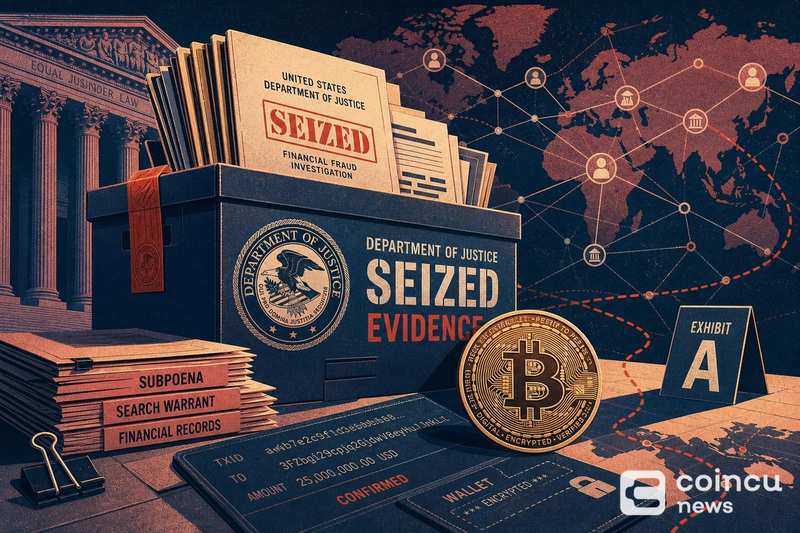
The U.S. Department of Justice has seized more than $25 million in cryptocurrency tied to a transnational investment fraud network, in an enforcement action that underscores how federal authorities are targeting cross-border scams that move victim funds through digital assets.
The seizure was announced by the U.S. Attorney's Office for the District of Columbia, which said the funds were connected to cryptocurrency investment scams operated across international borders, according to the Department of Justice. For related coverage, see DOJ Seizes $25M Crypto From Global Investment Fraud Network.
The action was carried out with the U.S. Secret Service, whose D.C. Scam Center Strike Force has reported related seizures of cryptocurrency linked to Chinese transnational criminal activity, the Secret Service said. For related coverage, see Malaysian Police Dismantle Illegal Crypto Mining Dens in Port Klang Free Trade Zone.
What the seizure means and why the cross-border angle matters
A seizure is not a conviction. It allows the government to take custody of assets it alleges are connected to crime, a step that typically precedes civil or criminal forfeiture proceedings before ownership is permanently transferred.
The transnational structure is the defining feature of this case. When a fraud network spans multiple jurisdictions, tracing funds and coordinating recovery becomes harder, which is why joint DOJ and Secret Service task forces are central to these operations.
Similar dynamics appeared in an earlier District of Columbia matter that the DOJ described as its largest-ever seizure of funds related to crypto confidence scams, reflecting a sustained federal focus on this category of fraud.
How crypto investment fraud networks typically operate
Investment fraud of this kind generally relies on convincing victims that they are placing money into a legitimate, high-return opportunity. Crypto serves as the asset rail because transfers are fast, borderless, and difficult to reverse.
Victims are often induced to move funds off regulated platforms and into wallets controlled by the scheme's operators. Once transferred, the cryptocurrency can be layered across multiple wallets and services to obscure its trail.
The DOJ's Scam Center Strike Force has emphasized coordination with private industry to disrupt these operations, outlining results from a disruption effort that brought together federal investigators and companies to interrupt the flow of funds.
Why enforcement teams and the industry watch these cases
A federal seizure at this scale signals active enforcement and shapes public perception of digital assets, since fraud-linked cases feed the narrative that crypto is a vehicle for scams rather than legitimate finance.
For exchanges and compliance teams, cross-border cases raise practical jurisdiction and cooperation questions, which is why they track DOJ and Secret Service actions closely. Comparable pressure is visible in other jurisdictions, from a historic UK Bitcoin fraud case to broader enforcement and seizure activity across Asia.
The scale of recent U.S. actions has grown, including a separate case in which the DOJ seized billions in Bitcoin tied to overseas operators, illustrating how large these fraud-linked pools have become.
Red flags investors should watch for
Because this case involves an investment fraud network, the most useful takeaway for readers is recognizing the warning signs common to such schemes:
- Guaranteed or unusually steady returns. Promises of consistent profits with no downside are a classic fraud marker.
- Pressure and secrecy. Urgency to move funds quickly, or instructions to keep the opportunity confidential, are designed to bypass scrutiny.
- Off-platform transfers. Requests to send crypto to external wallet addresses controlled by a third party remove the protections of regulated venues.
Federal resources exist for those affected. The FBI has run coordinated victim outreach through Operation Level Up, which notifies people who may be caught in ongoing crypto investment scams.
FAQ
What does it mean when the DOJ seizes cryptocurrency? A seizure gives the government temporary custody of assets it alleges are tied to crime. It is a preliminary step and does not by itself establish guilt or transfer ownership.
How are transnational crypto fraud networks investigated? Cases are typically handled by joint task forces such as the D.C. Scam Center Strike Force, combining DOJ prosecutors, Secret Service agents, and private industry partners.
Can victims recover funds after a seizure? Recovery is possible through forfeiture and remission processes, but it is not guaranteed and depends on the outcome of legal proceedings and the traceability of the assets.
Disclaimer: This article is for informational purposes only and does not constitute financial or investment advice. Cryptocurrency and digital asset markets carry significant risk. Always do your own research before making decisions.
The post DOJ Seizes $25M in Crypto Tied to Transnational Fraud Network was initially published on Coincu.