What Is Parallel Processing and Why Does Ethereum Need It? Ethereum is one of the busiest networks in crypto, yet it still runs transactions one after another, like a single checkout line. Th
What Is Parallel Processing and Why Does Ethereum Need It?
Ethereum is one of the busiest networks in crypto, yet it still runs transactions one after another, like a single checkout line. The Ethereum Glamsterdam upgrade aims to open more lanes. This guide starts with the basic terms, then covers the new parts, and ends with what they could mean for crypto.
The Ethereum Glamsterdam upgrade is a planned change to how Ethereum builds and checks blocks. Block-level access lists tell nodes which data a block touches, so work can run in parallel.
ePBS moves block building into the protocol. Testing is still going, and there is no mainnet date.
Parallel Processing: Block-Level Access Lists(BAL)
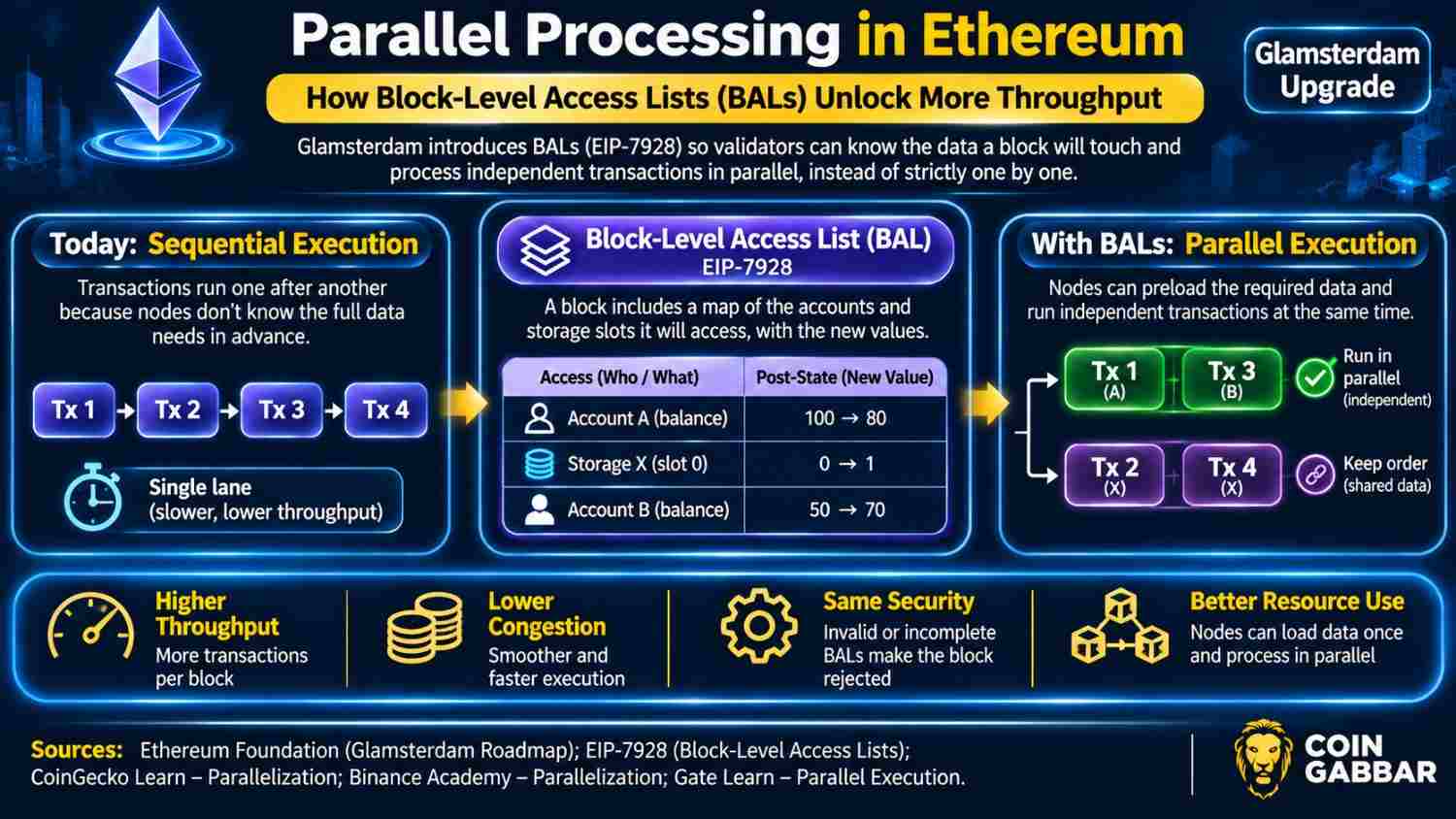
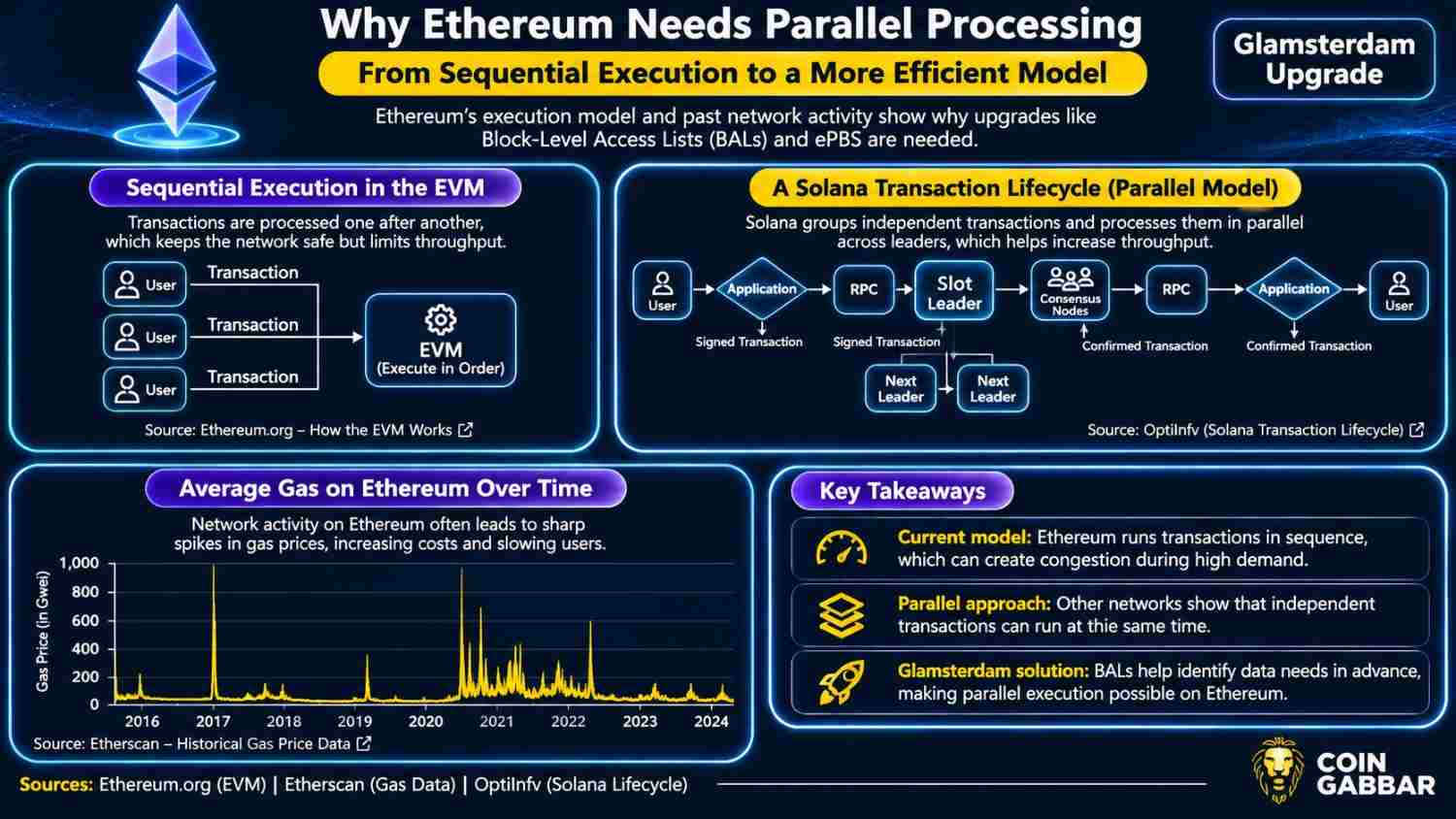
Think of a bank with one teller. Every customer waits in the same line. That is how Ethereum runs transactions today. Each one goes in order, because any of them might touch the same account.
Parallel processing adds more tellers. Many transactions run at once. It only works if you know in advance who touches which account. Two payments to the same account can't be handled together.
Ethereum can't guess that safely. So it plays it safe and runs one by one. That limits how much work fits in each block.
What Creates the Bottlenecks in Ethereum Transaction Processing?
Two things slow nodes down. The first is execution. A node must run every transaction in order and read data from disk as it goes. It only learns what data it needs when the transaction asks for it.
The second is the hand-off between the validator who proposes a block and the party who builds it. Most proposers rely on outside relays, which are trusted middlemen. The window to pass blocks around is short, about 2 seconds.
The Ethereum Glamsterdam upgrade targets both.
OurEthereum Glamsterdam guide gives the wider overview.
What Are Block-Level Access Lists and How Do They Help?
Block-Level Access Lists, or BALs, work like a map. Under EIP-7928, each block carries a list of every account and storage slot it touches, plus the new values after it runs.
With the map in hand, a node can load all the data at once, check transactions side by side, and compute the new state in parallel. A block with a wrong or incomplete list is invalid, so nobody can bend the map.
The cost is size. The authors estimate an average list of about 92 KiB compressed at a 60 million gas limit, based on 1,000 mainnet blocks. The first image shows the before and after.
What Is Enshrined Proposal-Builder Separation, or ePBS?
ePBS moves the proposer and builder hand-off into Ethereum's own rules. A builder sends a signed bid. The proposer picks it and gets paid, even if the builder later fails. No trusted relay is needed for that step. Ourcrypto MEV bot explained guide shows why block ordering matters to users.
Builders become a new staked role, and the entry stake can be as low as 1 ETH. A small committee of validators then votes on whether the builder revealed the block on time. The window grows from about 2 seconds to about 9.
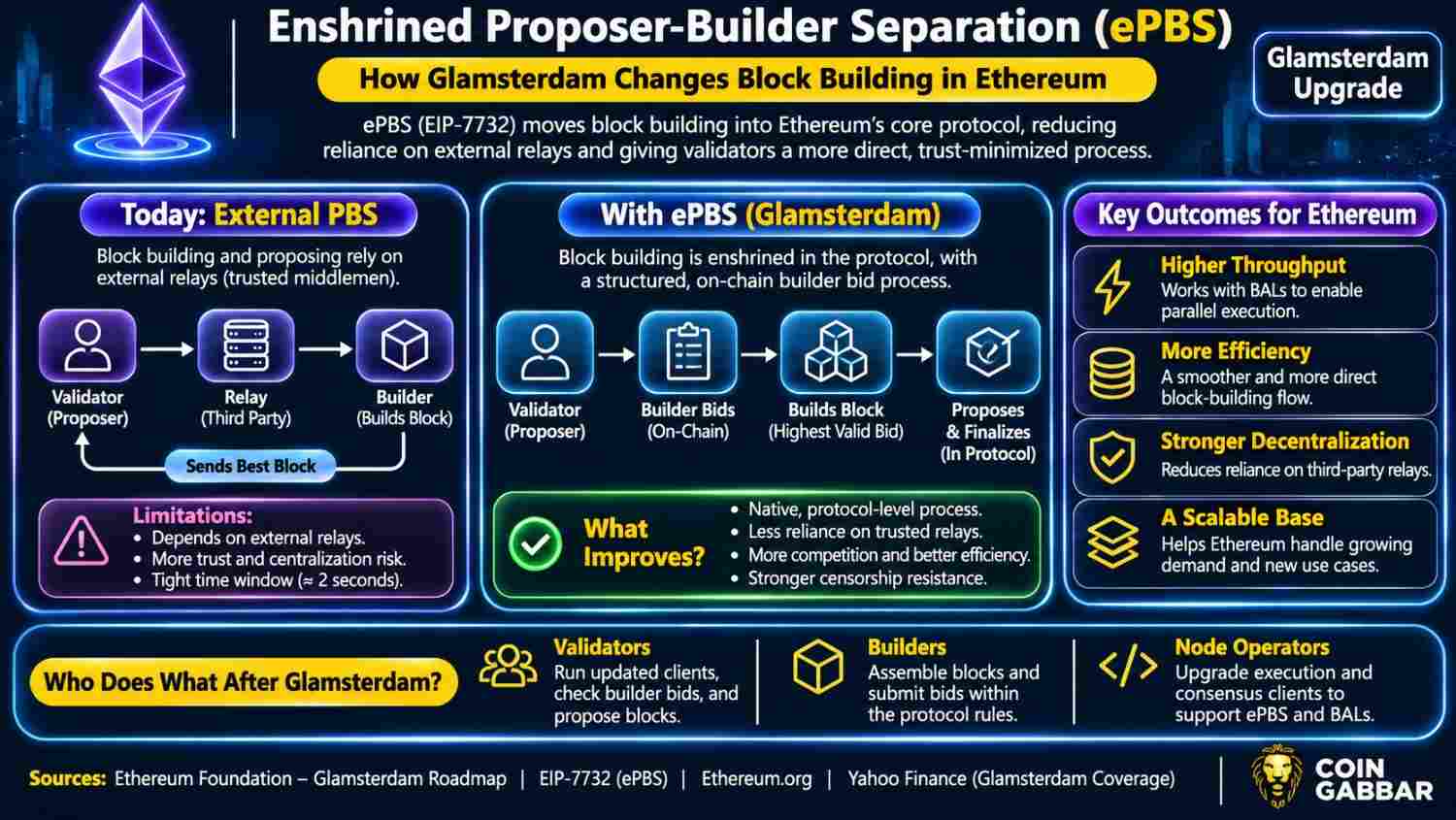
ePBS has open risks. A builder may hold back its block when that pays better, which can cause missed slots. The EIP also warns about a group holding over 20% of the stake. The second image shows the flow.
What Do Validators and Node Operators Need to Do?
Operators must update both the execution client and the consensus client. Stakers must update the beacon node and the validator client. They should also review the new ePBS duties and gas limit settings.
Staking pools face extra work. They will need new tools to watch builder payments without trust. Test on public testnets first.
Ordinary holders need to do nothing. Balances stay the same. The Ethereum Foundation warns that anyone telling you to "upgrade" your ETH is trying to scam you.
Where Does the Ethereum Glamsterdam Upgrade Stand Today?
It is still in testing. The Sepolia testnet fork was set for 6 October 2026. A Hoodi testnet fork was planned for 26 October, and the Foundation later said it was postponed. A November developer update reportedly kept it on hold during a gas review. No mainnet date is set.
The review looks at gas accounting. Auditors reportedly flagged contracts that could act differently when calls fail or that rely on fixed gas checks. That matters because Glamsterdam reprices state costs. The fourth image shows the timeline.
The roadmap names a Q4 2026 target but says scope can still change. Treat all dates as unconfirmed. OurGlamsterdam date and features page tracks updates.
What Could Glamsterdam Mean for the Future of Crypto?
If it ships as planned, Ethereum could fit more work in each block. Developers are testing a gas limit floor of 200 million, up from about 60 million. A proposed change could also make simple ETH transfers up to 71% cheaper. The third image lists the key numbers.
Cheaper fees are not promised. More capacity does not always mean lower gas, because demand sets prices. Bigger blocks also ask more of nodes.
Some newer chains run transactions in parallel by design. Ethereum is adding it to a live network, which is harder. If it works, the same idea could shape how other chains grow.
Expert Opinion: Is Glamsterdam a Big Step or a Slow Fix?
CoinGabbar analysis suggests the Ethereum Glamsterdam upgrade is plumbing work that matters more to builders, validators, and node operators than to everyday holders. The basis is the Foundation's roadmap, the two core EIPs, and the current delay for the gas review.
Its value depends on safe testing, not on a date. This view is not a forecast.
Disclaimer: It is not financial, legal, or tax advice. Nothing about timing, fees, or prices is promised or assured, and you can lose all the money you put into crypto. Check with a qualified adviser first.