Ethereum News Today: EIP-8222 Privacy Upgrade and BitMine Staking Deal Latest ETH Updates today bring two major developments that could influence institutional stakings in different ways. Fir
Ethereum News Today: EIP-8222 Privacy Upgrade and BitMine Staking Deal
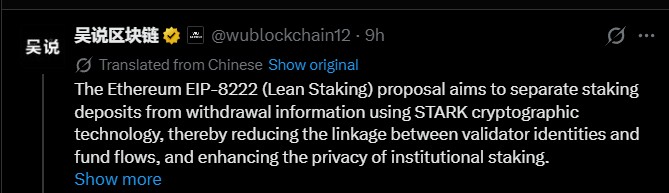
Latest ETH Updates today bring two major developments that could influence institutional stakings in different ways. First, developers are discussing EIP-8222 (Lean Staking), a proposal designed to improve privacy using advanced cryptography.
Second, BitMine latest regulatory filing reveals that nearly all of its revenue depends on Ethereum staking, while its long-term agreement with Ethereum Tower could make operational changes expensive.
Together, these updates highlight how Ethereum's institutional ecosystem is evolving, with privacy, operational efficiency, and long-term business commitments becoming increasingly important for companies building on the network.
Ethereum News: EIP-8222 Could Transform Institutional Staking Privacy
Source: Wu Blockchain X
What Is Ethereum EIP-8222?
EIP-8222, known as "Lean Staking," is a proposal built around STARK-based cryptography. Its core idea is simple: separate staking deposits from withdrawal credentials so validator identities become far harder to trace back to a single institution.
The proposal folds into the broader Lean redesign effort. Right now, it exists only at the discussion stage — no implementation timeline has been set, and any rollout would need broad agreement from the developer community.
Why Institutions Want Better Staking Privacy
Today, Ethereum staking is anything but private. Deposit addresses, validator IDs, and withdrawal credentials are all publicly visible on-chain.
Blockchain analytics firms can take that public trail and estimate an institution's position size, its entry timing, and even its broader stakings strategy — information most professional allocators would rather not hand over for free.
Thibault Dubuis, staking and DeFi product lead at Sygnum Bank, framed the current exposure this way: "position size, timing and strategy are effectively public" for institutional allocators under today's system.
That matters for banks, ETFs, custodians, and large investors who need to protect their strategies from competitors while still meeting regulatory and audit expectations.
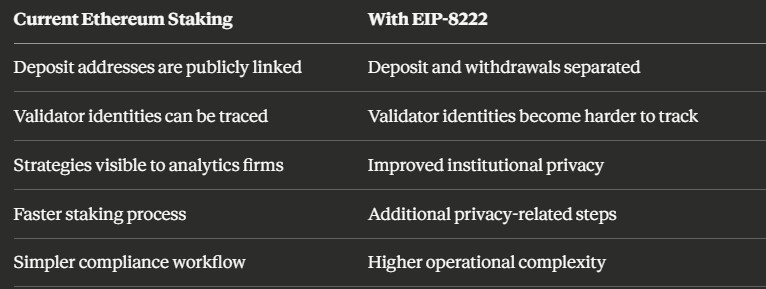
Ethereum Staking Before vs After EIP-8222
Challenges Institutions May Face Under EIP-8222
Better privacy wouldn't come free. Institutions would likely face a more complex staking process overall, including fixed deposit denominations that group transactions together for anonymity but reduce flexibility on exact amounts.
Withdrawal waiting periods could also be introduced to stop transactions from being linked, adding delay to time-sensitive business workflows. On top of that, institutions should expect higher operational costs and tighter compliance and audit requirements.
Custody responsibilities and slashing risks don't disappear either — protocol-level privacy doesn't remove the need for internal controls, key management, or regulatory reporting. In short: privacy improves, but execution gets harder. ETH challenge is balancing that new privacy layer against the transparency regulators still expect.
BitMine's Ethereum Staking Business Faces Long-Term Contract Constraints
Source: Official Post
BitMine Depends Heavily on Ethereum Stakings Revenue
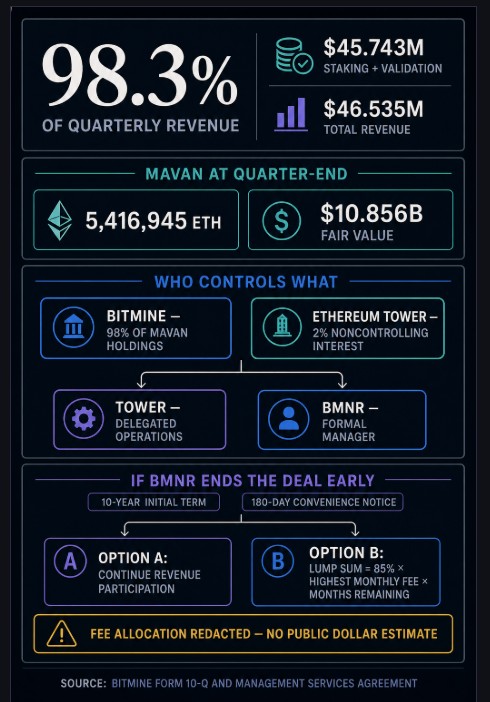
Ethereum BitMine Form 10-Q, filed July 14, shows just how concentrated its business has become. Stakes and validation generated $45.743 million of the company's $46.535 million in quarterly revenue — 98.3% of the total.
The company held 5.4 million ETH at quarter-end, with around 87% of that actively staked. BitMine has also stated a longer-term goal of accumulating 5% of total circulating supply.
Why the Ethereum Tower Agreement Matters
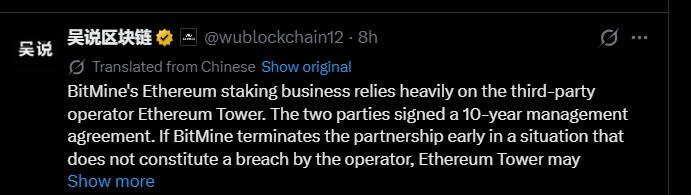
Nearly all of that activity runs through a 10-year management agreement with Tower, effective March 24. Tower operates the validator infrastructure day-to-day, while BitMine owns 98% of the underlying entity and Tower holds the remaining 2%.
In exchange for running operations, Tower receives monthly revenue participation from the stake business. That structure ties BitMine's flexibility directly to a single third-party relationship for the next decade.
Source: CryptoSlate
BitMine-Ethereum Tower Agreement at a Glance
Agreement Length: 10 years
Operator: Ethereum Tower
Revenue Source: 98.3% from staking & validation
ETH Holdings: 5.4M ETH
ETH Staked: About 87%
Early Exit: Revenue sharing or lump-sum compensation
Tower Ownership: 2% of MAVAN Holdings
Why These Updates Matter For Investors and Crypto Traders
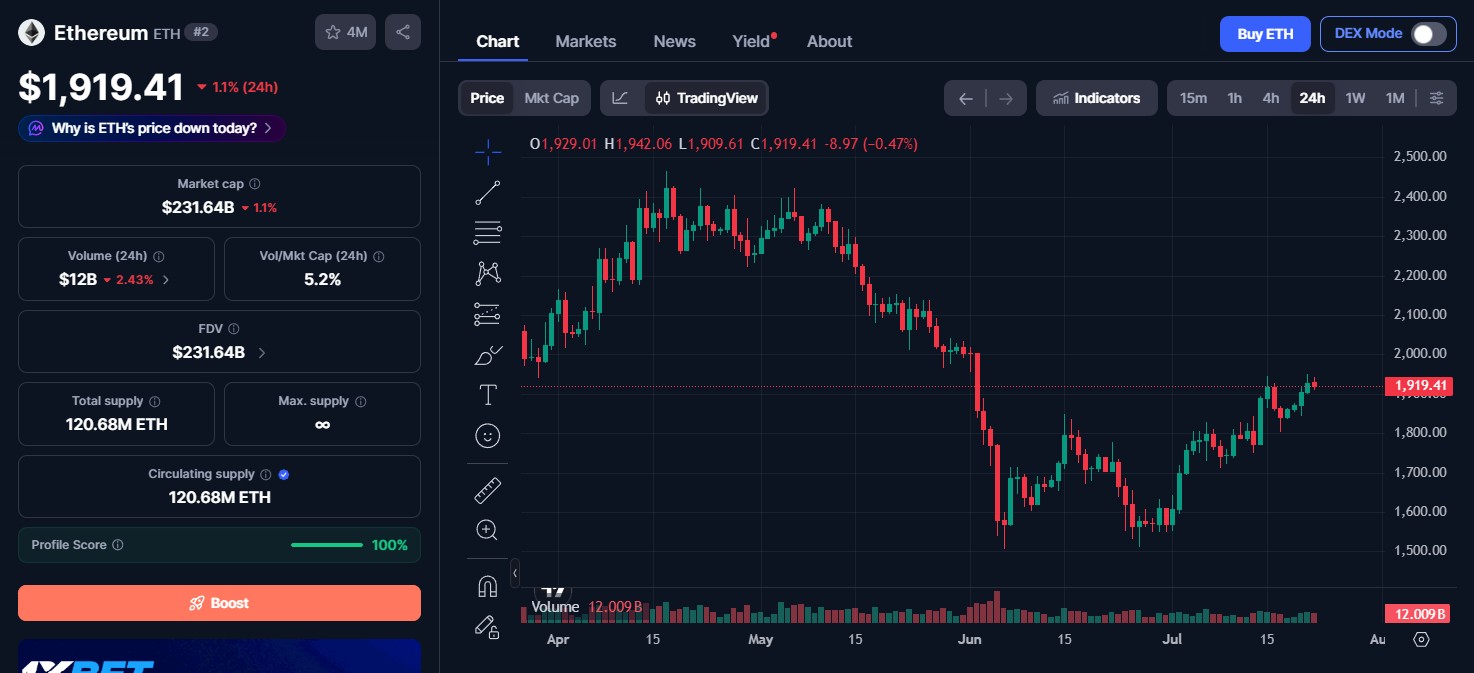
Both stories affect institutional Ethereum Price today and its adoption, just from opposite ends. EIP-8222 is about better privacy, stronger institutional confidence, and long-term network improvement.
The BitMine story is about business dependency, operational flexibility, contract risk, and infrastructure management. One is a protocol-level change still years from certainty; the other is a live contractual obligation already shaping a public company's balance sheet today.
Source: CoinMarketCap Data
Timeline: Ethereum Updates Today
March 24, 2026: BitMine and ETH Tower management agreement begins
May 31, 2026: BitMine reports quarterly revenue with 98.3% from stakes
June 1, 2026: Company reports around 87% of ETH holdings actively staked
July 14, 2026: BitMine files Form 10-Q detailing stakes dependence
July 22, 2026: EIP-8222 discussion gains attention for institutional privacy
Upcoming: Community continues reviewing EIP-8222 before any implementation decision
Conclusion
Ethereum News Today shows a new phase, where technology and business strategy carry equal weight. EIP-8222 could meaningfully improve privacy by making validator activity harder to trace, which may draw more institutional capital over time. But that same proposal introduces real trade-offs: higher costs, slower workflows, and heavier compliance demands.
Meanwhile, BitMine's decade-long tie to Tower shows how deeply a business can become bound to its infrastructure partner through contract terms alone. Investors should watch EIP-8222's progress through developer discussions alongside how companies like BitMine manage their partnerships, since both will shape validator economics and enterprise adoption going forward.
Disclaimer: This article is for informational purposes only and does not constitute financial, investment, or legal advice. Cryptocurrency markets are volatile and carry risk. Always conduct your own research before making investment decisions.