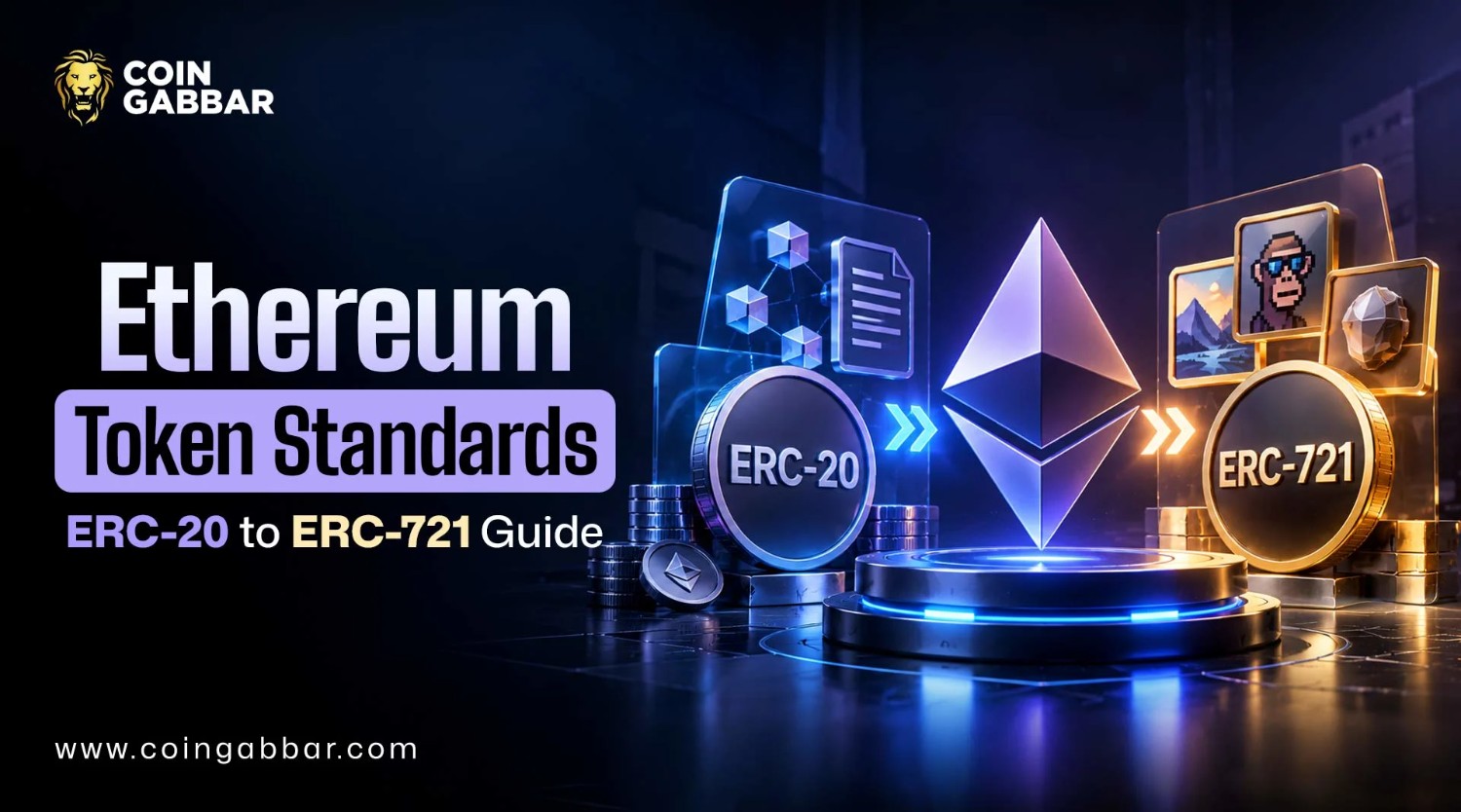
What Are Ethereum Token Standards and Why Do They Matter What makes a token work in every wallet and app? A shared rulebook. That rulebook is the heart of Ethereum token standards. Explained:
What Are Ethereum Token Standards and Why Do They Matter
What makes a token work in every wallet and app? A shared rulebook.
That rulebook is the heart of Ethereum token standards. Explained: ERC-20 to ERC-721. One side covers coins that are all the same. The other covers items that are all different.
Readers who follow Ethereum news today bump into these names all the time. But few get a plain definition.
Here’s the short version. One it handles assets that can be swapped one for one. The other handles assets that can’t.
What Are Ethereum Token Standards, and Why Do They Matter?
These token standards are agreed templates for how a token behaves. They list the functions a smart contract must have, like checking a balance or sending tokens.
A smart contract is just code that runs on the blockchain by itself. No middleman, no manual steps.
Now picture a world with no templates. Every project would invent its own rules.
Turns out, that gets messy fast. Wallets and exchanges would need custom code for every single token.
A shared standard fixes that. One set of rules, thousands of projects that all play nicely together.
Key Takeaways
ERC-20 covers fungible assets, where every unit is identical.
ERC-721 covers NFTs, where each token has its own ID.
Ethereum Token Standards save wallets and apps from custom work.
The fungible standard came first, in 2015. The NFT standard followed in 2018.
Fake copies and careless approvals are the real risks.
ERC-20 Explained: The Standard Behind Most Ethereum Assets
Fabian Vogelsteller and Vitalik Buterin proposed this standard in November 2015. It’s built for fungible assets.
Fungible just means every unit is swappable. One 100 rupee note works the same as any other.
Stablecoins, governance coins, and reward points all follow this model. Hold ten units or ten thousand; each one is identical.
Core Features
TotalSupply: shows how many units exist.
BalanceOf: shows what one address holds.
Transfer: sends tokens to another address.
Approve and transferFrom: let an app spend on a holder’s behalf, up to a set limit.
Transfer and Approval events: log every move so wallets can track it.
Name, symbol, and decimals are optional extras. Decimals simply decide how finely a token can be split.
ERC-721 Explained: How Ethereum Powers Unique NFTs
The NFT standard showed up in January 2018. William Entriken and Dieter Shirley are among its authors.
NFT stands for non-fungible token. Each one is distinct, so ownership gets tracked one by one.
And that’s the whole difference. Two NFTs from the same collection can still be worlds apart.
Think digital art, game items, or even deeds to physical assets.
Core NFT Features
Unique token ID: a contract address plus a number names each NFT.
OwnerOf: names the current owner of one token.
SafeTransferFrom: checks that a receiving contract can handle NFTs, so assets don’t get stuck.
Approve and setApprovalForAll: let a marketplace move one NFT or all of them.
TokenURI: an optional link to a name, description, and image.
How Ethereum Token Standards Make Wallets and Apps Work Together
Both standards run through Ethereum smart contracts. Each contract keeps a ledger of who owns what.
Every send is one of many Ethereum transactions. Each one pays a gas fee in ETH, so costs in rupees move with the Ethereum price.
An Ethereum node checks every transaction. That’s simply a computer running the network software.
Then the Ethereum block explorer shows the result to anyone. Public, searchable, permanent.
Here’s the thing: the contract holds the record. A wallet only displays it.
ERC-20 contracts store one balance per address. NFT contracts store one owner per token ID.
ERC-20 vs ERC-721: Key Differences Every User Should Know
Feature
Fungible standard
NFT standard
Token type
Fungible
Non-fungible
Each unit
Identical
Unique ID
Record kept
Balance per address
Owner per token ID
Divisible
Yes, via decimals
No
Common uses
Stablecoins, governance
Art, game items, deeds
Proposed
2015
2018
Spending approval
Set amount
One token or all
Real-World Uses of Both Ethereum Token Standards
The fungible standard powers most everyday crypto assets. Payments, voting rights, and in-app rewards all fit.
The NFT standard covers anything that must stay one of a kind. A game sword. A concert ticket. A digital painting.
Staking shows how the two worlds touch. Joining an Ethereum staking pool often returns a receipt token built on ERC-20. But Ethereum solo staking skips that step.
Across the Ethereum ecosystem, builders pick the standard that matches the job. Identical units call for one. Unique items call for the other.
Which Ethereum Token Standard Is Right for a Project?
Start with one question. Should every unit be identical?
If yes, the fungible standard fits. Rewards, stablecoins, and voting rights all work well that way.
If every unit needs its own identity, the NFT standard fits better. Mixed needs? ERC-1155 may be the smarter pick.
Simple rule, really. But the right choice still depends on goals, costs, and the people who’ll use the token.
Beyond the Big Two: Other Standards and Risks
That newer standard bundles both kinds of assets in one contract. It cuts costs when many items move at once.
New ERC proposals keep arriving through an open process. And the Ethereum roadmap points to cheaper transactions on layer 2 networks.
Risks deserve plain talk. Ethereum scams often copy a popular name and symbol. Any contract can reuse them.
An Ethereum bridge adds more risk, since wrapped assets depend on the bridge itself. And a loose approval can let a contract spend a balance later.
So what should a careful reader check first? The contract address.
Expert Take: What Should Readers Watch?
The stronger signal is track record. ERC-20 has run since 2015 and still anchors most projects.
The main concern is user safety, not design. Fake contracts and loose approvals remain the weak spot.
The NFT standard seemed like a niche add-on at first. Actually, that undersells it. It set the pattern for tracking unique digital ownership.
The biggest unknown is which new proposals will last. As of October 22, 2026, both standards hold final status.
Readers should verify every contract on their own. That habit costs almost nothing.
Conclusion
These two standards solve two different problems. One tracks balances. The other tracks unique items.
Ethereum token standards keep them both usable across wallets and apps. What stays uncertain is which newer standards will catch on.
Next step: read the official proposals and check any contract before use.
Disclaimer
This article is for information only and isn’t financial advice. Crypto assets carry high risk, and prices can fall fast. Readers should research independently before any decision.