Key Takeaways Ethereum maintains its position as the dominant platform with strong institutional backing and a mature decentralized application network Solana offers superior transaction spee
Key Takeaways
- Ethereum maintains its position as the dominant platform with strong institutional backing and a mature decentralized application network
- Solana offers superior transaction speed and cost efficiency, with fees averaging just $0.00025 per transaction
- Both blockchains now have spot ETF products available in the United States, leveling the institutional playing field
- Stablecoin volume on Solana has surged past $11 billion, with monthly transaction counts exceeding 200 million
- While both represent high-risk investments, Ethereum is generally viewed as the more conservative choice for long-term portfolios
While Ethereum and Solana both function as smart-contract platforms, their technological approaches and investor appeal differ significantly.
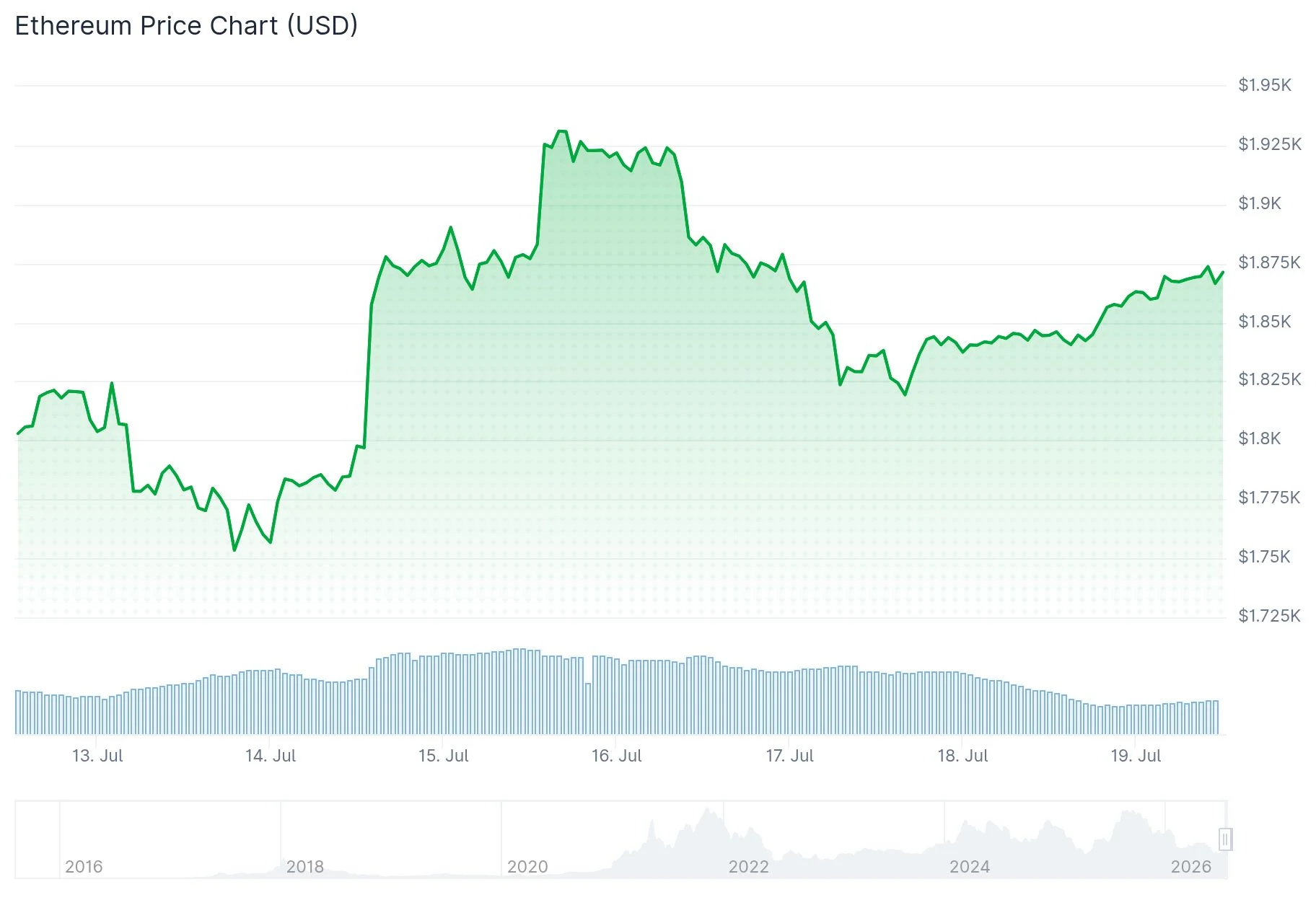 Ethereum (ETH) Price
Ethereum represents the veteran in this comparison. The network supports an extensive collection of decentralized applications, stablecoins, and tokenized real-world assets. Its scaling philosophy centers on layer-2 solutions that process transactions off the main blockchain while leveraging Ethereum’s base layer for final settlement and security guarantees.
Throughout 2024, regulatory approval of spot Ethereum exchange-traded products in the United States created new pathways for mainstream adoption. Investors can now access ETH exposure through conventional brokerage platforms and tax-advantaged retirement accounts.
Future development plans for Ethereum include technical enhancements such as PeerDAS and increased blob capacity, both designed to accommodate higher volumes of layer-2 transaction processing.
A critical challenge facing Ethereum investors involves the economics of value accrual. With growing transaction volumes migrating to layer-2 solutions, the base layer captures diminishing fee revenue.
User experience complexity presents another hurdle. Participants frequently navigate between different networks, utilize cross-chain bridges, and handle multiple token variants across various layers.
Solana operates as a monolithic blockchain without depending on secondary scaling layers. This architectural choice streamlines the overall user experience.
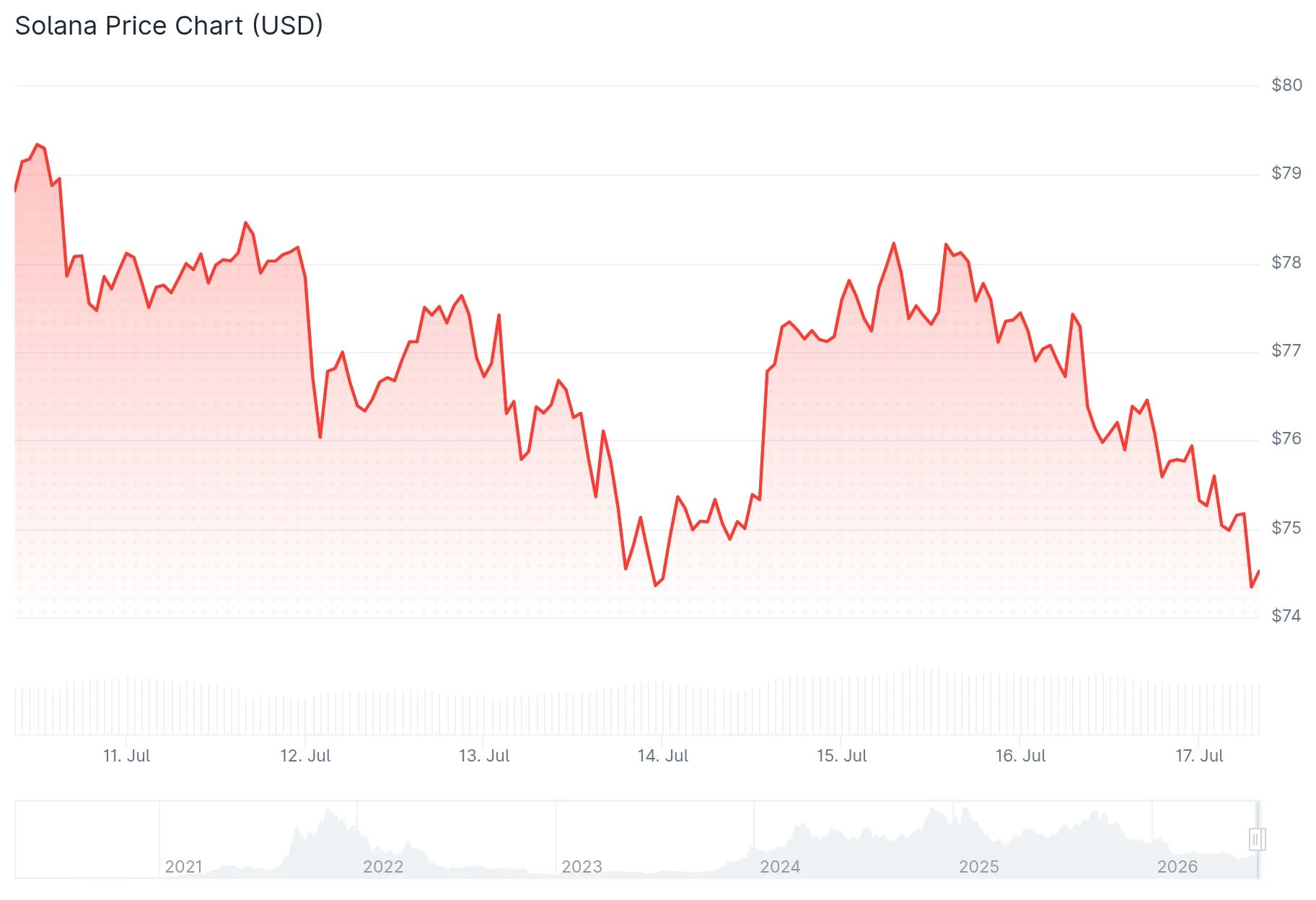 Solana (SOL) Price
Transaction costs on the network remain remarkably minimal. Standard operations cost approximately $0.00025. This pricing structure positions Solana favorably for applications requiring high-frequency, low-cost interactions — including decentralized exchanges, blockchain gaming, payment systems, and NFT marketplaces.
The Solana network has witnessed explosive growth in stablecoin adoption. According to the Solana Foundation, stablecoin circulation on the platform has exceeded $11 billion, with monthly transaction volumes surpassing 200 million.
Access points for institutional capital have expanded considerably. Investment products from firms like 21Shares, Grayscale, and Bitwise now provide American investors with regulated SOL exposure, including vehicles that incorporate staking rewards.
This development has significantly reduced Ethereum’s historical edge in attracting institutional investment flows.
Understanding the Risk Profile
Solana faces heightened implementation challenges. The ecosystem has demonstrated considerable dependence on speculative trading dynamics, particularly within the memecoin sector. Network activity may contract substantially during bearish market conditions.
Concerns regarding network decentralization persist. Operating a Solana validator node demands high-performance computing resources, creating potential barriers for independent, smaller-scale participants.
Ethereum confronts a distinct set of challenges. While the layer-2 approach enhances transaction throughput, it simultaneously fragments liquidity and complicates the user journey. Long-term questions remain about the proportion of economic value that ultimately accrues to ETH token holders.
Investment Implications
Risk-averse cryptocurrency investors may find Ethereum represents a more suitable foundation for portfolio allocation. The platform benefits from operational longevity, established infrastructure networks, and mature relationships with institutional participants.
Solana presents potentially higher appreciation potential, accompanied by increased price volatility and ecosystem uncertainty.
Many sophisticated investors adopt a dual-allocation strategy — capturing Ethereum’s network effects while participating in Solana’s rapid ecosystem expansion. Regardless of approach, both assets remain fundamentally speculative with substantial downside risk potential.
The post Ethereum vs Solana: A Deep Dive Into Two Leading Crypto Networks in 2025 appeared first on Blockonomi.