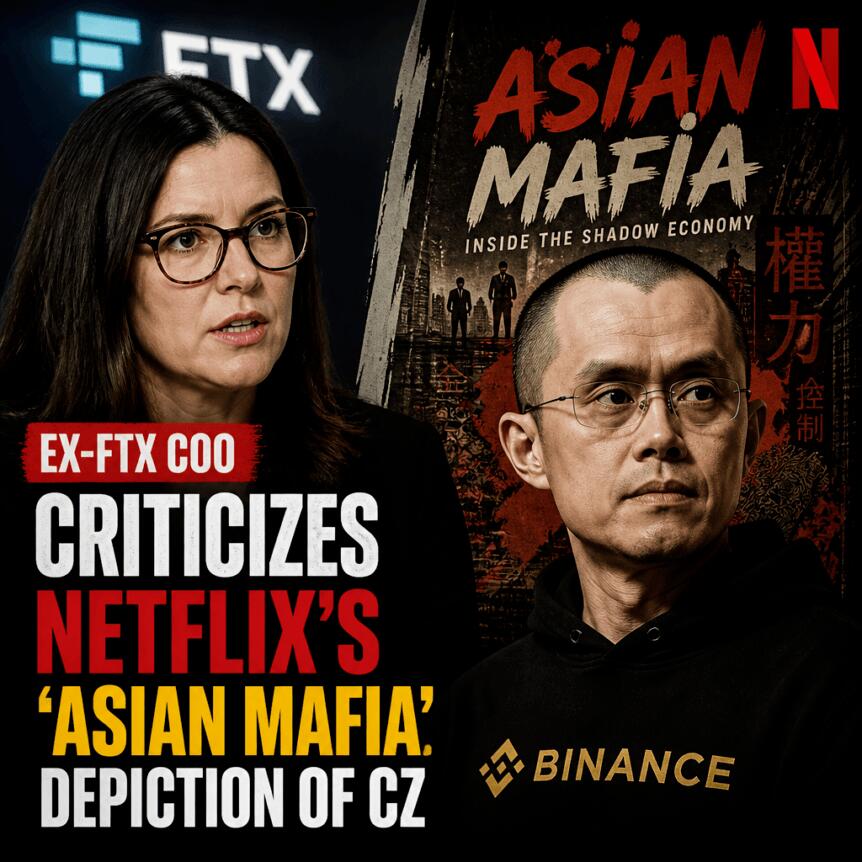
Former FTX and Alameda executive Constance Waing has criticized Netflix’s dramatization of the rise and fall of Sam Bankman-Fried’s crypto empire, calling its portrayal of Binance founder Cha
Former FTX and Alameda executive Constance Waing has criticized Netflix’s dramatization of the rise and fall of Sam Bankman-Fried’s crypto empire, calling its portrayal of Binance founder Changpeng Zhao “racist” and rooted in Asian mafia stereotypes.
In remarks delivered during a Wednesday episode of Cointelegraph’s Chain Reaction on X Spaces, Waing objected in particular to a scene from The Altruists—which premiered Thursday—depicting Zhao (also known as “CZ”) steering Bankman-Fried and Alameda’s former CEO Caroline Ellison toward actions Waing said are framed in a prejudiced way.
Key takeaways
- Constance Waing says Netflix’s portrayal of CZ in The Altruists relies on “Asian mafia” stereotypes and is “very racist,” according to her comments on Cointelegraph’s Chain Reaction.
- The show’s fourth episode includes a fictionalized front-running-style storyline involving FTX customer orders and Alameda, which drew criticism from Zhao and others.
- Zhao himself called the scene “insane,” while Ethereum co-founder Vitalik Buterin questioned whether the depiction crosses into racist caricature.
- Series creator Graham Moore told Vulture that there is no evidence CZ specifically pressured FTX to front-run.
- Waing also disputed broader elements of the series, including how FTX staff losses and internal dynamics are presented.
Why Waing says the CZ storyline is harmful
Waing took issue with how The Altruists portrays Zhao as a manipulatively criminal figure. She singled out a scene in which Bankman-Fried and Ellison are shown entering through a back door to meet Zhao, whom the show depicts as urging them toward wrongdoing.
During the Cointelegraph discussion, Waing said the episode frames Zhao as an “Asian mafia” character and presents him as “trying to get these two innocent people into something bad.”
While The Altruists is a dramatization rather than a documentary, Waing’s criticism focuses on the character work—how stereotypes are used to define motivations and influence perceptions of real-world individuals associated with the FTX collapse.
Front-running allegations in the episode draw pushback
In episode four, the series depicts Zhao encouraging Bankman-Fried and Ellison to grant Alameda Research advance access to FTX customer orders so Alameda could trade ahead of them. That particular framing became a focal point for criticism beyond Waing.
Zhao publicly challenged the depiction, calling it “insane” and questioning in a post how such a portrayal shapes public perception. Vitalik Buterin also criticized the scene, pointing to exaggerated elements such as Zhao’s accent and raising concerns about whether the depiction is racist, as reflected in his public reaction.
These responses highlight a familiar tension in crypto drama: even when a story is labeled fictional, portrayals can still be taken as implying specific real conduct—especially when they center on alleged misconduct that readers associate with the FTX debacle.
Creators say the front-running claim has no evidence attached
Series creator Graham Moore described the scene as fiction in a Vulture essay, writing that there is “no evidence that CZ ever specifically pressured FTX to front-run.”
That distinction matters for viewers trying to separate dramatic interpretation from claims that could be interpreted as factual. In the broader context of the FTX case, the direction of responsibility and the specifics of alleged trading conduct are central issues, and the line between “inspired by” and “evidence-based” can be easy to blur in narrative adaptations.
Moore’s comment, as reported by Vulture, functions as an explicit acknowledgment that the show’s storytelling extends beyond what can be tied to documented behavior involving Zhao in particular.
Beyond the depiction of Zhao, Waing said she watched The Altruists alongside former FTX and Alameda colleagues and concluded that the series is “completely made up.” She disputed multiple aspects of the show, including how office life, executive relationships, and her own response to problems are portrayed.
Waing also described how FTX employees were affected by the exchange’s collapse. According to her, many employees kept their money on the platform before it failed. She said one employee in Hong Kong could not afford a ticket home, requiring someone else to pay for it.
After the collapse, Waing stayed in the Bahamas to seek answers from Bankman-Fried. She recalled their last conversation before his extradition to the United States, saying Bankman-Fried told her: “I’m sorry, I fucked up.”
Waing said she received no explanation beyond what he had said publicly in interviews, and that she has not spoken to him or Ellison since that period.
Where the real cases stand
Bankman-Fried was convicted on seven fraud and conspiracy counts and sentenced to 25 years in prison in March 2024, as covered by Cointelegraph. Ellison pleaded guilty in December 2022 and testified against Bankman-Fried; Cointelegraph also reported that she received a two-year prison sentence in September 2024.
Against that backdrop, Waing’s criticism underscores how dramatizations can shape public understanding of the same events that later became subjects of criminal proceedings—especially when the series uses character scenes to suggest motivations and influence.
For viewers, the central question now is how The Altruists will be interpreted as it spreads—whether audiences treat its elements strictly as fiction, or whether certain depictions (particularly those that critics describe as stereotype-driven) harden into assumptions about real people. Watch for further responses from those depicted and for more discussion around what the show changes, what it leaves ambiguous, and where creators draw the line between narrative invention and substantiated claims.
This article was originally published as Ex-FTX COO Criticizes Netflix’s ‘Asian Mafia’ Depiction of CZ on Crypto Breaking News – your trusted source for crypto news, Bitcoin news, and blockchain updates.