A fake website impersonating Ledger, the popular hardware cryptocurrency wallet brand, has been reported targeting users' wallet recovery phrases. The scheme is emerging alongside a reported
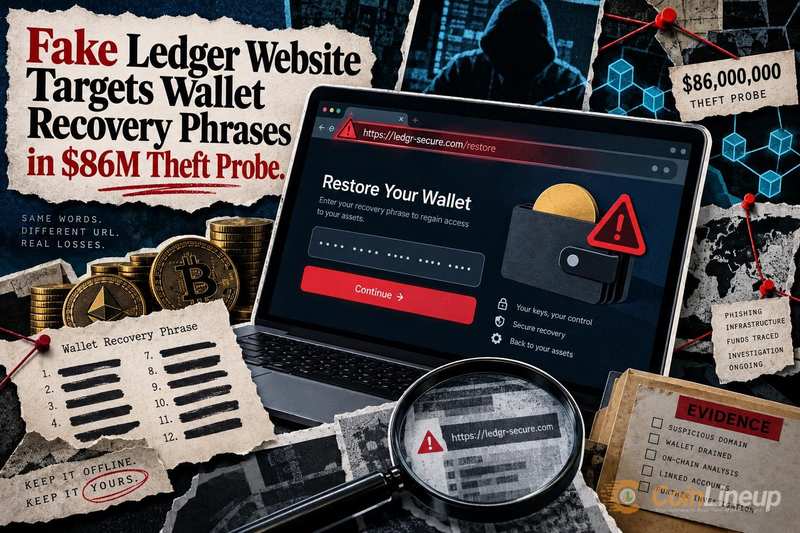
A fake website impersonating Ledger, the popular hardware cryptocurrency wallet brand, has been reported targeting users' wallet recovery phrases. The scheme is emerging alongside a reported probe into an $86 million theft, raising urgent security concerns for anyone who stores crypto using a hardware wallet.
Why your recovery phrase is the target
A wallet recovery phrase, sometimes called a seed phrase, is a sequence of 12 to 24 words generated when you first set up a hardware wallet. Think of it as the master key to your entire crypto account. Anyone who has it can access and drain your funds from any device, anywhere in the world. For related coverage, see Ethereum Below 50-Day SMA: Selling Pressure Grows.
The fake Ledger website appears designed specifically to collect these phrases. It impersonates the legitimate Ledger brand to trick users into believing they are on an official page. Once a user enters their recovery phrase, the attacker gains full control of that wallet. For related coverage, see Cardano Academy Coming to a University This Fall.
Phishing sites that mimic trusted hardware wallet brands follow a pattern security researchers have tracked for years. A similar tactic appeared in a campaign that HP warned about involving a fake AI crypto trading tool designed to target browser-based wallets, showing how attackers consistently tailor lures to the tools users already trust.
What the $86 million theft probe signals
Investigators are reportedly examining a theft probe totaling $86 million in connection with this activity. The probe is ongoing and no final findings have been confirmed. It is important to treat the $86 million figure as part of an active investigation, not a settled conclusion.
The scale of the alleged loss reflects how valuable recovery phrase theft has become as an attack method. When a single phrase unlocks access to a hardware wallet, one successful phishing attempt can yield a significant payout. On-chain theft investigations have shown similar patterns, including the tracing of $12 million linked to the 2025 Bybit theft, where stolen funds were moved quickly through multiple wallets to obscure their origin.
Recovery after a wallet theft is rarely straightforward. Projects that have attempted structured recovery programs, such as Drift's recovery claims process following a hack, illustrate how difficult it is for victims to recoup losses once funds leave a compromised wallet.
How to protect yourself from recovery phrase phishing
Your recovery phrase should never be typed into any website, app, or online form, under any circumstances. The legitimate Ledger software will never ask for your recovery phrase through a browser. If any page requests it, treat the request as a theft attempt and close the tab immediately.
Reach Ledger's official support only through the address you type directly into your browser yourself, never through links in emails, social media posts, or pop-up messages. Attackers rely on urgency, claiming your wallet is at risk or needs verification, to pressure users into acting quickly before they think.
If you believe you have entered your recovery phrase into an unauthorized site, move your funds to a new wallet with a freshly generated seed phrase as soon as possible. The compromised phrase should be considered permanently exposed.
KEY TAKEAWAYS
- A fake Ledger website is actively targeting wallet recovery phrases, which grant full access to any crypto stored in the wallet.
- An $86 million theft probe is reportedly connected to this activity; the investigation remains ongoing and findings are unconfirmed.
- Never enter your recovery phrase online. If any site requests it, it is a phishing attempt regardless of how legitimate it looks.
Additional source references: source document 1, source document 2.
Disclaimer: This article is for informational purposes only and does not constitute financial or investment advice. Cryptocurrency and digital asset markets carry significant risk. Always do your own research before making decisions.
Read original article on coinlineup.com