A study has found that fake payment addresses were used to target 4.5 million Solana wallets, raising serious concerns about transaction safety for anyone using the Solana network to send or
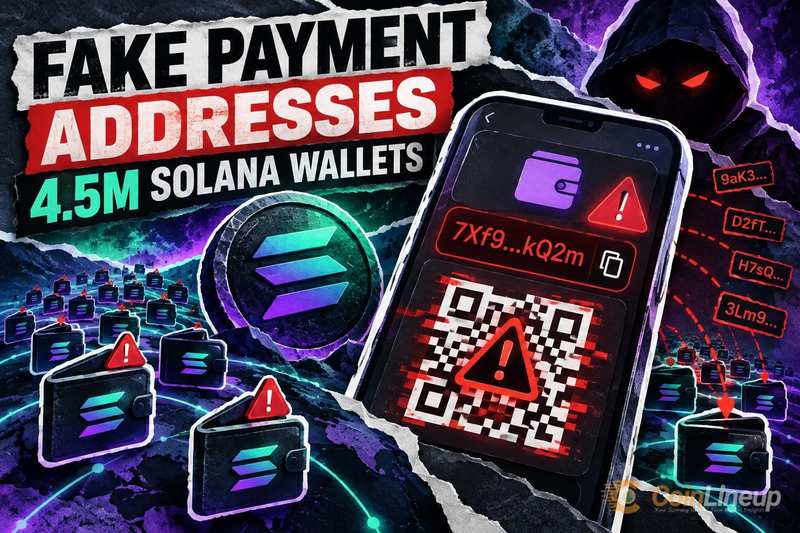
A study has found that fake payment addresses were used to target 4.5 million Solana wallets, raising serious concerns about transaction safety for anyone using the Solana network to send or receive crypto.
The findings, reported by CryptoSlate, highlight how attackers planted fraudulent destination addresses within the Solana ecosystem at a scale that few users would expect. A payment address is the unique string of characters that tells a blockchain network where to send funds. Think of it like a bank account number. If that number is swapped out for a fake one, your money goes somewhere you never intended. For related coverage, see BTC & ETH ETFs Lose $1.22B in One Week Without a Green Session.
What the Study Found
The study identified 4.5 million Solana wallets that were exposed to fake payment addresses. The scale of targeting places this among the larger address-poisoning campaigns observed on any blockchain network. For related coverage, see DOJ Scrutinises Binance’s 2023 Settlement Compliance.
The tactic at the center of this finding is commonly called address poisoning. Attackers generate wallet addresses that look similar to a legitimate one, often matching the first and last few characters. They then push these fake addresses into a victim's transaction history, hoping the victim copies one by mistake the next time they send funds. For related coverage, see Evernorth XRPN Nasdaq Debut on Oct. 12 After SPAC Merger.
This kind of attack does not require a hacker to break into a wallet or steal a private key. It exploits human habit: the tendency to copy a recent address from transaction history rather than re-entering it manually. Wallet targeting at this scale is a reminder that even secure wallets can be compromised by what happens outside them. Similar address-spoofing methods have also been tied to larger thefts, as seen in cases involving fake wallet interfaces used in an $86 million theft probe.
Why This Matters for Solana Users
Being targeted does not automatically mean funds were stolen. Targeting means a fake address was introduced into a wallet's environment, most often through a small "dust" transaction sent to the real wallet. The risk converts to a loss only if the wallet owner acts on the fake address.
Solana's network processes a high volume of low-cost transactions, which makes it relatively cheap for attackers to flood thousands of wallets with these dust transactions. That cost advantage helps explain how the targeting could reach 4.5 million wallets. For context on how wallet drains can escalate from exposure to confirmed loss, earlier incidents like the Ledger-related $92.9 million wallet drain show how quickly address-level vulnerabilities can turn into real financial damage.
What Solana Wallet Users Should Do
The most effective defence is simple: never copy a payment address from your transaction history without verifying it against a trusted source. If you are paying someone, get their address directly from them each time, not from a past transaction.
Before approving any transaction, read the full destination address. Most wallets display the complete address before you confirm. Take a few seconds to check that the first and last characters match what you expect. A mismatch, even a single character difference, is a red flag.
Treat any unexpected incoming transaction from an unknown address as suspicious. A small unsolicited deposit is often the setup for an address-poisoning attempt, not a gift. Do not interact with it, and do not copy any address associated with it.
If you use a hardware wallet or a software wallet with an address book feature, save your most-used addresses there and pull from the saved list rather than from transaction history. This removes the poisoned history entry from your workflow entirely.
The 4.5 million-wallet figure is a reminder that blockchain security is not just about protecting your private key. It also means paying close attention to where your transactions are actually going before you hit send.
Additional source references: source document 1.
Disclaimer: This article is for informational purposes only and does not constitute financial or investment advice. Cryptocurrency and digital asset markets carry significant risk. Always do your own research before making decisions.
Read original article on coinlineup.com