On Aug. 17, the layer-2 network plans to activate streamed EIP-7928 access lists a technical move meant to supercharge transaction verification without squeezing independent validators. Scali
On Aug. 17, the layer-2 network plans to activate streamed EIP-7928 access lists a technical move meant to supercharge transaction verification without squeezing independent validators.
Scaling Ethereum has always been a tightrope walk. Push for higher speed, and you usually end up demanding beefier hardware from the people running the nodes. When that happens, smaller players get priced out, and decentralization takes a hit. World Chain thinks it has a way around the problem.
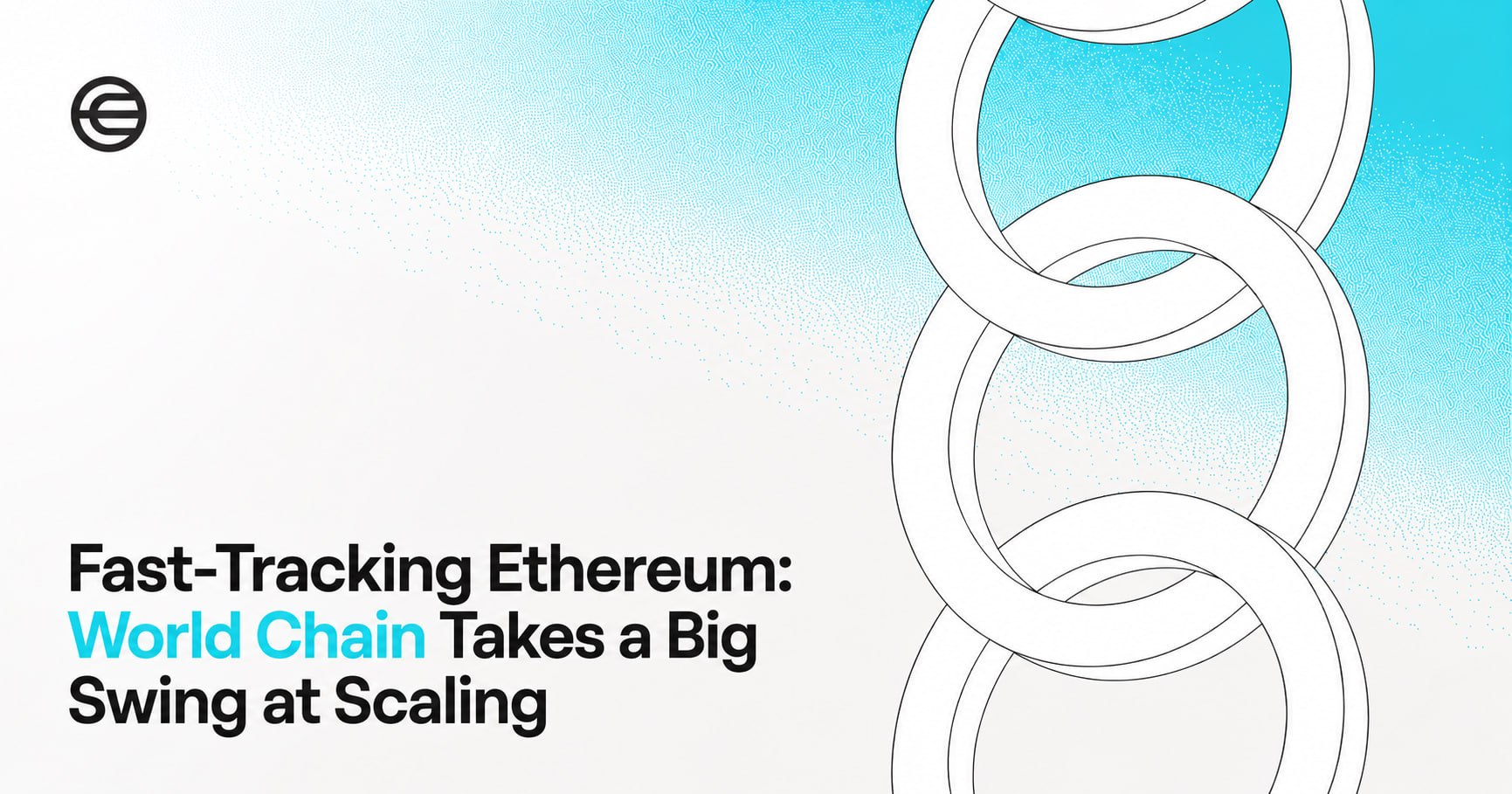
On Aug. 17, the OP Stack-based network will turn on streamed EIP-7928 block access lists across its mainnet. It marks the first time a production blockchain will stream these full access lists inside every 200-millisecond "flashblock."
The goal? Break open the biggest bottleneck in transaction processing without making node ownership an expensive hobby.
Breaking the Sequential Bottleneck
Traditionally, verifying a block is a linear grind. A node receives a full block of transactions, line by line, and re-executes them one after the other. It works. But as transaction volumes surge, the whole process slows down.
EIP-7928 changes the playbook.
Think of an access list as a pre-flight checklist for transactions. It explicitly maps out which exact parts of the blockchain's memory a transaction intends to read or write. Once a node knows who is touching what, it does not need to run everything in a single line. Transactions that do not touch the same data can run simultaneously across multiple CPU cores.
Parallel processing enters the chat.
Why Streaming Every 200ms Matters
Static access lists are not entirely new, but World Chain is taking the concept a step further. Instead of handing validators a massive access list at the very end of a block's creation, World Chain will stream the data incrementally every 200 milliseconds.
Validators can start checking work while the block is still being built.
By spreading the computational heavy lifting over the lifespan of block construction, the network aims to eliminate the massive latency spikes that usually happen when heavy blocks land all at once. According to World Chain, internal testnet runs hit throughput speeds of up to one gigagas per second while running on basic cloud infrastructure—all without a noticeable spike in validation delays.
Those numbers remain unverified by third parties, but if they hold up in production, the efficiency gains could be substantial.
A Dress Rehearsal for Ethereum's Glamsterdam
This deployment isn't happening in an isolated bubble. World Chain operates inside Optimism’s Superchain ecosystem, anchoring its ultimate security to Ethereum. What happens on Aug. 17 serves as a real-world test drive for the broader Ethereum ecosystem.
Ethereum core developers plan to bake EIP-7928 into the upcoming "Glamsterdam" upgrade down the road. World Chain is simply getting there first.
Better yet, node operators do not need to brace for a chaotic, network-wide hard fork to turn this on. World Chain built the upgrade behind a simple runtime flag, allowing client software to enable the feature smoothly ahead of the activation date.
The Real-World Test Ahead
The layer-2 landscape is crowded with competing approaches to speed, from zero-knowledge rollups to massive block-size increases. World Chain's bet hinges on smart distribution of work rather than raw brute force.
Aug. 17 will reveal whether streamed access lists hold up under actual mainnet stress. If the network hits its performance goals without forcing node operators to upgrade their rigs, expect developers across the Ethereum ecosystem to take close notes.