Nigerian regulators such as the Nigerian Communications Commission (NCC) and the Federal Competition and Consumer Protection Commission (FCCPC) have approved MTN’s proposed $2.2 billion acqui
Nigerian regulators such as the Nigerian Communications Commission (NCC) and the Federal Competition and Consumer Protection Commission (FCCPC) have approved MTN’s proposed $2.2 billion acquisition of IHS Towers.
According to MTN Group’s earnings results for the first half of 2026 released on Monday, the approval signals an important step in the group’s move to control the infrastructure that powers the connectivity of its over 300 million customers.
“The transaction has received approval from various regulators, including Nigeria’s Federal Competition and Consumer Protection Commission,” MTN said.

NCC – FCCPC
Recall that following the announcement of the deal in February, the Nigerian government said it wants to assess the proposed acquisition regarding its future impact on the Nigerian telecoms industry. This comes as experts raised concerns over the monopoly of MTN controlling tower infrastructure that serves other major Nigerian network providers such as Airtel Nigeria and T2mobile.
In addition, the Minister of Communications, Innovation, and Digital Economy, Dr Bosun Tijani, explained that the review is to ascertain its impact on the long-term sustainability, investor confidence, and performance of the industry. It is also an effort to stabilise the telecoms sector as a critical pillar of Nigeria’s digital economy.
While the regulatory approvals now mean MTN’s acquisition of IHS Towers is not expected to affect competition and the industry at large, Nigerian regulators have included a clause to put that in check.
In order to put the industry at ease, the regulators noted that MTN cannot keep 100% of IHS Nigeria. The operator is expected to sell a 30% stake in the Nigerian branch to local Nigerian investors at a fair market price.
“MTN will sell-down 30% of IHS Nigeria to local Nigerian investors, on an arms-length commercial basis and subject to market conditions,” part of the statement reads.
The clause is expected to protect local competitors and avoid a single foreign giant having total control over critical infrastructure. It also allows local businesses and investors to hold equity in essential national infrastructure like telecom towers.
The proposed merger first came to light in early February when MTN disclosed its plan to acquire the remaining 75% stake in IHS Holdings to investors. Recently, IHS Towers’ stakeholders approved the acquisition.
The deal is expected to be finalised in the second quarter of 2026.
Also Read: Tower monopoly: “Globacom is not bothered by MTN’s acquisition of IHS”, insider says.
MTN wants to buy back its shares
MTN has also revealed that it wants to reduce the total number of its shares available on the market.
In the process, MTN said it will spend $375.5 million (R6 billion) to buy back up to 31 billion of its own shares from the open market and effectively delete them.
“The share buyback programme is part of the shareholder remuneration framework announced with the launch of Ambition 2030, of delivering between 40% and 60% of equity free cashflow to shareholders either in cash dividends or share buybacks,” the operator said.
In the programme, each share represents a part of the company and boosts metrics like Earnings Per Share (EPS). This makes existing shares more valuable without the company actually having to earn more revenue.
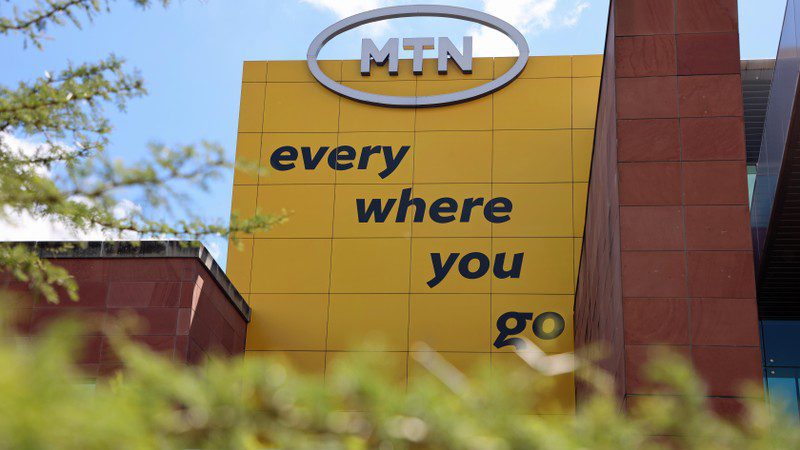
MTN-headquarters-in-Fairlands-14th-avenue-Johannesburg-Picture-Timothy-Bernard-African-News-Agency-ANA
MTN noted that the share buyback will continue as long as the stock price adds value for remaining shareholders rather than wasting cash.
Buying its tower back and launching a share buyback program forms a significant pillar of the group’s move to achieve its Ambition 2030, which surrounds strengthening connectivity, fintech and its digital infrastructure.