TLDR FLY stock surged 23.03% to $18.67 after Firefly announced its $1.3B engine deal. AST SpaceMobile will receive 36 engines for its first three heavy-lift rockets. The agreement includes Mi
TLDR
- FLY stock surged 23.03% to $18.67 after Firefly announced its $1.3B engine deal.
- AST SpaceMobile will receive 36 engines for its first three heavy-lift rockets.
- The agreement includes Miranda and Vira engines plus manufacturing license rights.
- Firefly plans new Texas test bays, increased hiring, and faster rocket production.
- AST SpaceMobile will pay over $1.3B in cash and shares under the engine deal.
Firefly Aerospace (FLY) shares jumped 23.03% to $18.67 after the company announced a rocket engine agreement with AST SpaceMobile. The stock gained $3.49 and approached its intraday high of $18.70. The deal exceeds $1.3 billion and supports Firefly’s manufacturing expansion and AST SpaceMobile’s heavy-lift rocket development.
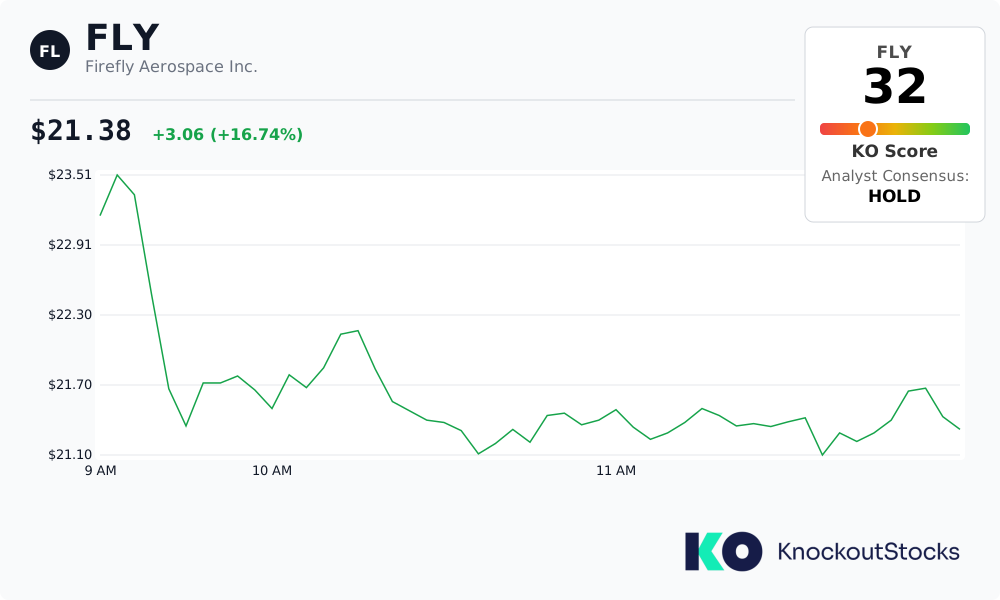
Firefly Aerospace Inc., FLY
Firefly Aerospace Stock Rises After Major Engine Agreement
Firefly will supply 36 rocket engines and engineering support over three years. AST SpaceMobile will also receive a license to manufacture engines for its planned heavy-lift rockets. The arrangement combines equipment deliveries, technical assistance, and manufacturing rights.
For the first three rockets, Firefly will provide 27 Miranda engines and nine Vira vacuum engines. These engines will power AST SpaceMobile’s new launch system. AST SpaceMobile aims to manage launch schedules directly instead of relying on outside providers.
The agreement covers payments worth more than $1.3 billion through cash and AST SpaceMobile Class A shares. The stock component carries various lock-up periods. Meanwhile, Firefly will retain ownership of its engine intellectual property.
Engine Testing Supports Heavy-Lift Rocket Plans
Firefly developed Miranda as a high-thrust engine with a rated thrust of 230,000 pounds-force. The engine has completed more than 175 hot-fire tests, totaling over 4,200 seconds of operation. Those tests provide a technical foundation for its engine commitments.
During one flight-like test, Miranda operated at 110% performance and exceeded its nominal flight duration. The engine continued for 20 seconds beyond the planned 206-second interval. Firefly also developed Vira using technology from its earlier Reaver and Lightning engines.
Both newer engines draw on Firefly’s patented tap-off cycle and in-house development capabilities. The company designs, builds, and tests its propulsion systems internally. That approach supports its existing government and commercial launch activities.
Firefly Plans Production Expansion With Deal Proceeds
Firefly plans to use the additional funds to expand hiring and purchase long-lead materials. The company will also acquire equipment and strengthen infrastructure to increase launch vehicle output. These investments target production constraints as demand for launch services grows.
At its Briggs, Texas, facility, Firefly plans to add multiple engine testing bays. The extra capacity will support more frequent testing and shorten production timelines across its launch programs. Firefly also expects the larger engineering team to advance milestones across its technology roadmap.
Both companies maintain headquarters in Texas and operate across different parts of the space industry. Firefly will continue serving other commercial customers and government programs under the agreement. The deal gives AST SpaceMobile engine manufacturing access while funding Firefly’s broader production plans in the coming years.
The post Firefly Aerospace (FLY) Stock: Surge 23% on $1.3 Billion AST SpaceMobile Rocket Engine Deal appeared first on Blockonomi.