Franklin Templeton is preparing to broaden exposure to Hyperliquid’s ecosystem inside its crypto index exchange-traded fund (ETF). In a filing with the US Securities and Exchange Commission d
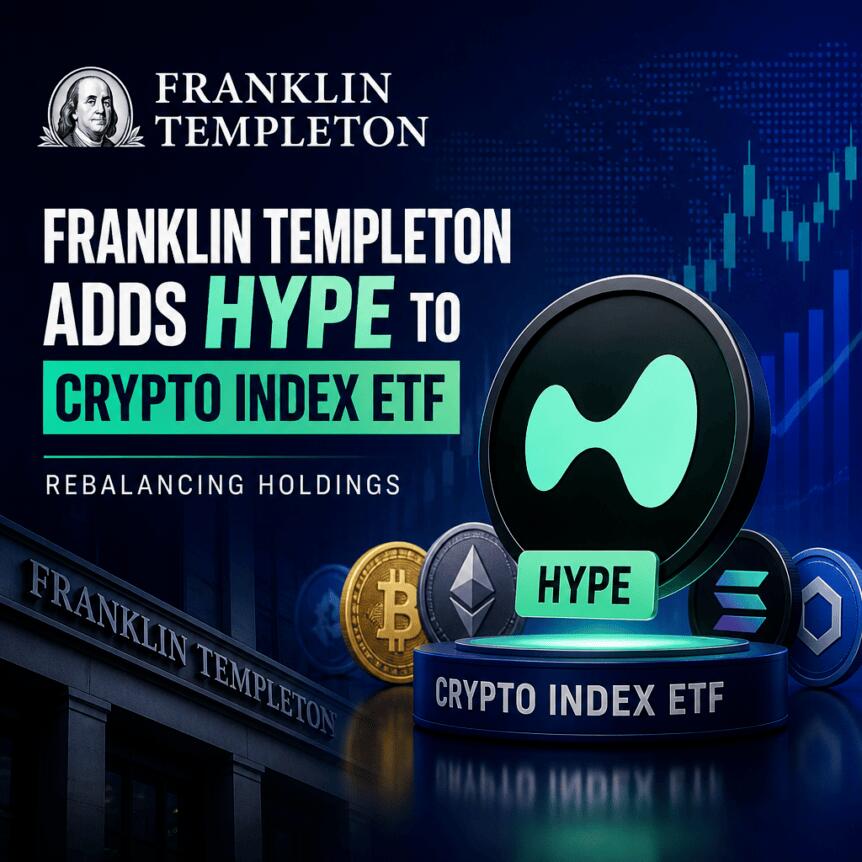
Franklin Templeton is preparing to broaden exposure to Hyperliquid’s ecosystem inside its crypto index exchange-traded fund (ETF). In a filing with the US Securities and Exchange Commission dated Nov. 25, the asset manager said it plans to add Hyperliquid’s native token, HYPE, to the Franklin Crypto Index ETF (trading under the ticker EZPZ).
The ETF is set to make the change on Dec. 1, contingent on HYPE’s inclusion in the fund’s benchmark. According to the filing, EZPZ currently holds Bitcoin (BTC), Ether (ETH), XRP, Solana (SOL), Dogecoin (DOGE), Cardano (ADA) and Lumen (XLM).
Key takeaways
- Franklin Templeton’s Franklin Crypto Index ETF (EZPZ) plans to add HYPE on Dec. 1, subject to its benchmark inclusion.
- The move is aimed at giving investors index-based exposure to Hyperliquid via traditional market infrastructure.
- Hyperliquid’s value locked has climbed to $7.3 billion from $4.13 billion earlier this year, according to DefiLlama.
- Separate US spot ETPs tracking HYPE have launched since May and collectively held about $266.5 million in assets as of Nov. 27, per Coinperps data.
Why an index ETF adding HYPE matters
In practical terms, index ETFs are designed to reduce some of the single-asset decision-making that comes with holding individual tokens. By adding HYPE to its crypto index ETF, Franklin Templeton is effectively steering incremental demand toward Hyperliquid through an allocation mechanism tied to the ETF’s benchmark.
The filing also underscores that this change is not merely a promotional decision—it is linked to how the underlying benchmark determines constituents. For investors, that can matter because it frames HYPE’s inclusion as part of a systematic approach rather than a one-off bet.
For traders and builders, the impact is more indirect but potentially meaningful: when a token becomes eligible for index-style products, it can become easier for mainstream portfolios to gain exposure without navigating on-chain custody or exchange interfaces. That can change the flow of capital—particularly from investors who prefer regulated wrappers.
Hyperliquid’s growth signals deeper ecosystem demand
Hyperliquid is a layer-1 blockchain best known for hosting a decentralized exchange centered on perpetual futures trading. Its on-chain footprint has expanded alongside that narrative. DefiLlama data cited in the source material shows total value locked rising to $7.3 billion from $4.13 billion in early January.
The protocol’s recent performance has also been tied to trading activity. The same DefiLlama figures indicate Hyperliquid generated $80.3 million in revenue over the past 30 days. That revenue is relevant because the network’s token economics connect trading to HYPE demand.
As described, HYPE is used to pay network fees and can be staked to earn rewards. Additionally, Hyperliquid allocates a portion of its trading fee revenue to buy back HYPE on the open market. That mechanism creates an explicit link between perpetual futures activity on the platform and potential sustained buying pressure for the token.
From on-chain perps to Wall Street products
Franklin Templeton’s planned addition comes during a broader period when HYPE exposure is increasingly available through regulated investment products. The source material notes that three US spot ETPs tracking HYPE launched since May, backed by asset managers including 21Shares, Bitwise and Grayscale.
Coinperps data cited in the article puts their combined assets under management at approximately $266.5 million as of Nov. 27. While those numbers reflect a smaller ecosystem than major tokens, they highlight that demand for HYPE exposure is already finding a foothold through traditional financial channels.
Even with those products, the on-chain reality remains that Hyperliquid’s core venue is decentralized perpetual futures trading. Perpetual futures are derivative contracts that let traders speculate on price movements without a fixed expiration date. While the exchange has been described as one of the largest decentralized perpetual futures venues, the source material also notes that its official interface remains restricted to US users.
Regulatory push continues to shape access
The question of US access has been a moving part in Hyperliquid’s story. In August, President Donald Trump said Commodity Futures Trading Commission (CFTC) Chair Michael Selig was working toward bringing Hyperliquid into the US in compliance with regulations. That comment, as referenced in the source material, points to the broader tension facing crypto derivatives platforms: major trading venues may want to expand US participation, but regulatory alignment can determine how and when that happens.
Against that backdrop, the ETF approach provides a different route to participation for US investors. Rather than relying on direct access to Hyperliquid’s trading interface, index and ETP structures can deliver exposure via securities-market mechanisms.
For readers tracking what happens next, the key watch items are the benchmark change process tied to Dec. 1 and whether Hyperliquid’s continued growth—particularly in TVL and trading-driven revenue—stays consistent enough to reinforce HYPE’s role in crypto index methodologies. Investors should also monitor any regulatory updates that affect how US market access evolves for the underlying platform.
This article was originally published as Franklin Templeton Adds HYPE to Crypto Index ETF, Rebalancing Holdings on Crypto Breaking News – your trusted source for crypto news, Bitcoin news, and blockchain updates.