Crypto in India can’t seem to catch a break. Recent developments have led to fresh uncertainty as the Reserve Bank of India (RBI) backed a policy banning cryptocurrencies, while the Income Ta
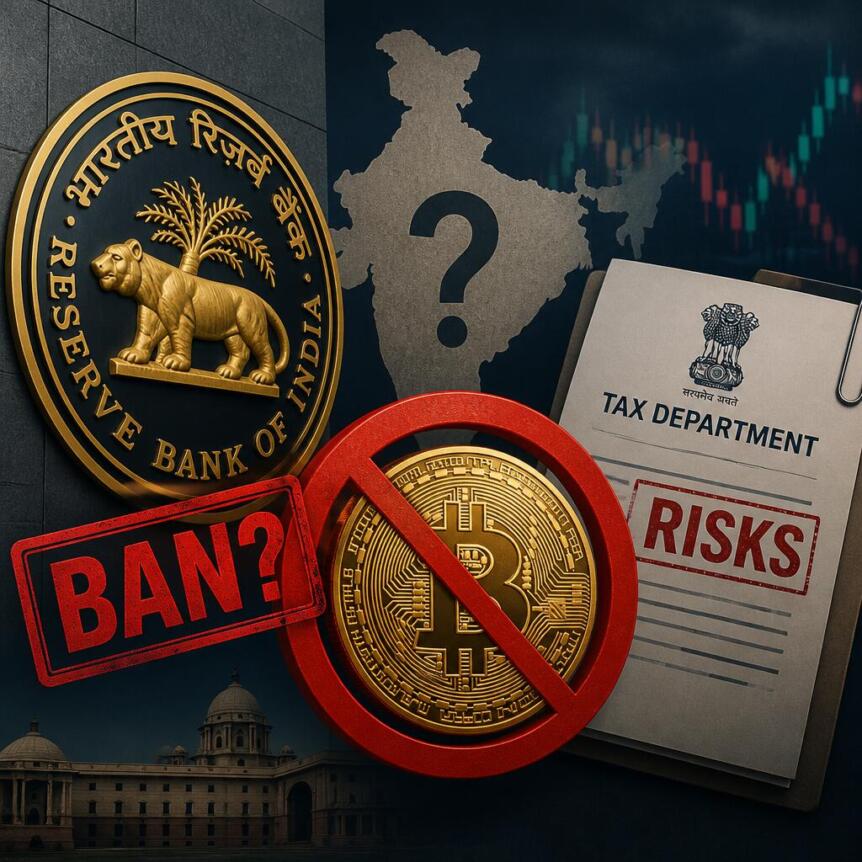
Crypto in India can’t seem to catch a break. Recent developments have led to fresh uncertainty as the Reserve Bank of India (RBI) backed a policy banning cryptocurrencies, while the Income Tax Department flagged compliance concerns.
Despite India’s ambiguous stance on cryptocurrencies, it remains one of the leading markets in grassroots adoption of crypto. The country has around 39 million users, holding just over $2 billion in assets.
RBI Pushes For Crypto Ban
India’s crypto policy could remain muddled for the foreseeable future after the RBI reiterated its support for a policy leaning toward banning cryptocurrencies. According to officials and documents accessed by Reuters, the central bank wants banks and other financial institutions barred from exposure to crypto and private stablecoins to limit risk to lenders and the broader financial system.
Cryptocurrencies have operated in a grey area since 2018, when an Indian court struck down policies that effectively banned crypto in the country. While Indian banks are allowed to engage with cryptocurrencies, the RBI has issued repeated statements warning lenders to stay away.
The RBI’s opposition extended to stablecoins as well, arguing that stablecoins backed by foreign fiat currencies are a risk to India’s sovereignty. It also argued against rupee-backed stablecoins, stating that such tokens could reduce government income and impact financial stability during difficult economic circumstances. The RBI also argued that stablecoins could make it difficult to tax cryptocurrency gains because holders won’t need to convert their holdings into fiat currency.
Tax Department Flags Concerns
India’s Income Tax Department has also raised concerns about the misreporting of crypto holdings in tax return disclosures. The department found that less than a quarter of the 645,000 individuals reported their cryptocurrency transactions on their tax returns during the financial year ending March 2023. Additionally, transactions completed using private wallets and overseas exchanges are significantly harder to trace and recover taxes. The department also stated that rupee-denominated peer-to-peer trades made it difficult to track taxable income.
A Regulatory Dead Zone
India’s crypto policy has been muddled for several years. The RBI had initially prevented banks from providing services to crypto businesses and exchanges operating in India, effectively banning the industry. However, a court struck down these provisions in 2018. Despite the court ruling allowing cryptocurrencies to operate, the government has been reluctant to introduce key regulatory oversight. As a result, cryptocurrencies have been operating in a grey area.
In 2021, the government prepared a draft bill to ban private cryptocurrencies. However, the bill was not introduced in parliament. A discussion paper around cryptocurrencies has also seen several delays. Publicly, the government has said that crypto policies must strike a balance between encouraging innovation, managing risk, ensuring financial stability, preserving monetary sovereignty, and safeguarding consumers.
What Is The Way Forward For Crypto in India
India’s Finance Ministry held internal discussions with the RBI in September, supporting limited clarity for virtual digital assets (VDAs) and arguing that existing tax rules could mitigate risks associated with cryptocurrencies. However, the latest documents reveal the government remains concerned about the risks posed by cryptocurrency trading without proper regulatory safeguards.
While the RBI remains steadfast in its opposition to crypto and advocates a strict policy, several government bodies, including the ICAI, have favored clear regulatory guidelines to establish a legal framework for cryptocurrencies. Additionally, the government taxes crypto transactions heavily, with each transaction subject to a 30% flat tax on capital gains and 1% Tax Deducted at Source (TDS).
Despite the uncertainty, India remains one of the largest cryptocurrency markets in the world. The government must hold comprehensive consultations with all stakeholders and create a clear regulatory framework to govern digital assets.
Disclaimer: This article is provided for informational purposes only. It is not offered or intended to be used as legal, tax, investment, financial, or other advice.
This article was originally published as Fresh Uncertainty For Crypto in India As RBI Pushes For Ban, Tax Department Flags Risks on Crypto Breaking News – your trusted source for crypto news, Bitcoin news, and blockchain updates.