Germany’s Sparkassen savings banks have launched a new feature that lets users at select institutions trade five leading cryptocurrencies without the hassle of a new brokerage account. Summar
Germany’s Sparkassen savings banks have launched a new feature that lets users at select institutions trade five leading cryptocurrencies without the hassle of a new brokerage account.
Summary
- Germany’s Sparkassen savings banks began offering cryptocurrency trading through their existing banking app on October 19, 2026.
- The service supports Bitcoin, Ethereum, XRP, Solana and Polygon, with a reported €0.99 order fee plus trading spreads.
- DekaBank provides trading and custody, while participating savings banks decide individually when to introduce the service.
- More than 230 institutions have reportedly expressed interest, with 30 to 40 additional banks expected to join each month.
- Customers retain exposure to cryptocurrency losses, and the assets do not qualify for Germany’s statutory bank deposit insurance.
According to DekaBank’s official product information, the service, called “Krypto, powered by Deka,” allows eligible customers to trade Bitcoin, Ethereum, XRP, Solana and Polygon directly within the Sparkasse app. The service launched on October 19, 2026, at select Sparkassen savings banks, with more institutions expected to join in phases.
Customers can access the service through the app’s investment section and open a dedicated cryptocurrency account with DekaBank. Trading is available to adult customers who make their own investment decisions, while the savings banks will not provide cryptocurrency investment advice.
The rollout follows an earlier decision by the German Savings Banks and Giro Association to permit its member institutions to offer cryptocurrency services. Each savings bank can decide independently whether and when to introduce trading for its customers.
You might also like: Sparkassen, the German bank that said ‘Nein’ to Bitcoin is now building a gateway
Sparkassen begins cryptocurrency trading with five tokens
The new service allows Sparkassen customers to purchase and sell five digital assets through a familiar banking interface.
Bitcoin and Ethereum are included alongside XRP, Solana and Polygon’s POL token. DekaBank’s product page identifies the assets individually and explains the main blockchain networks associated with each cryptocurrency.
Customers do not need to open a conventional securities brokerage account to begin trading. They must, however, open a separate cryptocurrency account with DekaBank inside the Sparkasse app before placing their first order.
The service operates through the investment section of the banking application, where users can view their cryptocurrency account and initiate purchases or sales. DekaBank provides a binding quoted price for a limited period, allowing customers to review the transaction before proceeding.
Unlike stock markets with fixed trading sessions, cryptocurrency markets operate throughout the week. DekaBank says its service can generally support trading outside ordinary exchange hours, provided the underlying systems remain available.
The bank warns that technical problems, maintenance periods and unusual market conditions can interrupt trading. Customers might therefore be unable to complete transactions at their preferred time or price.
The launch follows a change in the savings-bank group’s approach to cryptocurrency products. German savings banks previously avoided retail cryptocurrency trading because of concerns about market volatility and investor protection.
In June 2025, crypto.news reported Sparkassen’s earlier decision to prepare cryptocurrency services for retail customers through DekaBank. The October 2026 launch puts that decision into operation at the first participating institutions.
DekaBank charges €0.99 per order plus trading spreads
The reported order charge is €0.99 per transaction, but the fixed fee does not represent every possible cost of trading.
DekaBank provides customers with quoted purchase and sale prices, which can include a spread between the buying and selling rates. The effective cost of a transaction therefore depends on both the fixed order fee and the quoted price available when the customer trades.
For a hypothetical €50 purchase, the €0.99 fixed order charge alone represents 1.98% of the order amount. On a €500 transaction, the same charge represents 0.198%, before accounting for the trading spread.
The difference illustrates how the fixed fee can have a larger percentage impact on smaller purchases. The calculations use only the reported €0.99 charge and do not estimate the separate spread, which can change between transactions.
DekaBank says it offers a binding price for a limited period before each trade. Customers can review that quote inside the app, although a price that is available at one moment may no longer be available after the quoted period expires.
The service is intended for self-directed investors, and Sparkassen advisers will not recommend individual cryptocurrency purchases through the product. Customers must therefore decide which assets to buy, how much to invest and when to sell.
The bank’s risk information warns that cryptocurrency prices can change substantially within a short period. Market conditions may cause investors to lose their entire investment, including when transactions take place through a regulated banking institution.
Sparkassen’s traditional savings accounts, securities services and financial advice will remain separate from this cryptocurrency offering. The banks have said they do not intend to promote the new product aggressively during the initial rollout.
DekaBank handles crypto custody with transfer restrictions
Customers purchasing cryptocurrencies through the Sparkassen app will not control the private keys securing those assets.
DekaBank’s product documentation states that the institution holds the keys on customers’ behalf through a jointly managed omnibus wallet. An omnibus arrangement holds assets for multiple customers within a shared custody structure while the provider maintains the corresponding account records.
The bank says its cryptocurrency custody arrangements are centralized, with external infrastructure support involving Boerse Stuttgart Digital. Customers can view their positions through the Sparkasse app while DekaBank provides the custody service.
The arrangement differs from a self-custody wallet, where an investor independently manages the private keys needed to transfer digital assets. Sparkassen customers rely on the bank’s custody arrangements and its rules governing permitted transfers.
According to DekaBank’s documentation, cryptocurrency withdrawals are allowed only to wallet addresses belonging to certain approved crypto-asset service providers. Transfer to other wallet addresses are not included, thus customers are not able to liberally withdraw assets to any personal wallet address they choose.
The limitation is a crucial aspect of the new service. While buying a cryptocurrency using the app does give you some flexibility in transferring, it is not as flexible as that of a site that allows you to transfer as you please.
DekaBank is registered as a crypto-asset service provider under the European regulations and acts in accordance with the German financial regulations. The European Union’s Markets in Crypto-Assets Regulation (MiCAR) introduces new regulations for companies that offer services in the crypto-asset sector, including those that act as custodians and traders.
Regulatory oversight will not change the losses that can be suffered from fluctuations in the price of cryptocurrencies. DekaBank expressly disclaims that cryptocurrencies are covered by the statutory deposit insurance that applies to certain deposits in banks.
The institution detects risks related to the technology, market changes, and attacks on the blockchain infrastructure. While professional custody may limit some of the functions of customers, the assets are not in any way comparable to insured savings deposits.
Sparkassen plans to add 30 to 40 banks each month
The October 19 launch covers only a small part of the Sparkassen network.
Initial reporting identified five participating savings banks, including Frankfurter Sparkasse, Taunus Sparkasse, Sparkasse Karlsruhe, Sparkasse Rottal-Inn and Niederrheinische Sparkasse RheinLippe. More than 230 savings banks have reportedly expressed interest in offering the cryptocurrency product.
The network plans to add approximately 30 to 40 institutions each month as technical preparations and individual decisions are completed. Most institutions intending to participate are expected to introduce the service by the first half of 2027.
Participation is not compulsory. Customers whose savings bank has not yet activated the product may need to wait for their own institution to introduce it before they can open a Deka cryptocurrency account through the app.
Based on a reported network total of 339 savings banks, the five initial participants represent approximately 1.5% of institutions. The calculation measures institutional availability at launch, not the percentage of customers with access or the number who have completed cryptocurrency transactions.
Likewise, expressions of interest from more than 230 banks do not mean all those institutions currently offer the service. Their eventual participation will depend on individual rollout decisions and implementation schedules.
Germany’s savings banks are entering a market where traditional financial institutions have begun introducing regulated cryptocurrency services. The Sparkassen product provides trading access through an existing retail banking channel while relying on DekaBank for the specialized operational functions.
Germany ranks 13th in global cryptocurrency adoption
Germany placed 13th in Chainalysis’ 2026 Global Crypto Adoption Index, which examined cryptocurrency activity across 117 countries.
According to the blockchain analytics firm’s 2026 research, Germany ranked 12th for total cryptocurrency flows, fifth for balances, 15th for domestic peer-to-peer activity and 15th for cross-border flows. Its overall position reflects a combination of the four measures.
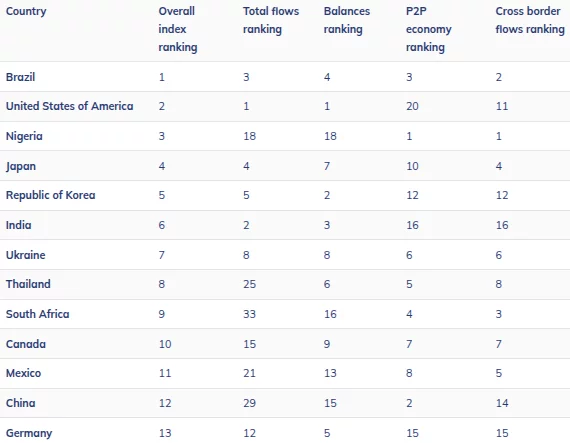
Top 20 countries by grassroots adoption, source: Chainalysis
The index covers activity between July 1, 2025 and June 30, 2026, predating the Sparkassen cryptocurrency launch. It therefore provides historical market context without measuring the impact of the new banking service.
Chainalysis uses transaction data, estimates of service activity and measures adjusted for economic conditions to compare national markets. The ranking does not represent the percentage of German residents who own cryptocurrency.
DekaBank’s published information separately addresses how cryptocurrency gains may be taxed in Germany. It identifies a €1,000 annual exemption threshold for applicable private disposal transactions under the rules described on its website.
The threshold is not a general tax-free allowance automatically available to every cryptocurrency transaction. Tax treatment can depend on holding periods, the type of transaction and an individual’s circumstances.
The bank advises customers that cryptocurrency tax requirements may change as laws and administrative interpretations develop. Its support service is available Monday through Thursday from 8 a.m. to 6 p.m. and Friday until 5 p.m., according to the customer information.
Read more: Scammers impersonate Tyler Hobbs in fake QQL NFT mint scheme