The gold price crash has revived Peter Schiff’s comparison with 2008, when bullion fell amid market stress before recovering as the Federal Reserve eased policy. Gold closed near $3,538 an ou
The gold price crash has revived Peter Schiff’s comparison with 2008, when bullion fell amid market stress before recovering as the Federal Reserve eased policy. Gold closed near $3,538 an ounce on November 20 after a steep weekly decline. Schiff says the selloff could precede another financial crisis and a later rally.
Why it matters
The 2008 comparison is a historical pattern, not proof prices will repeat it. Gold is more than a third below its January 2026 record. Interest-rate expectations and market stress are among the factors in the reporting, but they don’t establish whether Schiff’s bullish case will play out.
What we know
Gold price crash draws a 2008 comparison
BeInCrypto reported that gold lost 8.9% over the week to close near $3,538 an ounce, a level last seen in September 2025. It said gold was more than a third below its January record above $5,600. The Economic Times put the January 29 record at $5,595 and reported a 2.41% drop on November 20, with gold losing about $200 over two trading days. The outlets describe different weekly and daily moves.
Schiff, an economist and longtime gold advocate who runs precious-metals dealer SchiffGold, made the comparison on his weekly podcast. BeInCrypto summarized his view that gold began sliding months before the 2008 financial crisis intensified, then fell further as investors raised cash. The Economic Times also reported his November 21 post on X, where he said stocks could ultimately fall further and gold could later set new records. That’s his forecast, not an established outcome.
Historical estimates vary by source. BeInCrypto, citing TradingView chart data, said gold rose from about $681 to roughly $1,921 by September 2011, a gain of 183%. State Street Investment Management’s November 2026 gold monitor describes a roughly 29% crisis-era fall followed by a 167% rise through September 2011. The Economic Times reported a decline of about 30% and a gain of about 166% from the 2008 low to the 2011 peak. The estimates show a similar pattern, but aren’t identical.
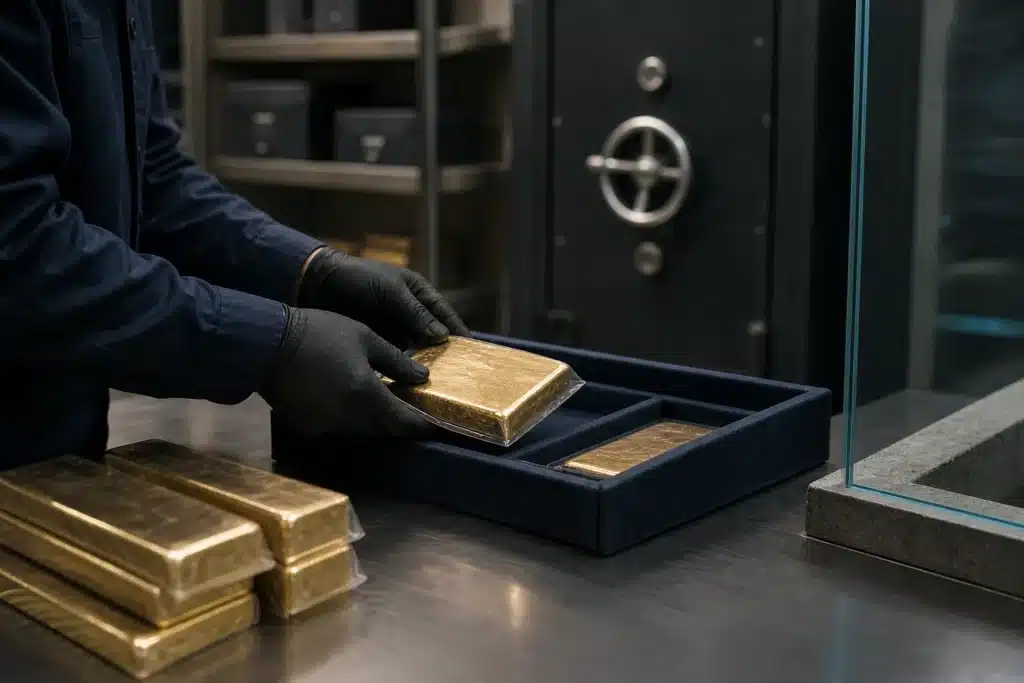
Schiff attributes some selling to traders facing margin calls on gold futures.
Schiff attributes recent selling partly to traders facing margin calls on borrowed gold futures positions. BeInCrypto explained that margin calls demand extra cash and can push traders to sell. Schiff also argues central-bank buyers are waiting for the selloff to pass. BeInCrypto noted that he promoted his precious-metals business during the podcast, relevant context for assessing his outlook.
What is still unclear
It’s unclear whether the decline reflects investors raising cash amid market stress, as State Street described in 2008, or expectations that rates will stay higher. BeInCrypto said traders were positioning for another Federal Reserve rate increase on December 9. Schiff expects a shift away from rate hikes to help gold, but the timing of any policy change is uncertain.
According to BeInCrypto, gold recovered after the 2008 crisis as the Fed cut rates to near zero and bought bonds with newly created money. State Street’s monitor says investors sold gold during the crisis to raise cash. These details support parts of Schiff’s comparison, but don’t show that today’s selling has the same cause or that a similar policy response is imminent.
The supplied reporting doesn’t confirm that central banks are waiting to buy or establish how much futures margin calls account for in the decline. Those are Schiff’s explanations. The December 9 policy decision and incoming market conditions are points to watch, but the sources don’t establish what the Fed will decide.

The timing of a Federal Reserve policy shift remains uncertain.
How markets and analysts reacted
The gold price crash came alongside sharp weekly losses in other precious metals, according to Schiff’s show. The November 21 episode of The Peter Schiff Show put gold’s weekly decline at 9.1% and silver’s at 16.3%, compared with BeInCrypto’s 8.9% gold figure. The reports may use different measurement windows, so the numbers may not cover the same close-to-close period.
The Economic Times reported that SPY rose 1.11%, QQQ gained 1.53% and DIA advanced 0.94% in Friday after-hours trading. That snapshot doesn’t settle Schiff’s warning about a broader equity decline. Goldman Sachs economists, as reported by BeInCrypto, expect rate increases in December and March 2027 and see gold reclaiming $5,600 only in 2028. That’s a slower path than Schiff’s expected Fed pivot.
Crypto markets offer a separate snapshot. CoinGecko data at 18:13 UTC on November 22 showed bitcoin at $60,627, up 0.97% over 24 hours but down 6.06% over seven days. Ether was $1,712.50, up 1.93% in 24 hours and down 5.57% over seven days. Alternative.me’s Crypto Fear & Greed Index was 11, classified as Extreme Fear, on November 22. These readings describe crypto markets, not the cause of gold’s decline.
For historical context, State Street’s November gold monitor documents the crisis-era decline and subsequent recovery. BeInCrypto’s account of Schiff’s comments is in its report on the 2008 comparison.

The next Federal Reserve decision is a point for markets to watch.
What it means for investors
How to read the gold price crash
The gold price crash shows bullion fell sharply during a period Schiff compares with 2008. State Street says the earlier crisis-era decline happened while investors raised cash amid market stress. That episode is a historical example, not a reliable template for future prices.
Schiff’s argument depends on worsening market stress, eventual central-bank easing and a recovery in gold demand. Goldman Sachs’ reported forecast instead points to more rate increases. Neither outlook rules out further price declines, volatility in bullion funds and mining shares, or losses for people holding leveraged futures. BeInCrypto reported that bullion owners, gold funds and mining stocks have taken losses during the current decline.
Crypto and gold have distinct market data in the supplied reporting. Bitcoin and ether’s changes over the stated periods don’t establish a direct relationship with bullion. Past rallies don’t show that gold, mining shares or digital assets will recover on a particular schedule.
Bottom line
Gold’s steep decline resembles one part of the 2008 pattern, when the metal fell amid market stress before recovering. Schiff’s call depends on a future crisis and Fed policy shift that haven’t been confirmed, while Goldman Sachs expects rate hikes to continue into 2027. The December 9 Fed decision is a near-term point to watch, not a reliable indicator of gold’s next move.
Related Articles
Sources
This article is for informational purposes only and does not constitute financial or investment advice. Cryptocurrencies are highly volatile; always do your own research before investing.
Read More:Gold Price Crash: Why Schiff Sees a 2008 Repeat">Gold Price Crash: Why Schiff Sees a 2008 Repeat