Goldman Sachs, Bank of America and 19 other financial institutions have committed to a joint U.S. dollar stablecoin launch targeted for the first half of 2027, marking the most concentrated p
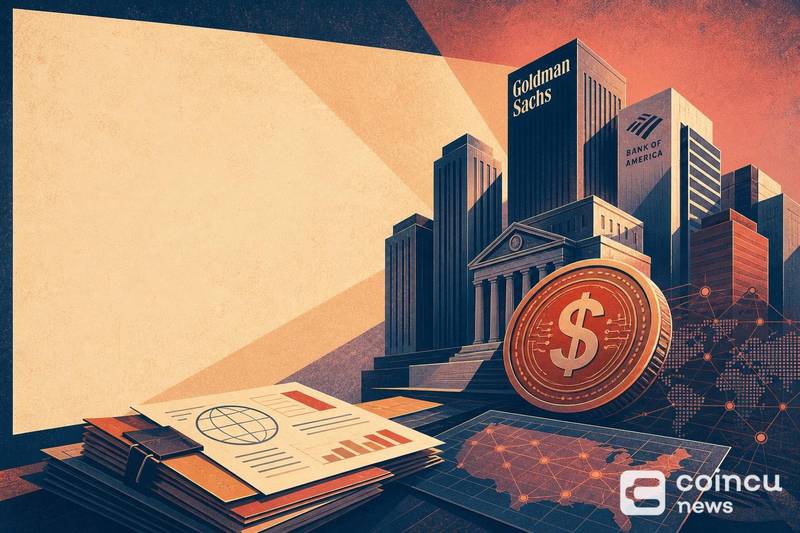
Goldman Sachs, Bank of America and 19 other financial institutions have committed to a joint U.S. dollar stablecoin launch targeted for the first half of 2027, marking the most concentrated push yet by global systemic banks into tokenized dollars and setting up a direct challenge to incumbent issuers as the GENIUS Act reshapes U.S. stablecoin rules.
What the 21-bank consortium actually committed to
The group of 21 financial institutions said on September 1, 2026 that it had agreed to establish a new company in the second half of 2026, subject to closing conditions, to build and operate a shared stablecoin platform, according to the consortium's statement. The venture's first product is a U.S. dollar-denominated stablecoin, with the solution targeted to reach market in the first half of 2027. For related coverage, see Goldman Sachs NEOS Buyout Signals Bitcoin Income ETF Push.
The roster spans five regions and includes Bank of America, Goldman Sachs, Wells Fargo, Citi, Capital One, Fidelity Investments, UBS, Deutsche Bank, Santander, BBVA, MUFG Bank and Standard Bank, among others. The breadth of the backing, rather than any single name, is the signal here: this is a settlement-layer coalition, not a marketing exercise. For related coverage, see Arbitrum DAO Revenue Reaches $6.19M in H1; Robinhood Chain Adds $360K.
Consortium members
21 The consortium said 21 institutions have committed to the new stablecoin enterprise, underscoring the breadth of bank backing behind the planned launch.
Longer term, the consortium plans to add stablecoins in other G7 currencies and has prioritized a euro product, positioning the dollar token as the first of a multi-currency suite rather than a standalone play.
Why 21 banks are building together instead of alone
A consortium model spreads the fixed costs of compliance, reserve custody and settlement infrastructure across balance sheets that already clear the bulk of institutional dollar flows, which matters more for a payments instrument than brand differentiation. For the banks named here, several of which have moved on crypto piecemeal, shared rails lower the marginal cost of entry.
The strategic logic tracks a wider TradFi pivot. Goldman Sachs has been building crypto exposure through vehicles like its move into Bitcoin income ETFs via the Neos buyout and a broader $2.25 billion acquisition adding Bitcoin and Ether income ETFs, even as it exited XRP and Solana ETF positions while keeping over $700 million in Bitcoin ETFs in the first quarter. A jointly issued dollar stablecoin extends that posture from asset management into the payment layer itself.
The single-issuer alternative concentrates counterparty and reserve risk in one institution; a consortium distributes it, which is a meaningful difference for corporate treasurers and regulators evaluating a settlement token. That governance argument, more than distribution reach, is why the joint structure carries weight.
What the H1 2027 timeline hinges on
The announcement describes a future launch window, not a live product, and the intervening company formation in the second half of 2026 is explicitly conditional on closing conditions. Three dependency tracks will determine whether the first-half 2027 target holds.
Regulatory alignment
The initiative intends to be compliant with the U.S. GENIUS Act and the EU's MiCA regime, as applicable, per the consortium statement. Structuring a dollar token to satisfy GENIUS reserve, redemption and disclosure standards is the gating item, and the political tailwind behind U.S. crypto policy, visible in vehicles like Fairshake's $122 million war chest for the general election, does not remove the need for issuer-level approvals.
Technical and interoperability build-out
A multi-bank issuer requires shared ledger infrastructure, mint-and-burn controls and interoperability across the participants' existing systems before any token goes live. That engineering, not the announcement, is the long pole in an 18-month runway.
Governance and reserves
Reserve management, redemption mechanics and rollout sequencing across 21 institutions and five regions demand a governance framework that does not yet publicly exist. The new company being formed in the second half of 2026 is the vehicle meant to resolve exactly those questions.
How a bank-issued dollar token reshapes the stablecoin map
Stablecoin circulation stood at roughly $309.6 billion in total, led by Tether's USDT at about $183.4 billion at research time, a market still dominated by two crypto-native issuers. A regulated, bank-owned dollar token aimed at institutional settlement would compete on a different axis than exchange liquidity, targeting cross-border transfers and on-chain settlement for clients the incumbents reach only indirectly.
The relevant benchmark for a new dollar entrant is USDC, the largest regulated incumbent and the closest analog to what the consortium plans to issue.
USDC market cap
$73.76B USDC's roughly $73.76 billion market cap shows the scale of the incumbent benchmark in the dollar stablecoin market the bank consortium aims to enter.
For institutional adoption narratives, 21 systemic banks endorsing tokenized dollars is a stronger validation signal than any exchange listing, because it embeds stablecoins into the plumbing of regulated finance rather than the periphery. Whether that translates into displaced USDT and USDC share depends on distribution, not intent.
Sentiment is constructive but not euphoric, with the Fear & Greed Index reading 63 in Greed territory at research time, a backdrop that favors institutional risk-taking without signaling froth.
The euro race is already ahead
The consortium is not first to the regulated-bank-stablecoin model. Rival Qivalis said on May 20, 2026 that its euro stablecoin consortium had grown to 37 financial institutions across 15 European countries, still targeting a launch in the second half of 2026 and pursuing De Nederlandsche Bank authorisation as an electronic money institution. That puts a European bank coalition roughly two to three quarters ahead of the dollar group's timeline.
The prioritized euro leg of the U.S.-led consortium therefore lands into a market where a regulated competitor may already be live, sharpening the case for the dollar-first sequencing.
What is confirmed, what is conditional
Confirmed: the participant list, the U.S. dollar first product, the GENIUS Act and MiCA compliance intent, and the H1 2027 market target. Conditional: the company formation in the second half of 2026 remains subject to closing conditions, and no reserve model, ticker, chain or regulatory approval has been disclosed.
What to watch next
The first concrete milestone is the second-half 2026 company formation; its completion, or slippage, is the earliest read on whether the first-half 2027 launch is realistic. Beyond that, watch for a named issuing entity, a chosen settlement chain, and the first GENIUS Act issuer application tied to the venture, alongside whether Qivalis ships its euro token on schedule and pressures the consortium's currency roadmap.
FAQ about the Goldman Sachs and Bank of America stablecoin plan
Which institutions are mentioned in the headline?
Goldman Sachs and Bank of America are named alongside 19 other financial institutions, for a total of 21 participants that include Wells Fargo, Citi, Capital One, Fidelity Investments, UBS, Deutsche Bank, Santander, BBVA, MUFG Bank and Standard Bank.
When is the stablecoin expected to launch?
The consortium targets a market launch in the first half of 2027, preceded by the formation of a new operating company in the second half of 2026, subject to closing conditions.
Is the stablecoin tied to the U.S. dollar?
Yes. The initial product is a U.S. dollar-denominated stablecoin, with longer-term plans to add other G7 currency stablecoins and a prioritized euro product.
Why is this important for the broader market?
It represents the most concentrated commitment yet by global systemic banks to issue tokenized dollars under GENIUS Act and MiCA frameworks, positioning a regulated bank coalition against crypto-native incumbents that currently dominate the roughly $309.6 billion stablecoin market.
Disclaimer: This article is for informational purposes only and does not constitute financial or investment advice. Cryptocurrency and digital asset markets carry significant risk. Always do your own research before making decisions.
The post Goldman Sachs, Bank of America and 19 Others Plan U.S. Dollar Stablecoin Launch in H1 2027 was initially published on Coincu.