The platform's new Instant Funds feature turns NFT-based Bitcoin miners into loan collateral, a move that puts GoMining alongside a small but growing group of crypto platforms testing borrow-
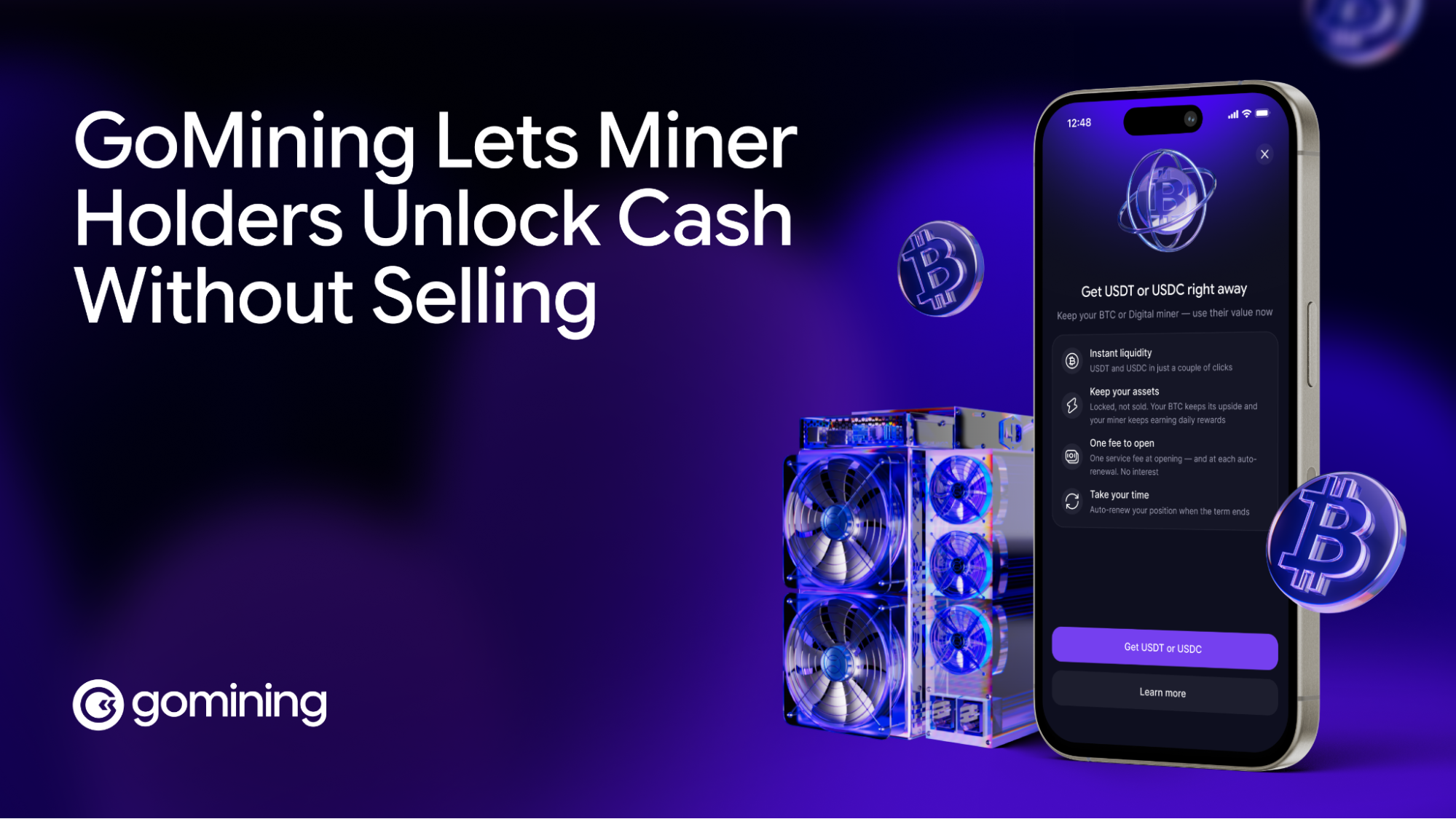
The platform's new Instant Funds feature turns NFT-based Bitcoin miners into loan collateral, a move that puts GoMining alongside a small but growing group of crypto platforms testing borrow-against-your-assets models.
GoMining has rolled out Instant Funds to its full user base in supported markets, after testing the feature in a closed mode first. The pitch is straightforward: put up an eligible digital miner as collateral, get USDT or USDC, and keep collecting Bitcoin mining rewards the whole time. No need to liquidate anything.
How the Borrowing Actually Works
Here's where it gets specific. Positions run for 30 days at 0% APR, and they renew automatically. That's mandatory, not optional. Each time a position opens or renews, GoMining charges an origination fee somewhere between 1.5% and 2.5%, depending on the user's VIP tier.
Borrowing power tops out at 30% of a miner's collateral value. The minimum draw is just $5, which is low enough to make this feel more like a convenience tool than a serious leverage play. Per-user borrowing caps at $10,000 total, though there's no cap on how many separate positions someone can open to get there.
As long as a position stays healthy, meaning it's below the 60% loan-to-value threshold, the underlying miner keeps mining Bitcoin and those rewards flow to the holder as usual. Cross that 60% line, though, and things change fast. The position enters a seven-day buyback window, and any mining rewards earned from that point forward, through buyback and into a potential auction, are gone. Not returned. That's a meaningful detail for anyone treating this as free money.
Who Actually Qualifies
Not every miner in someone's wallet gets in. GoMining set the initial bar at 12 watts per terahash or better in energy efficiency, meaning older or less efficient miners are excluded for now. The miner also has to sit in the user's platform wallet unlisted, so anything up for sale on GoMining's secondary marketplace is disqualified. Same goes for miners tied to an active Mine Now, Pay Later plan or one with an overdue auto-upgrade subscription.
GoMining says it intends to loosen that efficiency threshold over time, which would bring more miners into eligibility. For now, this is described as just the first phase.
Access also requires KYC Level 1 verification. Users based in the European Economic Area who've completed that verification can pull funds specifically in USDC.
What This Says About Where Crypto Lending Is Headed
Borrowing against crypto holdings isn't new, but doing it against tokenized mining hardware, while that hardware keeps producing income, is a narrower niche. GoMining says it operates real mining infrastructure across the U.S. and internationally and serves more than 5.5 million users, positioning itself among the top 10 Bitcoin mining operations globally by hashrate. Those are the company's own figures, and they haven't been independently verified.
The bigger question is what happens at the edges: how often positions actually hit that 60% liquidation mark, and how many users end up forfeiting mining rewards they didn't expect to lose. GoMining hasn't published data on either, and the feature is too new for outside numbers to exist yet.
Instant Funds is live now inside the GoMining app for eligible users in supported markets. Whether the company follows through on loosening eligibility standards will likely shape how much this feature actually gets used beyond its early adopters.