Imagine waiting days for a simple stock trade to settle. We can stream 4K movies from space, but moving ownership of a financial asset still requires a small army of intermediaries and a frus
Imagine waiting days for a simple stock trade to settle. We can stream 4K movies from space, but moving ownership of a financial asset still requires a small army of intermediaries and a frustrating amount of patience.
That might finally be changing.
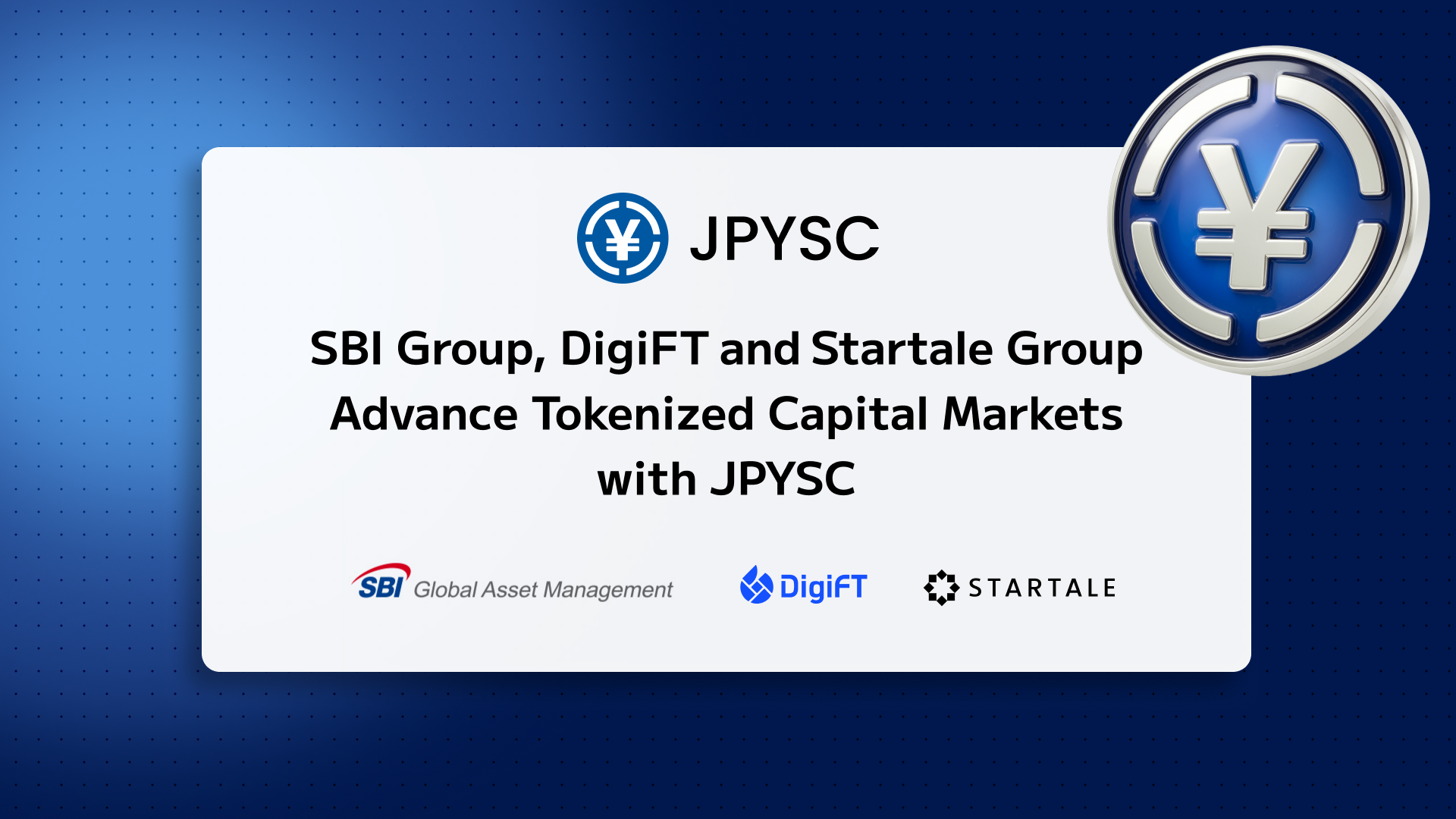
SBI Group, DigiFT, and Startale just pulled off a fascinating technical trial. They set out to see exactly what happens when you fuse tokenized securities with a Japanese yen-backed stablecoin. The result is a highly practical glimpse into a financial system that actually moves at the speed of the internet.
The Missing Piece in Tokenization
Right now, the hype around tokenizing "real-world assets" is deafening. But there is a glaring missing piece. You can put a mutual fund or a bond on a blockchain. However, if the cash paying for it, along with the dividends flowing out of it, still rely on legacy banking plumbing, you are essentially driving a sports car in a traffic jam. The asset is digital, but the money is stuck in the analog mud.
This new pilot tackles that exact bottleneck.
The team ran their tests on the Ethereum testnet. Because they were experimenting, they used a dedicated stand-in token designed to mimic JPYSC, which is Japan's heavily regulated, trust-based yen stablecoin. The companies made sure to clarify that this test token was built purely for technical verification and remains completely separate from the actual, regulated JPYSC circulating in Japan.
They split the experiment into two clear, highly focused demonstrations.
First, the buy-in. The team simulated investors purchasing subscriptions to a tokenized Japanese equity fund. In the traditional finance world, this triggers a multi-day waiting period. In this test, settlement happened almost instantly. The blockchain swapped the tokenized fund shares and the yen stablecoin simultaneously.
No clearinghouses. No agonizing counterparty risk. Just code executing a flawless trade.
Reprogramming the Dividend
Then came the really interesting part: corporate actions.
Anyone who holds dividend-paying stocks knows the drill. The company declares a payout. The cash slowly trickles through a labyrinth of custodians, transfer agents, and retail brokers. Eventually, a few days or weeks later, the money quietly lands in your account.
The SBI and DigiFT trial flipped this entirely.
They used smart contracts to fully automate the distribution process. Once the system locked in the finalized list of eligible token holders and their payout amounts, the on-chain infrastructure blasted the stablecoin dividends directly to investor wallets. No human intervention required.
Why a ¥200 Billion Fund Matters
This is not just sandbox play for developers. It is laying the actual groundwork for something massive.
SBI Group and DigiFT are actively working to tokenize the SBI Japan High Dividend Equity Fund. To put that in perspective, this specific fund manages over ¥200 billion in assets. Tokenizing an asset pool of that size requires bulletproof infrastructure.
If this model reaches the commercial market, the implications for everyday investors and massive institutions are profound. It is about capital efficiency. Because the dividend arrives as a digital stablecoin on a blockchain, it never sits idle. You could reinvest it the exact second it hits your wallet. You could transfer it across borders instantly. The cash flow becomes strictly programmable.
Unlike a lot of recent tokenization projects that just slap a digital wrapper on a traditional asset and call it a day, this collaboration is building an end-to-end operating model. DigiFT is supplying the regulated tokenization platform. SBI Asset Management is driving the underlying investment strategy. Startale is acting as the technical engine, bringing deep expertise on blockchain infrastructure and the mechanics of the JPYSC stablecoin.
Bridging the Gap to DeFi
The executives behind this trial were candid. They made it clear this was a technical dress rehearsal to validate the underlying tech for future production, not a live commercial launch.
But they aren't stopping at basic settlements.
They are already looking ahead to linking these tokenized Japanese equities with heavyweight institutional decentralized finance (DeFi) platforms. The group specifically highlighted active explorations with ecosystem partners like Morpho and Gauntlet.
Think about the mechanics of that for a second. In the near future, an investor could hold a tokenized traditional equity fund, earn dividends instantly via yen stablecoins, and simultaneously use that same tokenized fund as collateral to secure a loan in a decentralized lending market.
The plumbing of global finance is quietly getting a total overhaul. And this time, it is being built to run completely on-chain.