Google has launched Gemini 4 Argon, the first model in its Gemini 4 generation, with access initially limited to trusted cybersecurity defenders and Google’s internal teams. The company annou
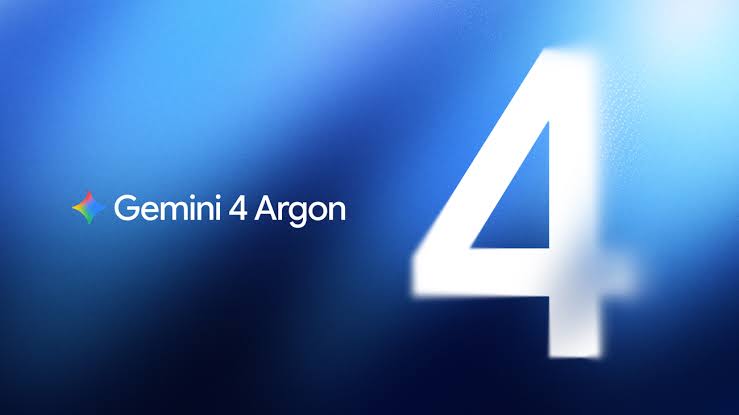
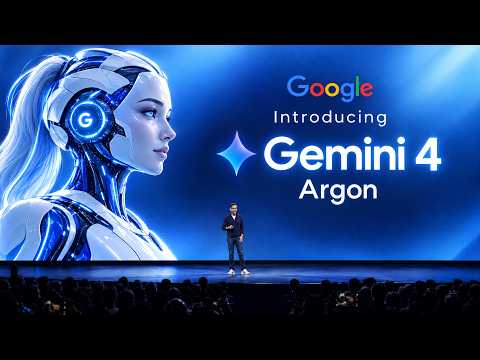
Google has launched Gemini 4 Argon, the first model in its Gemini 4 generation, with access initially limited to trusted cybersecurity defenders and Google’s internal teams.
The company announced Argon on Sept 30 through its Fairwind Programme, which gives selected governments and trusted partners access to Google’s advanced cybersecurity models.
Google says Argon can autonomously find, validate and patch critical software vulnerabilities. The company is initially withholding wider access while it continues testing the model and refining its safeguards.
Paid application programming interface (API) customers and Google AI Ultra subscribers will get access later, although Google has not announced a specific date for the wider rollout.
How Google says Argon compares
Google says Argon scored 77.9% on DeepSWE v1.1, a benchmark for software engineering tasks. The company reports 74.2% for Anthropic’s Claude Opus 5.5 and 74.1% for OpenAI’s GPT-6 Astra on the same test.
On CWE-bench v1, which evaluates how well AI models identify and fix software vulnerabilities, Google reports that Argon scored 68%, tying GPT-6 Astra.
The benchmark results come from Google’s own evaluations, so they do not independently establish how Argon performs across real-world workloads.
Read also: Google’s new Gemini features make Gmail, Docs and Keep easier to use with your voice: What you need to know
Argon can also generate up to 1 million tokens in a single response, compared with a 64,000-token output limit on previous models.
Tokens are the basic units of text processed and generated by AI models. The larger output limit is designed to allow Argon to handle longer software engineering and other complex tasks without repeatedly being prompted to continue.
What Google is already using Argon for
Google says Argon is already being used internally by thousands of employees for coding, research and other specialised tasks.
One of its reported uses is migrating C and C++ codebases to Rust. Google says Argon agents are working on codebases ranging from tens of thousands of lines to more than 800,000 lines in the Zircon kernel of its Fuchsia operating system.
The company says the larger code migrations are undergoing automated and manual audits, emulation testing and review before being deployed to production.
Google has also used Argon agents to analyse data-centre performance data and identify memory optimisations.
The company says the changes are expected to free more than 300 tebibytes of memory once fully rolled out, with total savings estimated at between 500 tebibytes and 1 pebibyte.
Google’s quantum computing researchers are also using Argon to optimise algorithms. In one example, the company said Argon beat a published baseline for a quantum computing task by 40% in a matter of minutes.
Why Google is restricting access
Argon’s cybersecurity capabilities are a major reason for the phased rollout. Google says the model can identify and fix vulnerabilities with limited human intervention, creating both defensive and potential security risks as such capabilities become more widely available.
The company is therefore making the model available first to trusted cyber defenders through Fairwind while it gathers feedback and continues developing safeguards.
Google said Argon will eventually be made available to developers, enterprises and consumers as it expands access.
How much will Argon cost?
Google will launch Argon at an introductory price of $2 per million input tokens and $10 per million output tokens.
After the introductory period, the price will increase to $4 per million input tokens and $20 per million output tokens. Cached input tokens will receive a 95% discount on the input-token price.
The launch comes as Google competes with OpenAI and Anthropic in the development of increasingly capable AI models for coding, cybersecurity, research and enterprise work.
For now, however, Google’s own benchmarks are the main publicly available performance measurements for Argon, while wider access will allow independent users and researchers to test the model across more workloads.