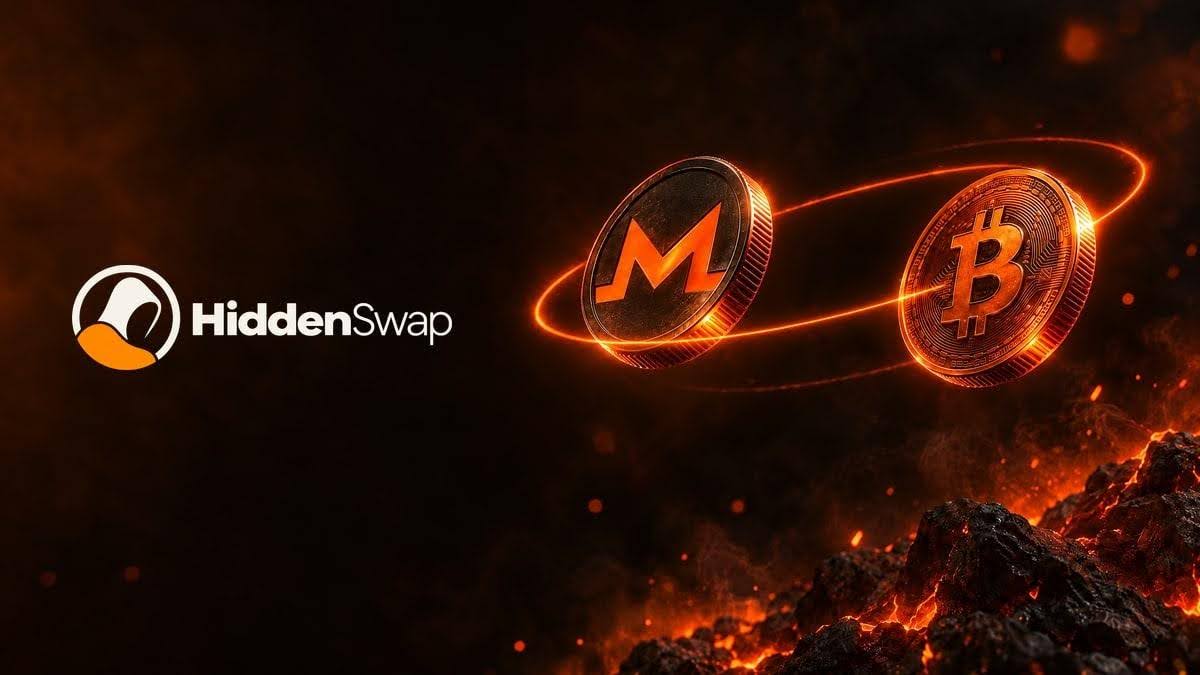
HiddenSwap offers no KYC crypto swaps through its website at hiddenswap.com. A user picks two coins, sends a deposit and receives the new coins at an address of their choice. There is no sign
HiddenSwap offers no KYC crypto swaps through its website at hiddenswap.com. A user picks two coins, sends a deposit and receives the new coins at an address of their choice. There is no sign-up form and no profile to fill in.
The service covers more than 1,000 coins and networks. It is built for people who already have crypto and want to move from one coin to another without opening an account on a trading platform.
Key points
- HiddenSwap swaps one cryptocurrency for another without a sign-up, an email address or an ID document.
- An order needs the two coins, the amount and a receiving address. A refund address is optional.
- Senders choose between a floating rate and a fixed rate before they pay.
- A swap record stores neither a name nor an IP address, and it is kept for 90 days.
- The swap form keeps working when JavaScript is turned off.
What HiddenSwap offers
HiddenSwap (hiddenswap.com) is a no KYC crypto exchange for crypto-to-crypto swaps: no account, no email and no ID are needed to swap. The service converts one coin into another and sends the result to the address the user gives.
Every swap gets its own order ID. Support can find any swap with that ID alone, so there is no login to remember and no password to protect.
The list includes Monero (XMR), Bitcoin (BTC), Ethereum (ETH), Solana (SOL), Litecoin (LTC) and Zcash (ZEC). Tether (USDT) is available on Tron and on Ethereum as two separate options. Users pick the version that matches the network their wallet uses.
How no KYC crypto swaps work in three steps
Step one is the order form. The user selects the coin to send and the coin to receive, together with the network for each. They type the amount and paste the receiving address for the new coins. A few coins also need a memo or a tag.
Step two is the deposit. Once the order is created, its page shows a deposit address made only for that order. The user sends the exact amount to it, in one transaction, on the network the page names. The address belongs to that order only, so it should not be saved for later swaps.
Step three is the payout. When the network confirms the deposit, the coins are swapped and the new coins go out to the receiving address. A refund address is optional, but it gives the coins a place to return to if a swap cannot finish.
Each stage appears on the order page as it happens: deposit received, confirmations, swap and payout. Users can close the page and return to it later with the order ID.
Fixed or floating: two ways to price a swap
Each order runs on a fixed or floating rate, chosen before the deposit is sent. The floating option sets the rate at the moment the network confirms the deposit. The final amount can therefore move with the market until then.
The fixed option keeps the quoted rate on one condition. The exact amount must arrive in a single transaction before the countdown on the order reaches zero. If prices shift by 3% or more before the deposit arrives, the sender can be offered the new rate or a refund. A fixed rate is not available for every pair at every moment.
The estimate shown before sending already includes the service fee, the spread and the fee for sending out the new coins. Apart from that, the sending wallet pays its own network fee, as with any transfer. Live rates and minimums change, so the swap form is the place to check them.
What the service keeps, and what it does not
A swap record contains the order ID, the coins, the amounts, the addresses and the transaction hashes. It contains no name and no IP address. After 90 days the record is deleted, apart from a few cases named in the Privacy Policy.
The site works in Tor Browser. Its swap form also works with JavaScript turned off, which matters for people who use the strictest security level in their browser.
Privacy on the chain depends on the coin that moves. A Bitcoin payment stays visible on the Bitcoin blockchain. For the strongest privacy, users can choose to receive Monero, which keeps amounts, senders and receivers out of public view by default.
What HiddenSwap is not
HiddenSwap is not a wallet. It keeps no balances between swaps, and it will never request your seed phrase or private keys. A message that asks for those in its name does not come from the service.
It is also crypto to crypto only. A user needs coins in a wallet before the first swap, because the service takes no other form of payment.
The model suits people who want to swap without an account and keep their coins in wallets they control. Traders who want charts, order books or leverage will need a different kind of platform.
Users should also know where to find the real service. Its official website is hiddenswap.com, and it does not contact users first by email or chat. Anyone who writes first and asks for coins or keys is not HiddenSwap.
Frequently asked questions
Does a swap need an account or an email?
No. An order needs the coins, the amount and a receiving address. The order ID is what the user keeps to track the swap and to reach support.
Which coins can be swapped?
More than 1,000 coins and networks are listed. They include Monero, Bitcoin, Ethereum, Litecoin, Solana, Zcash and Tether on both Tron and Ethereum.
What happens if a swap cannot finish?
The coins are returned to the refund address, if the user added one. Without one, they go back to the sending address where the network shows it. Network fees come out of the refund.
Full details on rates, fees and refunds are on the HiddenSwap website.
The post HiddenSwap Offers No KYC Crypto Swaps With No Account appeared first on ETHNews.