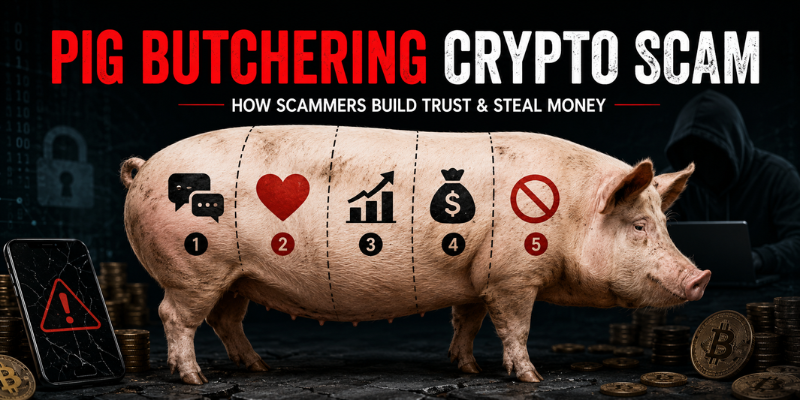
The crypto industry has created countless opportunities for investors, traders, and technology enthusiasts. However, as the popularity of cryptocurrency continues to grow, online scams are al
The crypto industry has created countless opportunities for investors, traders, and technology enthusiasts. However, as the popularity of cryptocurrency continues to grow, online scams are also becoming more sophisticated. Among all modern crypto frauds, pig-butchering scams have emerged as one of the most dangerous and financially destructive schemes in recent years.
Unlike traditional crypto scams that rely on quick tricks or fake giveaway links, pig-butchering scams are based on long-term psychological manipulation. Scammers carefully build trust with victims over weeks or even months before convincing them to invest money into fake crypto platforms. By the time victims realize the truth, they often lose their entire savings.
What makes these scams especially alarming is that victims are not only beginners. Experienced traders, educated professionals, business owners, and even financially aware individuals have become targets. These scams succeed because they exploit human emotions such as trust, loneliness, greed, hope, and fear.
As crypto adoption increases globally, understanding how pig-butchering scams work has become essential for every crypto user. Learning the warning signs and protection methods can help prevent devastating financial losses.
What Is a Pig-Butchering Crypto Scam?
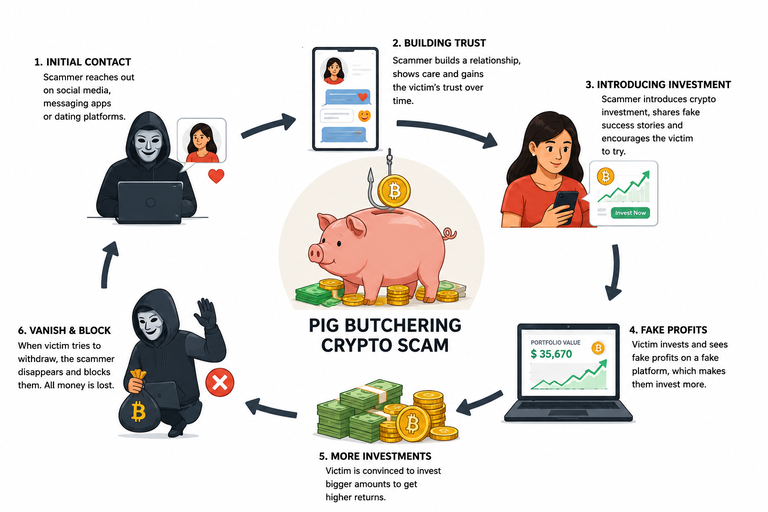
A pig-butchering scam is a type of long-term financial fraud where scammers emotionally manipulate victims before stealing their money through fake cryptocurrency investment opportunities. The scam gets its unusual name from the idea of “fattening up” the victim before financially destroying them. Instead of immediately asking for money, scammers slowly gain trust and build strong emotional connections first.
Pig-Butchering
The scam normally begins with a random online interaction. A victim may receive an unexpected message through WhatsApp, Telegram, Instagram, Facebook, LinkedIn, or even a dating app. The message usually appears harmless and casual. In many cases, scammers intentionally pretend to contact the wrong person just to start a conversation naturally.
For example, they may send messages like:
- “Hi, are we still meeting tomorrow?”
- “Sorry, I think I saved the wrong number.”
- “You seem friendly. Nice to meet you.”
At first, there will be no discussion about cryptocurrency or investing. The scammer focuses entirely on creating trust and emotional comfort. Over time, the conversation becomes more personal, and eventually the scammer introduces crypto investing as an easy way to make money.
Victims are then guided toward fake investment platforms controlled entirely by criminals. These platforms display fake profits and account balances to convince victims that their investments are growing successfully. Eventually, victims invest larger amounts of money and later discover they cannot withdraw anything. By the time victims realize the truth, the scammers usually disappear completely.
Why Pig-Butchering Scams Have Become So Popular
Pig-butchering scams have expanded rapidly because they are extremely profitable for criminal organizations. Many scammers operate in large international fraud networks where different people handle different stages of the scam process. Some individuals focus on finding victims, while others manage fake investment websites or communicate with victims directly.
One major reason these scams work so well is because cryptocurrency transactions are difficult to reverse. Unlike traditional bank transfers, blockchain transactions are usually permanent. Once funds are transferred to a scammer’s wallet, recovering the money becomes very difficult.
The following video provides a clear explanation of how pig-butchering scams operate in real-world situations and how scammers manipulate victims using fake relationships, cryptocurrency investments, and psychological pressure.
Another reason for the rise of these scams is the growing public interest in crypto investing. Many people enter the crypto market hoping to achieve financial freedom or generate passive income. Scammers exploit this excitement by presenting fake investment opportunities that appear profitable and low-risk.
Social media has also made these scams easier to operate. Fraudsters can contact thousands of people every day using messaging platforms, dating apps, and social networking websites. Since online communication has become normal in modern life, many people do not immediately suspect danger when strangers start conversations.
Technology has further improved the effectiveness of these scams. Modern scammers use AI-generated images, stolen photographs, fake luxury lifestyle content, fabricated trading screenshots, and professional-looking websites to appear legitimate. Some even use deepfake videos or fake video calls to strengthen trust. The combination of emotional manipulation, advanced technology, and financial temptation makes pig-butchering scams extremely dangerous.
How Pig-Butchering Crypto Scams Work
fake crypto investment scam
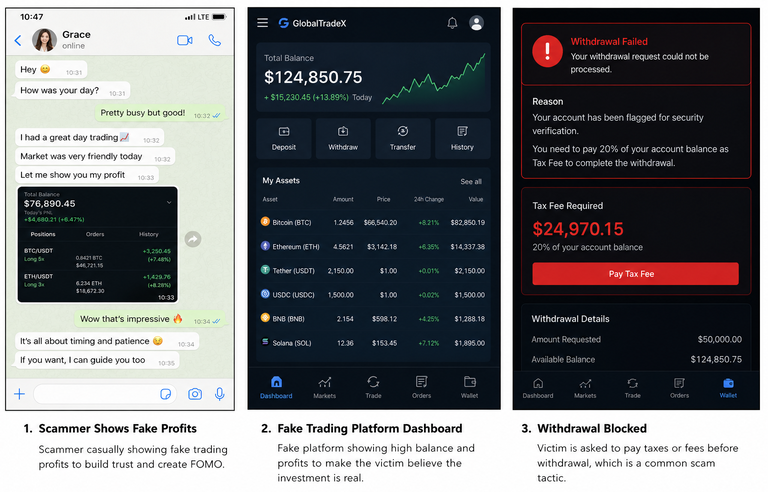
Although every scam is slightly different, most pig-butchering scams follow a very similar structure. Understanding each stage of the scam can help users recognize warning signs before losing money.
The scam usually begins with a random message from a stranger. Sometimes the scammer pretends to have contacted the wrong number accidentally. Other times, they may initiate contact through dating apps or social media platforms.
The first conversations are intentionally casual and friendly. Scammers avoid discussing money immediately because their goal is to make the interaction feel natural. They often behave politely, respectfully, and professionally.
During this stage, scammers carefully study the victim’s personality, lifestyle, financial situation, and emotional state. They try to understand whether the victim may be vulnerable to financial manipulation later.
Many scammers pretend to live luxurious lifestyles. They may claim to be:
- Successful entrepreneurs
- Crypto traders
- Financial analysts
- Investors
- Business owners
- Fashion professionals
- International travelers
They frequently share attractive photos, expensive restaurants, luxury cars, vacations, and profitable trading screenshots to create the image of financial success. The purpose is simple: Make the victim admire and trust them.
Building Emotional Trust
This stage is where the real psychological manipulation happens. Scammers invest significant time building emotional relationships with victims. In many cases, they communicate daily for weeks or months before discussing investments seriously.
The scammer may appear caring, supportive, and emotionally available. They ask about the victim’s personal life, work, stress, family, and future goals. Over time, victims begin viewing the scammer as a trusted friend or romantic partner.
Romance is one of the strongest tools used in pig-butchering scams. Many victims become emotionally attached because the scammer creates an illusion of affection and genuine care. The victim eventually lowers their guard completely.
Some scammers even manipulate victims emotionally by:
- Sending good morning and good night messages daily
- Sharing fake personal stories
- Pretending to discuss marriage or future plans
- Offering emotional support during difficult times
- Claiming deep emotional attachment
The longer this stage continues, the stronger the emotional influence becomes. Victims often stop questioning suspicious behavior because emotional trust replaces logical thinking.
Introducing Crypto Investing
Fake Crypto Profits
Once emotional trust has been established, the scammer gradually introduces cryptocurrency investing into conversations. Instead of immediately asking for money, they portray crypto trading as part of their successful and financially comfortable lifestyle. The discussion is usually subtle at first, making the victim feel as though the topic appeared naturally in conversation rather than as part of a planned manipulation strategy.
The scammer may casually mention:
- Profits earned from Bitcoin or Ethereum
- Short-term trading opportunities
- Passive income strategies
- Insider market analysis
- Private investment platforms
- “Low-risk” opportunities with unusually high returns
- Early access to profitable crypto projects
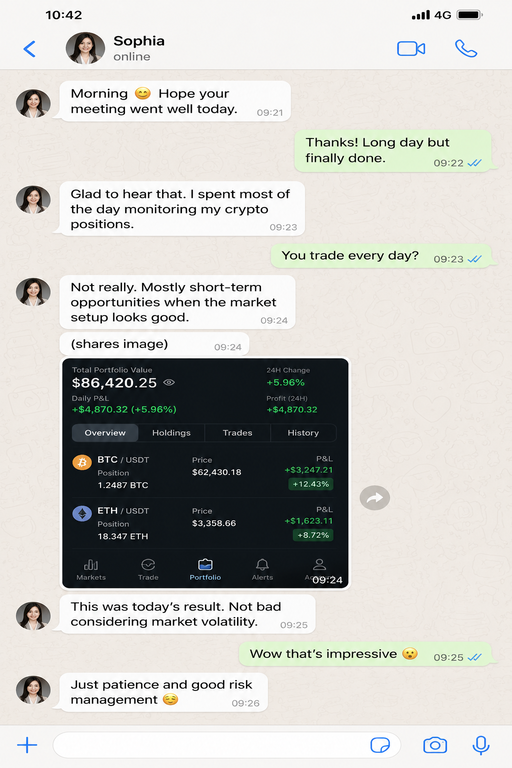
- Daily trading screenshots showing fake profits
- Luxury lifestyles supposedly funded by crypto investing
They often claim they learned profitable strategies from:
- Family members
- Financial experts
- Professional traders
- Exclusive investment groups
- Wealthy business partners
- Private mentors or “crypto professors”
- VIP investment communities
To appear credible, scammers frequently send screenshots of trading accounts, fake profit charts, luxury travel photos, or fabricated withdrawal records. Some even encourage victims to start with a very small investment so the platform appears trustworthy. In many cases, the victim is shown fake profits or allowed to make a small withdrawal successfully, creating the illusion that the investment platform is legitimate.
These tactics are carefully designed to create the impression that the scammer possesses exclusive financial knowledge unavailable to ordinary investors. Over time, the victim begins to view the scammer as both a trusted friend and a financial guide. Because the relationship feels genuine, many victims lower their guard and become emotionally dependent on the scammer’s advice.
Eventually, the scammer offers to “help” the victim begin cryptocurrency investing. At this stage, victims are often directed to fake trading platforms or fraudulent investment apps controlled entirely by criminal networks. The platforms may display fabricated account balances and fake profits to encourage larger deposits. As trust grows, victims are pressured to invest increasing amounts of money, sometimes including savings, loans, or retirement funds. This is the point where many victims unknowingly become trapped in the scam.
After gaining the victim’s trust, scammers slowly shift conversations toward crypto investing and introduce a fake trading platform. Most victims believe they are using a real cryptocurrency exchange because the website looks modern, professional, and convincing. These fake platforms are designed to create confidence and make beginners feel safe while investing.
Many fake platforms include:
- Live crypto price charts
- Trading dashboards
- Wallet balances
- Fake profit numbers
- Customer support chats
- Withdrawal buttons
- Mobile trading apps
Some scam websites are even designed to look similar to popular cryptocurrency exchanges. This makes the platform appear more trustworthy to new investors.
At first, victims are usually asked to invest only a small amount of money. Soon after depositing funds, the platform starts showing fake profits. The account balance may increase every day, creating excitement and confidence in the investment.
In some cases, scammers even allow a small withdrawal during the early stages. This is done intentionally to convince the victim that the platform is real and safe. Once trust grows, the scammer pressures the victim to invest larger amounts. However, the profits shown on the platform are completely fake.
The scammers fully control the website, meaning they can manually change balances, profits, and trading activity at any time. The victim is not actually trading cryptocurrency in real markets. Instead, the money is sent directly to wallets controlled by the scammers.
Eventually, when victims try to withdraw larger amounts, the platform starts demanding extra payments such as taxes, verification fees, or account unlocking charges. These are additional scam tactics used to steal even more money before the scammers disappear completely.
Building Financial Confidence
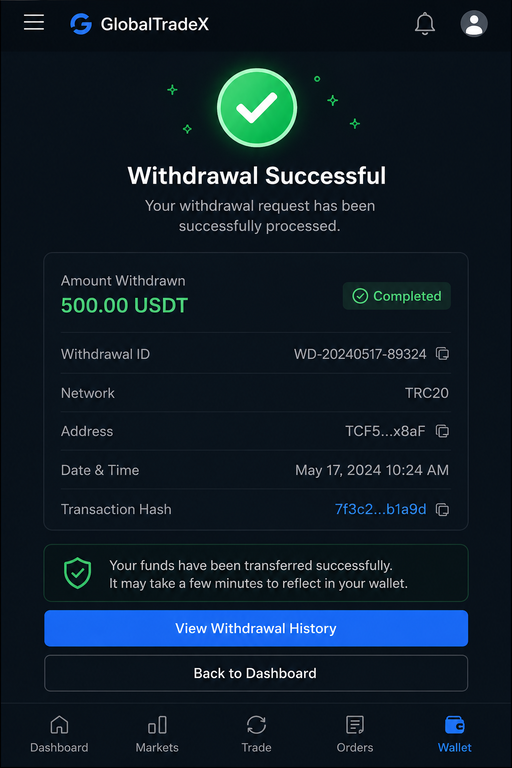
Fake Withdrawals Build Trust
One of the most dangerous parts of pig-butchering scams is that scammers sometimes allow victims to withdraw small amounts of money successfully. This tactic is used to remove suspicion and make the fake platform appear legitimate.
For example, a victim may deposit $200 and later withdraw $250 without any problems. After seeing the withdrawal succeed, the victim starts believing the trading platform is real and trustworthy.
At this stage, victims often begin thinking:
- The platform is legitimate
- Withdrawals work normally
- The profits are real
- The scammer is trustworthy
- Larger investments will generate bigger profits
This psychological trick is extremely effective because it gives victims “proof” that the system works. In reality, scammers intentionally allow small withdrawals to encourage victims to invest much larger amounts later.
Once confidence grows, victims usually lower their skepticism completely. Some people even borrow money, use savings, or sell assets because they believe the investment is safe and profitable.
In some cases, victims recommend the platform to friends or family members because they genuinely believe the platform is real. By the time larger withdrawal requests are made, the scammers usually block access, demand fake fees, or disappear entirely with the funds.
Escalating the Investment
Once victims fully trust the platform, scammers begin pushing for larger investments. They often claim that bigger deposits can unlock higher profits, VIP trading access, or exclusive investment opportunities that are only available for “serious investors.”
At this stage, the pressure becomes both emotional and financial. Scammers constantly encourage victims to invest more money before the “opportunity” disappears.
Victims may be encouraged to:
- Use personal savings
- Borrow money from banks
- Take personal loans
- Sell property or valuables
- Use retirement funds
- Borrow money from friends or family
The fake platform continues displaying massive profits, making victims believe they are becoming financially successful. Some victims even see fake account balances reaching hundreds of thousands of dollars.
To increase urgency, scammers may claim the market is entering a “special profit window” or that a limited-time trade can generate huge returns quickly. This creates fear of missing out and pushes victims into making rushed financial decisions.
As the fake profits grow, victims become emotionally attached to the money shown on the platform. Many stop thinking logically because they believe they are close to becoming wealthy. By this stage, victims are often deeply trapped financially and emotionally, making it extremely difficult to recognize the scam before significant losses occur.
The Withdrawal Disaster
The final stage of a pig-butchering scam usually begins when victims attempt to withdraw large amounts of money from the platform. Until this point, the investment platform often appears legitimate, profitable, and trustworthy. Victims may believe they are successfully earning returns and that their funds are completely secure.
However, the situation changes immediately when a withdrawal request is submitted. Suddenly, various unexpected problems begin appearing, preventing victims from accessing their money.
The fake platform may claim:
- Taxes must be paid before withdrawals can be approved
- Security verification is still pending
- Anti-money laundering checks are required
- Additional withdrawal fees must be completed
- Accounts have been temporarily frozen
These excuses are carefully designed to manipulate victims into sending even more money. Because victims already believe their profits are real, many become desperate to recover their funds and continue making additional payments in the hope that the withdrawal process will finally be completed.
Instead of resolving the issue, the scam only becomes worse. The scammers continue delaying withdrawals while creating new excuses and demanding further payments from the victim. Eventually, the situation completely collapses.
At this stage:
- Customer support stops responding
- The scammer blocks all communication
- The website or mobile application becomes inaccessible
- Victims realize the entire investment platform was fraudulent
By the time victims understand what has happened, the stolen cryptocurrency has usually already been transferred through multiple wallets and laundering channels, making recovery extremely difficult. Many victims only recognize the scam after losing significant savings, personal loans, or retirement funds, leading to severe financial and emotional consequences.
Why Smart People Still Fall for These Scams
Many people assume only inexperienced investors become victims of crypto scams. In reality, pig-butchering scams target emotions rather than intelligence. Scammers are highly skilled manipulators who understand human psychology deeply.
Victims fall for these scams because:
- Emotional trust lowers skepticism
- Fake profits create excitement
- Loneliness increases vulnerability
- Gradual manipulation feels natural
- Social engineering bypasses logical thinking
These scams are carefully designed to manipulate normal human emotions over long periods of time. That is why even financially educated individuals can become victims.
Common Red Flags of Pig-Butchering Scams
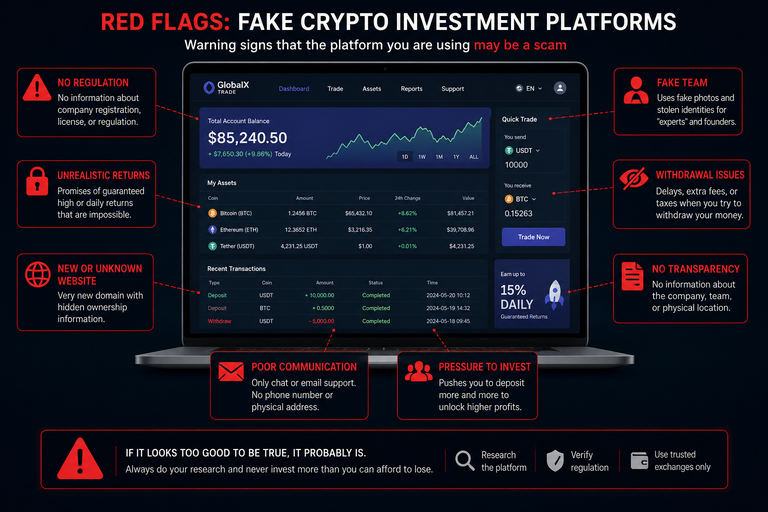
Red Flags of Pig-Butchering Scams
Several warning signs appear repeatedly in these scams. One major red flag is when strangers quickly attempt to build close emotional relationships online. Another warning sign is when someone constantly discusses easy profits or guaranteed investment returns.
Pressure and urgency are also common tactics. Scammers often try to create fear of missing out by claiming limited-time opportunities or insider information. Unknown investment platforms with little public information should always be treated carefully. If a platform has no real company details, no regulation, or suspicious reviews, it should never be trusted.
Withdrawal restrictions are another serious danger sign. Legitimate exchanges do not require users to pay taxes or verification fees before accessing their funds. Recognizing these red flags early can prevent devastating financial losses.
How to Protect Yourself From Pig-Butchering Scams
The best way to avoid pig-butchering scams is to stay cautious and verify everything independently before investing money. These scams are designed to manipulate emotions first and finances later, which is why many victims fail to recognize the danger early.
Never trust investment advice from strangers online, no matter how friendly, attractive, or financially successful they appear. Legitimate investors do not randomly contact people through WhatsApp, Telegram, dating apps, or social media to offer secret crypto opportunities.
Before using any crypto platform:
- Research the company independently
- Check how old the domain is
- Verify whether the platform is regulated
- Read real community discussions
- Search for scam complaints or warnings
- Confirm the company leadership actually exists
Crypto users should also stick to trusted and well-known exchanges whenever possible. Fake investment platforms often look professional, but many are recently created websites with no real company behind them.
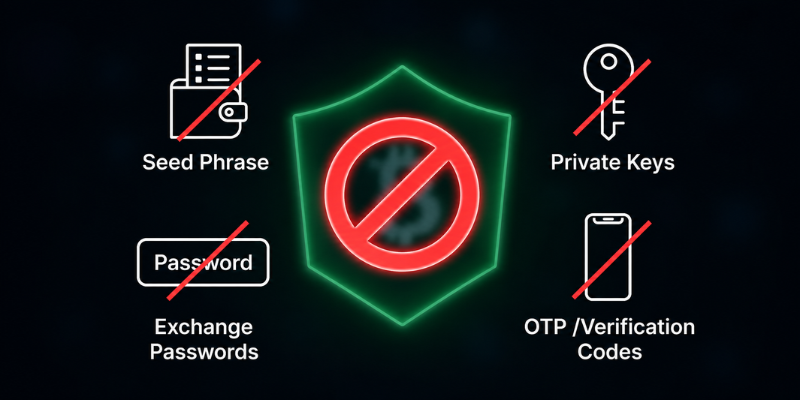
Protect Yourself From Pig-Butchering Scams
Most importantly, never share:
- Seed phrases
- Private keys
- Exchange passwords
- OTP or verification codes
No legitimate crypto company or support team will ever ask for this information. Investors should also avoid making emotional decisions during market excitement or personal conversations. Scammers are highly skilled at creating urgency, trust, and fear of missing out. Taking time to research carefully and think logically before investing can prevent devastating financial losses.
What To Do If You Become a Victim
Anyone who suspects they have fallen victim to a pig-butchering scam should stop sending money immediately. Scammers often continue demanding fake taxes, verification charges, or withdrawal fees even after stealing large amounts from victims.
The next step is to collect and save all possible evidence, including:
- Wallet addresses
- Transaction hashes
- Chat conversations
- Screenshots
- Website or app links
This information can help investigators trace scam activity and connected crypto wallets.
Victims should report the scam to:
- Local cybercrime authorities
- Cryptocurrency exchanges
- Blockchain investigation companies
- Financial fraud reporting organizations
Quick reporting is important because stolen funds are often moved through multiple wallets very quickly, making recovery harder over time. Victims should also secure their remaining accounts immediately by changing passwords, enabling two-factor authentication, and checking whether any wallets or exchange accounts were compromised.
Most importantly, victims should not feel pressured to stay silent. Many people avoid discussing Scams & Fraud because of embarrassment or guilt, but sharing real experiences can help warn others and prevent more victims from being targeted.
Where To Report Pig-Butchering Crypto Scams
If someone becomes a victim of a pig-butchering crypto scam, they should immediately stop sending money and report the fraud through official cybercrime and financial fraud platforms. Important places where victims can file complaints include:
Victims should also save all possible evidence such as wallet addresses, transaction hashes, screenshots, scam website links, and chat conversations before filing reports. Early reporting can help investigators trace scam wallets, identify fraudulent platforms, and potentially prevent more users from becoming victims.
Final Thoughts
Pig-butchering scams represent one of the most dangerous forms of crypto fraud in the modern digital world. In this latest crypto scam update, these scams continue to combine emotional manipulation, fake relationships, psychological pressure, and fraudulent investment platforms to steal massive amounts of money from victims worldwide.
What makes these scams especially dangerous is that they do not rely only on technical tricks. Instead, they exploit human trust and emotions over long periods of time. As cryptocurrency adoption continues growing worldwide, awareness and education have become essential for every investor.
The most important lesson is simple: Never trust investment opportunities based purely on online relationships, emotional attachment, or promises of guaranteed profits. A few minutes of careful research can prevent life-changing financial losses.