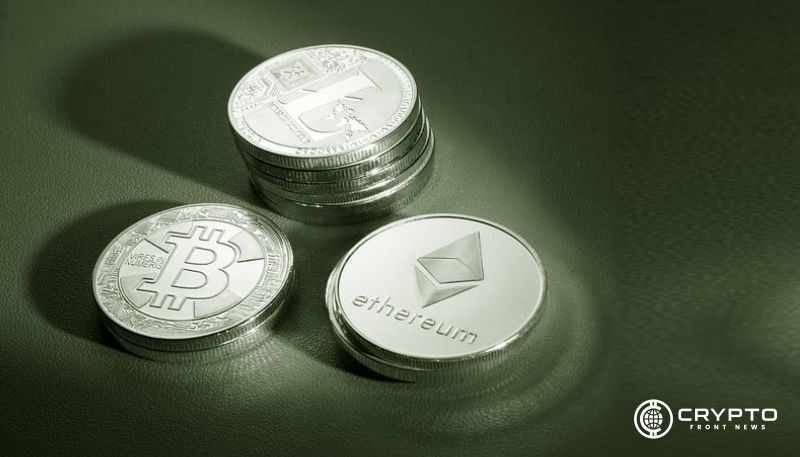
Buying USDT in the EU is no longer possible on any of the seven major platforms we checked on 1 November 2026. Bitpanda, Kraken, Coinbase, Bitvavo, OKX, Bybit EU and Trade Republic no longer
Buying USDT in the EU is no longer possible on any of the seven major platforms we checked on 1 November 2026. Bitpanda, Kraken, Coinbase, Bitvavo, OKX, Bybit EU and Trade Republic no longer sell Tether's stablecoin to customers in the European Economic Area. The reason is the EU's MiCA regulation: USDT has no authorisation as an e-money token, and since 8 October 2026 the European securities regulator ESMA has expected licensed providers to stop all services around such tokens, by 8 January 2027 at the latest. Holding USDT remains legal. If you want a dollar stablecoin in the EU, the licensed choice is USDC; if you think in euros, it is EURC. This guide shows what each platform still allows, what buying and transferring cost, and which route to USDT remains open.
Note: some links in this guide are affiliate links and are marked as advertisements. If you open an account through them, CryptoTicker receives a commission. The price stays the same for you.
Key points at a glance
- No purchase at EU platforms: none of the seven platforms we checked lets customers in the EEA buy USDT as of 1 November 2026.
- ESMA deadline: opinion of 8 October 2026, clean-up by 8 January 2027 at the latest. After that, only time-limited residual services such as selling and withdrawing remain.
- Holding stays legal: the opinion is addressed to providers, not to private individuals.
- Alternative USDC: licensed e-money token, classified on 14 October 2026 as the EU's first "significant" one. Market cap $71.7 billion, USDT $179.9 billion (CoinMarketCap, 1 November 2026).
- Spread measured: USDC against the euro 0.011% at Kraken, Coinbase and Bybit EU, 0.022% at Bitvavo.
- Network fee measured: a USDT transfer on Tron burns 6.43 TRX, about $1.95, without staked energy. On Ethereum it cost $0.01 to $0.15 on average.
None of the platforms we checked will sell you USDT today. Most of them switched off long before the ESMA deadline, Bitvavo as early as January 2025.
Platform
Buy USDT
What still works with USDT
Since
Bitpanda
no
buying and swapping into USDT disabled, according to
Bitpanda's statement to Trending Topics
3 February 2025
Kraken
no
delisted in the EEA, withdrawals only, according to
Kraken's help page on stablecoins in the EEA
2025
Coinbase
no
remaining balances converted to USDC, according to
Coinbase's help page on MiCA non-compliant stablecoins
30 October 2026
Bitvavo
no
switched off, remaining balances converted to USDC on 4 February 2025, according to
Bitvavo's announcement
31 January 2025
OKX
no
deposits accepted only for a one-way conversion into USDC, according to
OKX's help page on the USDT conversion
conversion since 17 July 2026
Bybit EU
no
no tradable USDT pair, stablecoins are offered as USDC and EURC
as of 1 November 2026
Trade Republic
no
not among the 49 crypto assets in
Trade Republic's product list
as of 1 November 2026
For existing balances, the routes differ: at Kraken you can still withdraw USDT, at OKX you can convert it into USDC, and at Coinbase and Bitvavo your balance has long been USDC. Which exchanges hold a MiCA licence is covered in our comparison of regulated crypto exchanges. Binance does not belong in this list: it is not in ESMA's MiCA register and paused withdrawals after the hack of 29 October 2026. Licensed exchanges are listed in our guide to Binance alternatives.
Why you can no longer buy USDT in the EU: the ESMA opinion
Tether has no authorisation for USDT as an e-money token in the EU. ESMA concludes that licensed providers should no longer offer any services around this token, from trading to custody.
The core sentence of the ESMA opinion of 8 October 2026 is paragraph 12: crypto-asset service providers "should not provide crypto-asset services" in relation to stablecoins that do not comply with MiCA. Paragraph 21 lists trading, exchange, order execution, advice, transfers, custody and portfolio management. Under paragraph 19, warnings to clients are not enough.
Under paragraph 24, residual services for existing holdings remain allowed: selling, conversion, withdrawal, transfer and safekeeping, but no new purchases. Under paragraph 27, national supervisors should require the clean-up "as soon as possible" and no later than three months after publication, which is 8 January 2027. The document contains no ban for private individuals. More on this is in our article on the ESMA stablecoin deadline, and what Tether actually is in What is Tether (USDT)?

On EU platforms, USDT only has an exit left: selling, converting, withdrawing. Illustration, AI-generated
Buy Tether despite MiCA: the route via USDC in five steps
Technically, you can still get USDT: you buy USDC on a licensed exchange, withdraw it to your own wallet and swap it there on a decentralised exchange. This is legal, but no supervisor protects you along the way. Check first whether you really need USDT: as a dollar stablecoin in your account, USDC does the job, and USDT only makes sense if a recipient outside the EU asks for exactly this token.
- Buy USDC on a MiCA exchange: open an account, verify your ID, deposit euros by SEPA and buy USDC.
- Set up your own wallet: choose a wallet for the network you need and write the recovery phrase down on paper. Apps are compared in our software wallet comparison.
- Choose the network and test first: withdraw USDC on the network your wallet and the recipient use, starting with a small amount. You need the network's own coin for fees, on Ethereum some ether.
- Swap on a decentralised exchange: according to its overview of pool fees, Uniswap usually charges 0.01% to 1% depending on the pool, plus the network fee. Check the minimum amount you receive before confirming, and only open the app via its official address.
- Keep records: swapping USDC for USDT is a disposal for tax purposes in many countries. Note the date, amount and price.
On this route there is no customer service and no chargeback, and a wrong network or a fake website costs you the balance. Exchanges without an EU licence often still list USDT, but they are not subject to European supervision.
For the first step, the four MiCA exchanges from our comparison are an option. Advertisement, for readers in the EU:Go to Bitpanda, Advertisement:Go to Kraken, Advertisement:Go to Coinbase. Bitvavo is available at the Bitvavo website. Our assessment is in the reviews of Bitpanda and Kraken.
Fees and spread when buying USDT via USDC
The expensive part is not the spread but the exchange fee. We measured the gap between the buy and sell price of USDC against the euro in the order books on 1 November 2026 in the early hours.
Exchange
Fee per purchase
Fee on 1,000 euros
Spread USDC/EUR
Bitvavo
0.25%
€2.50
0.022%
Bitpanda
from 0.99%
from €9.90
broker without a public order book
Kraken
1%
€10.00
0.011%
Coinbase
up to 1.875% plus spread
up to €18.75
0.011% in the order book
Fees from our comparison of regulated crypto exchanges, as of October 2026.
The exchange rate comes on top. On 1 November 2026, one USDC cost 0.8963 euros at Kraken, so 1,000 euros bought about 1,116 USDC before fees. If the euro rises by 5% against the dollar, a balance worth 1,000 euros loses about 48 euros, even though the token keeps its dollar peg.
Withdrawing USDT: which network to choose and what a transfer costs
USDT runs on more than ten blockchains, and according to Tether's transparency page the largest amounts sit on Tron and Ethereum. What matters is that sender and recipient use the same network, otherwise the funds may be lost. We measured the costs on real transfers during the night of 1 November 2026, on 15 transfers on Tron and twice 25 on Ethereum.
Network
Cost per USDT transfer
What you need in your wallet
Tron (TRC-20)
to an address that already holds USDT 64,285 energy, without staked energy 6.43 TRX (about $1.95); to a new address 13.03 TRX (about $3.96); plus 0.345 TRX bandwidth once the free allowance is used up
TRX or staked energy
Ethereum (ERC-20)
41,309 to 63,221 gas, on average $0.01 in the first and $0.15 in the second sample, peak $0.72
some ether
Prices: TRX $0.3038, ether $2,253 (CoinMarketCap, 1 November 2026).
On Tron, only one of 15 senders actually paid TRX, the others had staked or rented energy. On Ethereum, the average cost rose more than tenfold within seven minutes, because it moves with network load. The exchange also charges its own withdrawal fee, shown in the withdrawal form. Do not send USDT to an account at an EU exchange: Coinbase no longer credits such deposits, Kraken advises against them and OKX only converts them into USDC.
USDC and EURC: the MiCA-compliant alternatives to USDT
USDC is the licensed dollar stablecoin in the EU, EURC its euro counterpart. Circle issues both through Circle Internet Financial Europe SAS in France as e-money tokens under MiCA. All major EU exchanges list USDC, and EURC is available at Kraken, Bitvavo and Bybit EU, among others.
The European Banking Authority classified USDC on 14 October 2026 as the EU's first significant e-money token, out of 45 notified, and will supervise its reserve and own funds directly from 12 November 2026; details in USDC under EBA supervision. The key difference to USDT is in Article 49 of the MiCA regulation: holders of a licensed e-money token can redeem it with the issuer at any time, at par value and free of charge. In the EU, USDT holders have no such claim.
If you think in euros, EURC removes the currency risk. With a market value of about $450 million, however, the token is small, and the spread shows it: on 1 November 2026 it was 0.02% at Bybit EU, 0.05% at Kraken and 0.17% at Bitvavo. Other tokens are compared in our stablecoin list, and the choice between the two dollar tokens in USDT or USDC.

USDC or EURC: choosing between dollar and euro decides the currency risk. Illustration, AI-generated
Risks of buying USDT: freezes by Tether and the dollar peg
USDT carries two risks in every wallet: Tether can block addresses, and the dollar peg is a promise made by the issuer.
The USDT contract contains a blocklist. After the Binance hack of 29 October 2026, Tether froze more than 1.567 billion USDT, according to CEO Paolo Ardoino. The addresses hit are those that investigators link to theft or sanctions; how this works technically is shown in USDT frozen. The peg held on 1 November 2026 at $0.9988 according to CoinMarketCap. USDT is backed by reserves that Tether reports itself; there is no state guarantee or deposit insurance. In its early years, the token fell as low as $0.57, according to CoinGecko.
USDT and tax: every swap counts
In Germany, swapping one crypto asset for another counts as a disposal under Section 23 of the Income Tax Act, including a swap from USDC into USDT. A gain is taxable if the purchase was less than a year ago and the year's gains reach the 1,000-euro exemption limit. With stablecoins, the gain usually comes from the euro-dollar exchange rate, and the one-year period starts again for every newly received token.
A draft bill dated 30 September 2026 would scrap the one-year rule for newly bought crypto; the cabinet did not adopt it on 14 October 2026. What a forced stablecoin conversion means for tax is explained in Coinbase converts USDT into USDC, and tools that track every swap are compared in our crypto tax software comparison. Rules differ by country, and this guide is not tax advice.
USDT after 8 January 2027: what applies then
From 8 January 2027, licensed providers in the EU should only wind down USDT: selling, conversion, withdrawal, transfer and safekeeping of existing holdings, time-limited and under close supervision. Holding, receiving and sending USDT in your own wallet remain legal. If you hold USDT there and later want euros, you need an extra step, such as swapping into USDC on a decentralised exchange and then selling on a licensed exchange.
Our assessment: buying USDT hardly pays off for EU investors
For investors in the EU, USDC is the obvious dollar stablecoin: the same dollar peg, a legal right to redemption at par and direct EBA supervision from 12 November 2026. You can buy it on every major EU exchange at a spread of 0.011% to 0.022%.
USDT's strength lies outside Europe: at a market value of $179.9 billion, it is two and a half times the size of USDC. If you need it for a payment or a trading venue outside the EU, you can get it via your own wallet and carry the risk yourself. If you think in euros, consider EURC or simply euros in a bank account, where deposit insurance applies.
Cryptocurrency prices are highly volatile, and a total loss is possible. This guide is not investment advice.