Most banking apps expect their users to navigate complicated menus and learn how to use various features. However, Xara aims to change that by allowing customers to interact with a friendly A
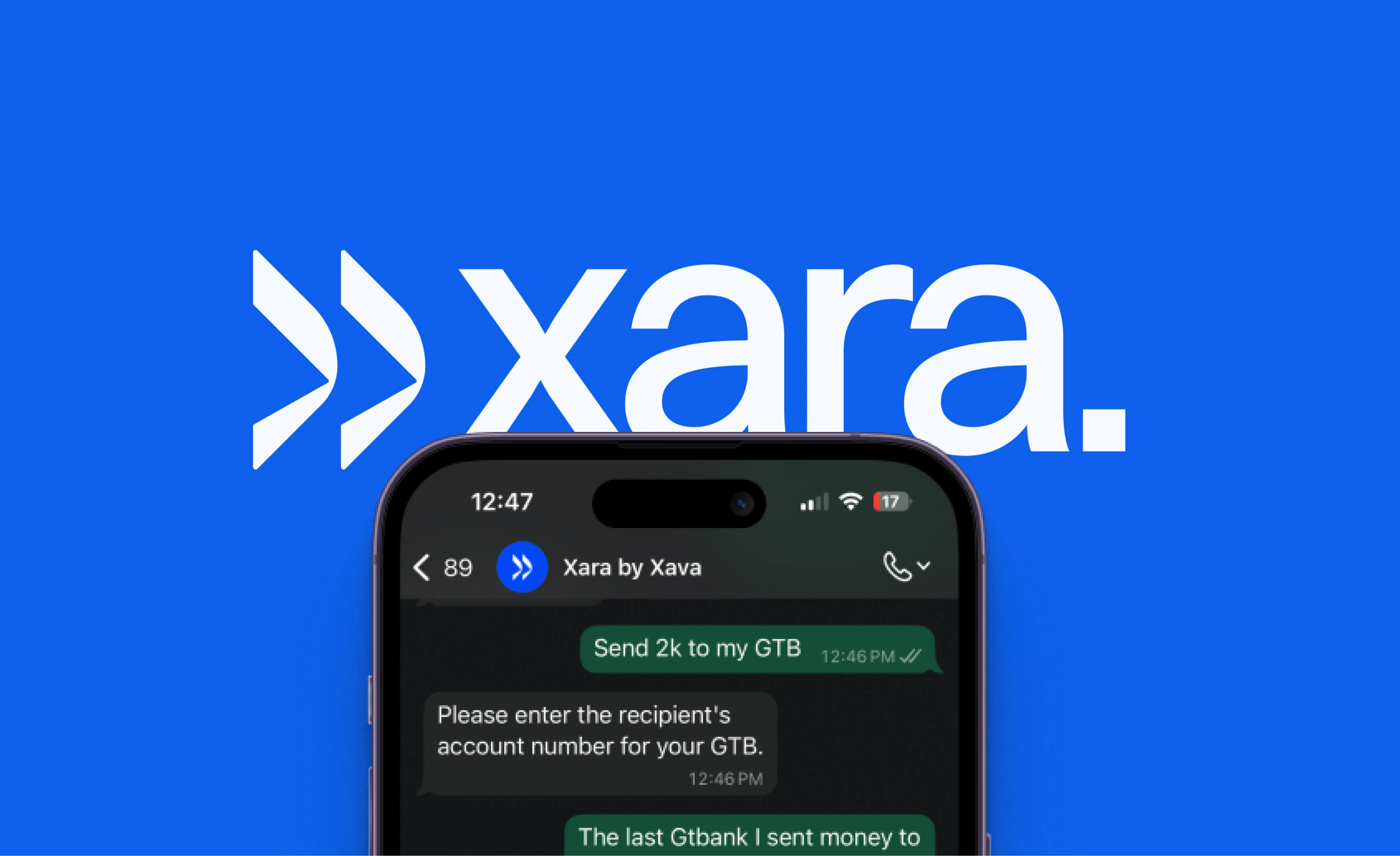
Most banking apps expect their users to navigate complicated menus and learn how to use various features. However, Xara aims to change that by allowing customers to interact with a friendly AI assistant through WhatsApp.
This means that if you need to send money, pay a bill, or check your spending, you can simply type a message, send a voice note, or even share a picture. The assistant will understand your request and help you with your financial task without the hassle of digging through menus. But trust is a critical issue when it comes to handling money.
Sulaiman Adewale, founder of Xara, explained in a conversation with Technext that ensuring users can rely on the system has been one of the biggest challenges in building the product. Adewale said that the team had to rebuild Xara more than three times to enhance the assistant’s reliability. The main difficulty lies in how people communicate.
Often, users don’t express their needs as clearly as developers might hope. For instance, someone might simply say “card,” but that could mean anything from an airtime card to a gift card.
Another user might provide only part of the information needed and expect the assistant to fill in the gaps. When financial transactions are involved, misinterpretations can lead to significant problems.
Adewale noted that the team needed to understand how language models can make mistakes and put safeguards in place to help Xara know when to act, ask for more information, or hold off on a transaction. He emphasised that developers often create systems that work well in their tests because they are familiar with the context.
However, everyday users come with different assumptions and ways of expressing themselves. For Xara, solving these communication challenges goes beyond just refining prompts. The team invests in fine-tuning their system, writing traditional software code, and researching how people in Nigeria communicate.
This understanding is crucial since users may switch between English and Pidgin, prefer voice notes over typing, or give vague references without much explanation. Xara’s goal is to understand these requests accurately, ensuring the integrity and safety expected from a financial service.
From WhatsApp chats to ₦22.6 billion in transactions
The startup has quickly gained the attention of users with its innovative approach to financial services. As of now, the company’s website proudly reports that it has processed over ₦22.6 billion in transactions, following a significant milestone of ₦10 billion announced in June 2026. At that time, Xara had also reached an impressive 50,000 active users in just its first year.
What sets Xara apart is its versatility. The platform allows users to make money transfers, pay bills, purchase airtime and data, and even analyse their spending habits. Xara is designed to be user-friendly, accepting voice notes and images, and it understands multiple languages, including English, Pidgin, Hausa, Igbo, and Yoruba.
As Adewale puts it, “People should not have to learn a complicated interface to access financial services.”
This emphasis on simplicity means users can interact with Xara through an app they’re already familiar with, eliminating the need to download another app or navigate through a confusing menu.

Adewale’s Xai offer
But Xara’s ambitions don’t stop at personal finance. Adewale highlights that what we currently see in the public version of Xara is just “10%” of the team’s grander vision. A key component of this vision is Xara Business, a tool designed to assist merchants in managing payments, issuing invoices, and tracking sales via WhatsApp.
This feature is particularly noteworthy, as businesses testing Xara Business have reportedly been handling around ₦6 million in daily transactions.
Similar read: WhatsApp fintech Xara crosses ₦10 billion transaction milestone in first year
Adewale also mentions that Xara provides specialised tools for businesses to manage their transactions and invoices effectively.
To sustain its growth, the WhatsApp-based fintech plans to generate revenue through various avenues, including merchant services, premium subscriptions, and commissions on bill payments. Additionally, the company is in the process of developing a “Pay with Xara” checkout option for online merchants. Looking ahead, Adewale expresses excitement about expanding into new markets, including the UAE, Zambia, and Ghana.

Building beyond WhatsApp
Relying on WhatsApp has its ups and downs for Xara. Since WhatsApp is owned by Meta, the fintech doesn’t entirely control the platform that supports its customer interactions. Despite this, Adewale expressed a clear commitment to continue using WhatsApp for the time being.
He said, “We intend to stay on WhatsApp as long as it serves our customers well,” but also revealed that they are in the process of developing something different.
Privacy is a top priority, especially when dealing with financial conversations. Adewale shared that the AI deletes general chat context after just two hours, but retains essential information like beneficiaries and contacts to facilitate smoother repeat transactions.
“We aim to make managing finances as simple as chatting with a friend,” he said.
He also noted that if a user encounters an issue and reports it, the relevant conversation details are shared with the support team to address their concerns.
Looking to the future, Adewale envisions Xara evolving beyond just a financial assistant. He dreams of a day when various services, such as delivery companies and retailers, can integrate with Xara, allowing users to make payments directly from their Xara wallets.
“I see Xara as a ‘mother to other assistants,’ where users can access a world of services through one central hub,” he explained.

Suleiman Adewale
Currently, the challenge lies in making the AI behind Xara reliable for everyday financial transactions. The increasing number of transactions on the platform indicates that people are open to managing their money through conversation.
Read also: Will WhatsApp’s new username feature hide your phone number? Here’s what you need to know