Hyperliquid-Linked Wire-Fraud Plea: US Session Roundup This is the Major Altcoin Ecosystems US Session roundup covering 12:00 UTC to 23:59 UTC on November 16, 2026. Five stories moved the nee
Hyperliquid-Linked Wire-Fraud Plea: US Session Roundup
This is the Major Altcoin Ecosystems US Session roundup covering 12:00 UTC to 23:59 UTC on November 16, 2026. Five stories moved the needle across the Hyperliquid, Cardano, and Binance ecosystems during the session, led by a former Robinhood software engineer pleading guilty to wire fraud for trading perpetual futures on Hyperliquid using confidential company information.
Key Takeaways
- Former Robinhood engineer Huaisong Xiang pleaded guilty to wire fraud for trading ahead of at least 11 crypto listing announcements on Hyperliquid, agreeing to forfeit $125,523.
- The Hyperliquid Policy Center filed comment letters backing the CFTC's effort to classify event contracts as swaps, separate from state gambling laws, ahead of a November 18 deadline.
- Binance launched a crypto-backed credit product called Pay Later in Argentina and Mexico, letting users borrow up to 1,000 USDC against BTC, ETH, or BNB collateral.
- Midnight City, an AI-driven multiplayer game on Cardano's privacy-focused Midnight network, drew a public endorsement from Cardano founder Charles Hoskinson.
- Cardano's delegated representatives (DReps) rejected a proposal to spend 22 million ADA on a physical copper reserve fund, with roughly 2.86 billion ADA voting against versus 20.02 million ADA in support.
Hyperliquid Faces a Criminal Case and a Policy Test
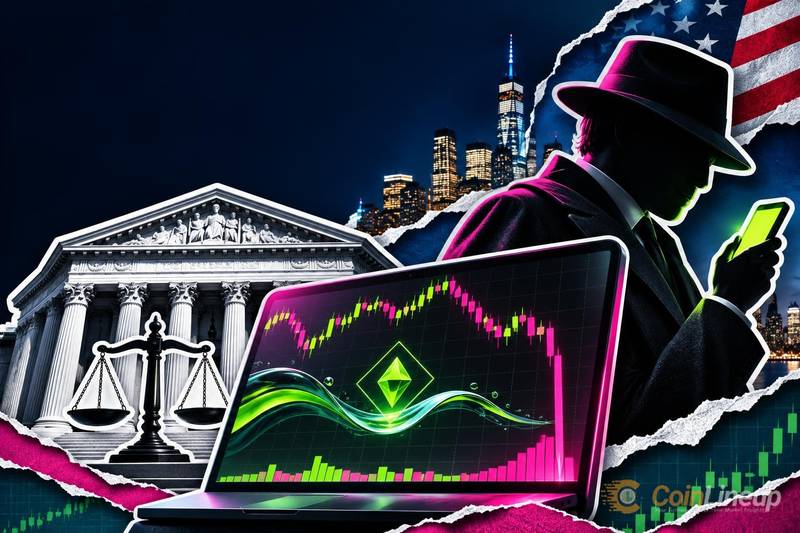
Huaisong Xiang, 30, a former software engineer at Robinhood Markets, pleaded guilty to wire fraud on November 16, 2026, before U.S. District Judge Colleen McMahon in Manhattan, according to CoinDesk. CoinDesk reported that Xiang pleaded guilty to wire fraud in connection with trades on Hyperliquid; sentencing has not yet been scheduled. For related coverage, see Why Is Hyperliquid (HYPE) Price Down Today? Key Drivers.
Xiang accessed Robinhood's internal crypto listing plans through a private company Slack channel called "Coin Aware Individuals." He then used that nonpublic information to place trades on Hyperliquid, a platform that offers perpetual futures contracts (agreements to buy or sell an asset at a future price without actually owning it), ahead of at least 11 public listing announcements between 2025 and 2026, per the Department of Justice Southern District of New York press release. The scheme ran for roughly a year before federal prosecutors charged him. Context on this theme: What Is Ethereum? A Beginner Guide With Live Data After Devcon 8.
Xiang agreed to forfeit the full amount he made from the scheme.
Hyperliquid insider-trading case
$125,523
Profits Xiang agreed to forfeit after pleading guilty to wire fraud.
A co-defendant, Hefu Chai, 36, was separately charged in September 2026 for allegedly trading ahead of at least 10 Robinhood crypto listings, according to CoinDesk. That case remains pending. U.S. Attorney Jamie McDonald stated: "No matter the trading platform, corporate insiders will be held accountable when they trade based on misappropriated information." Sentencing for Xiang has not yet been scheduled. HYPE, the native token of the Hyperliquid platform, traded at $69.28, up 2.17% over the prior 24 hours, as of the data snapshot taken on November 17, 2026, per CoinGecko. The guilty plea is an allegation resolved by Xiang's own admission; it does not constitute a finding of wrongdoing by Hyperliquid itself. More on this in Hackers Seize 64,000 Bitcoin Mining Rigs, Send Hashrate to OCEAN.
On the same day, the Hyperliquid Policy Center (HPC), a Washington-based advocacy group seeded with 1 million HYPE tokens by the Hyper Foundation, filed comment letters backing the CFTC's interim rule to classify event contracts as swaps and exclude casino-style gambling from that definition, according to CryptoTimes. The CFTC published two related rules on October 19, 2026, covering event contracts for sports, politics, culture, and weather, with a public comment deadline of November 18, 2026. The HPC also asked regulators to prevent individual states from classifying federally supervised event contracts as betting products, amid ongoing court disputes involving prediction market operators in Louisiana and Arkansas, per CryptoTimes. For more context on the HPC's approach to federal regulators, see the site's earlier coverage of Hyperliquid Policy Center urging five SEC crypto rule changes.
Binance Introduces Pay Later in Argentina and Mexico
Binance launched a product called Pay Later, a crypto-backed credit feature, initially available to eligible users in Argentina and Mexico, according to Cointelegraph. The product lets users borrow up to 1,000 USDC (a stablecoin pegged to the US dollar) by locking up Bitcoin, Ethereum, or BNB as collateral at a 50% loan-to-value ratio. That means a user needs at least $2,000 worth of collateral to access $1,000 in credit.
Purchases are made through Binance Card or QR Pay. The service charges no interest until the first day of the following month, with a one-day grace period. After that, overdue balances accrue 0.1% per day in compounding interest. If the collateral value falls to 90% of the loan amount, Binance can liquidate the collateral to cover the debt, per Cointelegraph.
Thomas Gregory, Binance's VP of Payments and Fiat, said the product targets people who "hold assets but have no formal credit file," noting that traditional consumer credit often requires income documentation and credit history that many asset holders in emerging markets lack. The launch focuses on two Latin American countries where formal credit access is limited relative to crypto adoption.
Cardano Sees an AI Gaming Experiment and a Treasury Rebuff
Midnight City, described as "the first AI MMORPG that plays itself," is running on Cardano's privacy-focused Midnight blockchain (a separate network layer within the broader Cardano ecosystem), according to CryptoNews. The game features artificial intelligence agents that hold in-game jobs, accumulate gear, and communicate with each other, generating real activity on the Midnight chain rather than relying on human players. Cardano founder Charles Hoskinson publicly endorsed the project on X, noting that it was drawing participation from Cardano's memecoin community including Snek and Hosky token communities, according to CryptoNews. This mention of Hoskinson's endorsement is based on a single source that could not be independently verified from a fetched article page.
Midnight City's launch coincides with renewed mainstream interest in multiplayer online games following the November 4, 2026 release of World of Warcraft: Forever by Blizzard, per CryptoNews. The project represents an early-stage test of whether AI-driven autonomous agents can generate meaningful on-chain activity on a privacy layer blockchain.
Cardano's governance system delivered a sharp rebuke to a separate treasury proposal during the same session. Toto Finance submitted a proposal on October 15 requesting 22 million ADA (roughly $5 million at current prices) from Cardano's on-chain treasury to purchase, store, and tokenize physical copper bars in what it called a "Cardano Strategic Copper Reserve," according to Bitcoinist. Voting closed on November 15.
DReps, the delegated representatives who vote on Cardano governance proposals on behalf of ADA holders, cast roughly 2.86 billion ADA against the proposal versus approximately 20.02 million ADA in support, per Bitcoinist.
Cardano copper-reserve vote
140-to-1
Ratio of ADA stake against the proposed Cardano Strategic Copper Reserve versus stake in support.
The proposal also failed to clear Cardano's required 67% active stake participation threshold and did not receive approval from the Constitutional Committee, which voted 3-of-7 against constitutionality with 4 members abstaining, per Bitcoinist. Under the proposal's terms, copper would have needed to appreciate roughly 49% for the treasury to break even, and Toto Finance stood to receive up to approximately 3.36 million ADA in fees, equal to around 15% of the total request. ADA traded at $0.153, down 1.41% over the prior 24 hours, as of the November 17, 2026 data snapshot, per CoinGecko. For prior coverage of this proposal, see Cardano Rejects Copper Proposal: Asia Session Roundup.
What to Watch Next
- The CFTC's public comment period on its event contract rules closes on November 18, 2026, one day after this roundup. The outcome will shape whether platforms like Hyperliquid can offer prediction market products nationally without navigating state gambling laws, according to CryptoTimes.
- Sentencing for Huaisong Xiang has not yet been scheduled, per the DOJ SDNY press release. A date will be set by U.S. District Judge Colleen McMahon.
This roundup summarizes reporting published from 12:00 UTC on November 16, 2026 to 23:59 UTC on November 16, 2026. Each item links to its original source.
Editorial credits
IR
Isabelle Ross
Duty editor · CoinLineup
Monitors published articles around the clock and can correct or withdraw them.
Checked by CoinLineup QC Team before publishing on November 17, 2026 for headline accuracy, original value, factual consistency, metadata, commercial disclosure and authorship claims: our AI review system checks every article before it goes live, and our duty editor monitors it after publication. Report an error.
CoinLineup uses AI for research, drafting and review. Our editorial team is responsible for every article and corrects or withdraws articles when needed. How we review.
Disclaimer: This article is for informational purposes only and does not constitute financial or investment advice. Cryptocurrency and digital asset markets carry significant risk. Always do your own research before making decisions.
Read original article on coinlineup.com