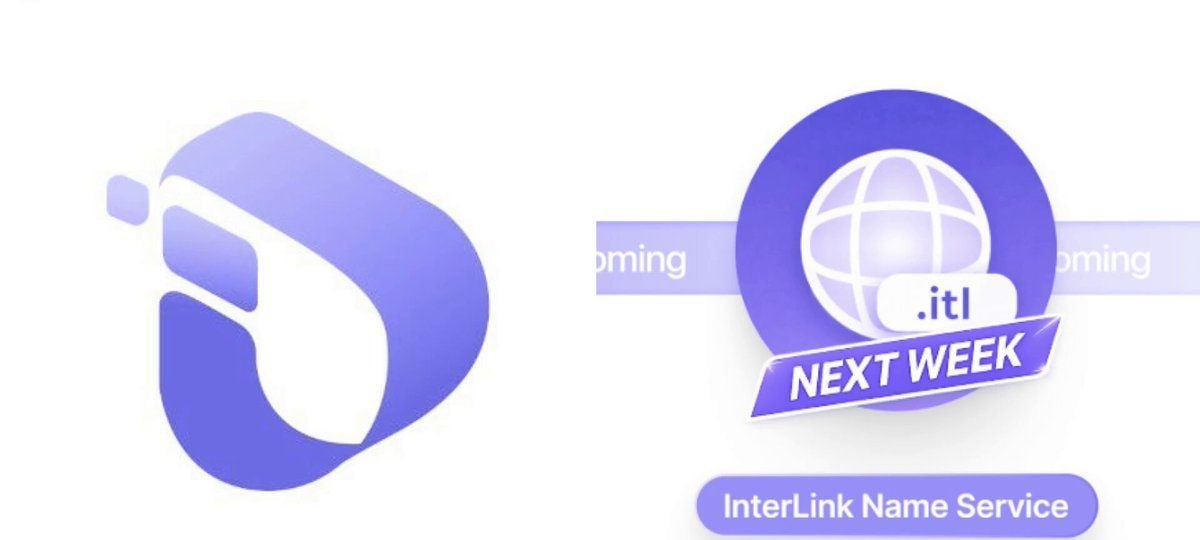
InterLink (@inter_link) has confirmed that its InterLink Name Service (INS) will go live next week, marking what the project describes as a major milestone for its broader ecosystem. What Is
InterLink (@inter_link) has confirmed that its InterLink Name Service (INS) will go live next week, marking what the project describes as a major milestone for its broader ecosystem.
What Is INS?
INS is InterLink's on-chain naming and identity protocol. Ownership records are stored and managed through smart contracts, meaning there is no central authority controlling user data or identities. At their core, blockchain naming systems like INS operate through smart contracts that record ownership, resolve names to addresses, and enforce transfer rules without any intermediary authority.
The service is designed to give users full control over their digital identities. According to InterLink, INS will support payments, credentials, governance, and future Web3 applications, positioning it as a foundational layer rather than a standalone product.
The concept draws a natural comparison to Ethereum Name Service (ENS), the most established Web3 naming protocol to date. ENS has become one of the most widely used decentralized naming systems, with millions of registered domains and strong adoption across the Ethereum ecosystem. InterLink is aiming to replicate that utility within its own network, with the added dimension of biometric-verified identity baked in at the protocol level.
Where INS Fits In the InterLink Ecosystem
The InterLink ecosystem is a modular, human-first architecture that connects identity, application, and blockchain infrastructure into one unified network.InterLink is a Web3 protocol that puts verified human identity at the heart of the blockchain, with a mission to build a decentralized network powered exclusively by real people, not bots, AI agents, or fake accounts.
Verified InterLink identities are designed to facilitate access across multiple blockchain networks including Ethereum, BNB Chain, and Solana. INS extends this identity infrastructure by giving users a human-readable name tied to their verified on-chain profile, making it usable across payments, decentralized applications, and governance systems within the InterLink network.
InterLink says INS will become the universal identity layer across its ecosystem, tying together the various applications and services it is building. The launch next week will be closely watched as an indicator of how the project's identity infrastructure performs at scale.
InterLink Labs WhitepaperBitget Academy: What Is Interlink (ITLG)?Blockchain Domains for Decentralized Identity in Web3, Nadcab