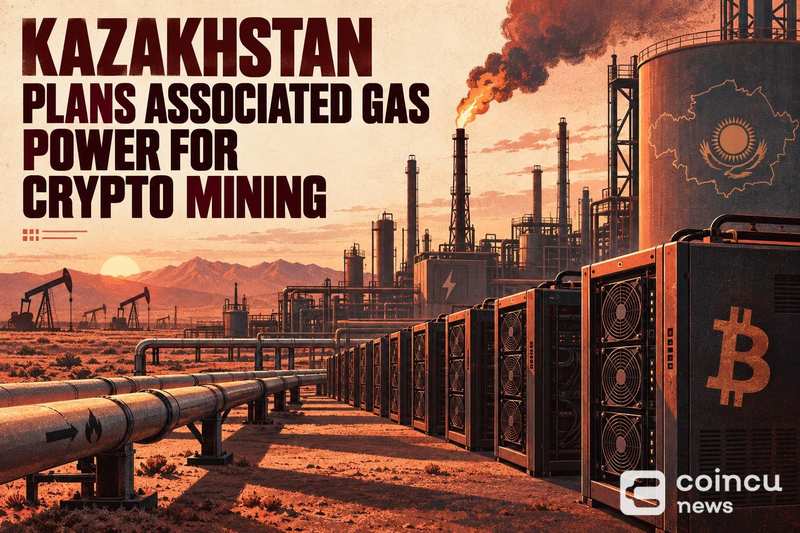
Kazakhstan is planning to redirect associated petroleum gas, a byproduct of oil extraction that is often burned off at the wellhead, toward electricity generation that could supply up to 1.3
Kazakhstan is planning to redirect associated petroleum gas, a byproduct of oil extraction that is often burned off at the wellhead, toward electricity generation that could supply up to 1.3 terawatt-hours of power annually for licensed crypto mining operations, according to the proposal circulating among Kazakhstani energy and digital assets authorities.
Kazakhstan's Associated Gas Plan for Crypto Mining Electricity
The proposal positions associated gas as a feedstock for dedicated power capacity allocated to the crypto mining sector, with 1.3 TWh cited as the upper planned ceiling, not a confirmed or delivered generation figure. Whether that ceiling is reached depends on infrastructure buildout, regulatory approvals, and the volume of gas that can be economically captured rather than flared or vented at producing fields. For related coverage, see Football, Crypto and $5 Million of Rewards in 1win’s World Cup Mega Tournament.
Kazakhstan has established itself as an active jurisdiction for crypto adoption and digital payments infrastructure, and the associated gas initiative would extend that engagement into the energy layer of blockchain infrastructure. The plan is presented as a forward-looking allocation, not an operational program already delivering power to miners. For related coverage, see 1win Crypto Tournaments Go Global With Up to 200K USDT in Rewards.
What Associated Gas Is and How It Becomes Mining Power
Associated Gas Defined
Associated petroleum gas is natural gas that emerges alongside crude oil during extraction. At many production sites, infrastructure to capture and transport the gas does not exist, so operators burn it off in a process called gas flaring or release it directly into the atmosphere. The Kazakhstan proposal would instead capture this gas and route it to generators that convert it into electrical power.
From Gas to Grid to Mining Load
Once combusted in gas-fired turbines or reciprocating engines, the gas produces electricity that can be delivered either via local grid connections or through on-site generation at or near the oil fields. That electricity would then power mining hardware, closing a loop between a stranded hydrocarbon byproduct and electricity-intensive proof-of-work computation. The specific technology, operators, and field locations involved in the Kazakhstan plan have not been confirmed in available reporting. For related coverage, see 20 Million Russians Hold Nearly $44B in Crypto Assets.
A terawatt-hour measures the total volume of electrical energy delivered over time, equal to one trillion watt-hours. At 1.3 TWh annually, the proposed capacity could sustain a meaningful base of industrial-scale mining hardware operating continuously, though actual mining capacity would depend on equipment efficiency, utilization rate, and whether the allocation is exclusive to mining or shared with other industrial loads.
The 1.3 TWh ceiling is an upper planned estimate. Actual power availability will hinge on how much associated gas is technically recoverable, the capital required to build out capture and generation infrastructure, and the contractual terms under which miners would access the electricity. None of these inputs have been confirmed as settled in publicly available documentation.
Potential Rationale and Open Questions
Use of Otherwise Constrained Gas
The rationale for routing associated gas toward crypto mining rather than flaring it is straightforward in principle: gas that would otherwise be wasted becomes monetized through power sales to mining operators, while miners gain access to electricity that does not compete with residential or industrial grid demand. Whether that rationale holds operationally depends on the economics of gas capture, the regulatory framework governing associated gas in Kazakhstan's oil-producing regions, and the contractual structure connecting field operators, power generators, and mining licensees.
What Remains Unconfirmed
The proposal raises several open questions that publicly available reporting has not resolved: which oil fields or operators are involved, what the power price would be for miners, whether environmental permitting for gas-to-power projects is in place, and on what timeline the capacity could come online. Regional regulatory dynamics are also shifting, with neighboring Russia moving toward mining restrictions in key areas while Kazakhstan has taken a more accommodative posture toward licensed mining activity.
FAQ: Kazakhstan's Associated Gas Crypto Mining Plan
What is Kazakhstan planning to use associated gas for? Kazakhstan plans to use associated petroleum gas, a byproduct of oil extraction, to generate electricity that would be supplied to licensed crypto mining operations.
How much electricity could the plan supply? The proposal cites up to 1.3 TWh annually as the maximum planned electricity allocation. This is an upper estimate, not a confirmed delivered figure.
Is the 1.3 TWh figure confirmed mining electricity output? No. The 1.3 TWh represents the ceiling of a proposed allocation. Actual delivered power would depend on infrastructure development, regulatory approvals, recoverable gas volumes, and operational terms that have not been publicly confirmed.
What details remain unknown about the proposal? Key unknowns include the specific oil fields and operators involved, the power pricing structure for miners, the environmental permitting status of associated gas capture projects, and the timeline for bringing capacity online.
Disclaimer: This article is for informational purposes only and does not constitute financial or investment advice. Cryptocurrency and digital asset markets carry significant risk. Always do your own research before making decisions.
The post Kazakhstan Plans Associated Gas Power for Crypto Mining was initially published on Coincu.