Kraken is now allowing traders to use tokenized stocks as collateral for leveraged trades, expanding the utility of equity-linked digital assets on its platform beyond simple buy-and-hold exp
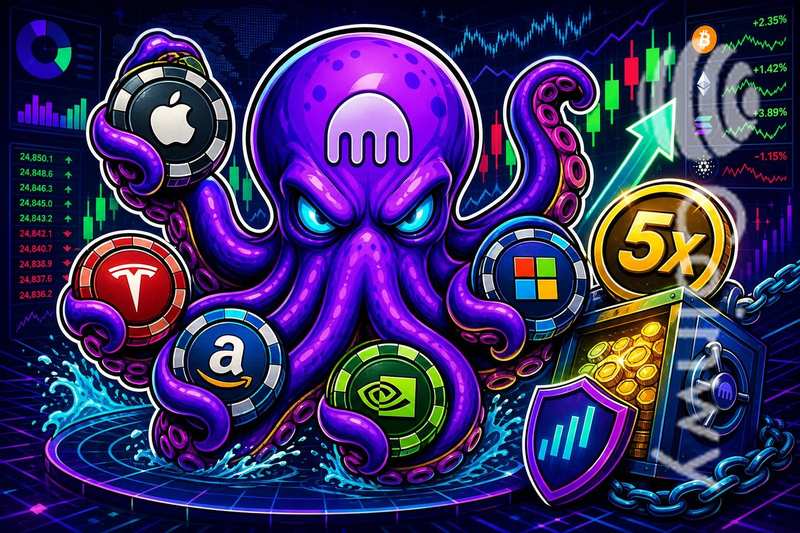
Kraken is now allowing traders to use tokenized stocks as collateral for leveraged trades, expanding the utility of equity-linked digital assets on its platform beyond simple buy-and-hold exposure.
What Kraken Announced About Tokenized Stocks and Leverage
The exchange announced that its xStocks, tokenized versions of traditional equities, are now eligible as collateral for futures and margin trading. This means traders holding tokenized stock positions can post them as backing for leveraged crypto trades, rather than needing to sell those positions first. For related coverage, see Aave Founder Denies Kraken Stake Deal Report.
The update builds on Kraken's earlier rollout of xStocks, which launched tokenized stock trading via Solana to give users around-the-clock access to equity exposure through crypto rails. By making these assets usable as collateral, the exchange is turning passive holdings into active trading capital. For related coverage, see Kraken Parent Payward Sues PowerTrade Over Alleged $7.2M Asset Misuse.
Kraken also introduced margin trading for xStocks on Kraken Pro, further integrating tokenized equities into its leveraged trading infrastructure. Together, these features position xStocks as more than a tokenization experiment.
How Using Tokenized Stocks as Collateral Could Work for Traders
Collateral is what backs a leveraged position. When traders open margin or futures trades, they must post assets to cover potential losses. Traditionally on crypto exchanges, this means depositing stablecoins or major cryptocurrencies like Bitcoin and Ethereum.
By accepting tokenized stocks as collateral, Kraken lets traders maintain equity exposure while simultaneously using that value to open leveraged positions. A trader holding tokenized Apple or Tesla shares, for example, would not need to liquidate those positions to free up margin.
The tradeoff is added risk. Tokenized stocks carry their own price volatility, and if the underlying equity drops in value, the collateral backing a leveraged trade shrinks. This could trigger margin calls or liquidations on both sides, the stock position and the leveraged trade, simultaneously. Traders using this feature need to account for correlated drawdowns across their portfolio.
Why This Matters for Tokenized Assets and Exchange Competition
This move signals that tokenized real-world assets are evolving past simple exposure products. When exchanges give tokenized assets collateral utility, those assets gain a functional role in trading infrastructure, not just a speculative one. That distinction matters for adoption.
Kraken is not the only platform pushing into tokenized equities. Ondo Finance recently brought tokenized U.S. stocks to Binance Wallet, showing that competition for tokenized asset distribution is intensifying across major platforms. Kraken's collateral integration, however, adds a layer of utility that pure trading access does not.
The exchange has been expanding aggressively on multiple fronts, including its launch of U.S. perpetual futures after acquiring Bitnomial. Allowing tokenized stocks to serve as collateral fits into a broader strategy of deepening the financial toolkit available to traders on the platform.
For the wider tokenized asset market, Kraken's decision could push other exchanges to add similar collateral support, gradually building the infrastructure needed for tokenized equities to function as first-class assets in crypto-native trading systems.
Disclaimer: This article is for informational purposes only and does not constitute financial or investment advice. Cryptocurrency and digital asset markets carry significant risk. Always do your own research before making decisions.
Read original article on coinwy.comRead also :