Layer 2 networks now carry much of the daily activity that once crowded the main Blockchain. They run transactions off the main chain and lean on it for security. This guide uses official Eth
Layer 2 networks now carry much of the daily activity that once crowded the main Blockchain. They run transactions off the main chain and lean on it for security.
This guide uses official Ethereum and Optimism sources to explain how they work. It covers the upgrades that cut costs, the risks that remain, and the 2027 outlook.
It also asks whether a big rally is coming. Readers new to the topic can start with a guide on what Ethereum is.
What Are Layer 2 Networks, and Why Do They Exist?
Ethereum is secure and open, yet it has a limit on how much it can process. Layer 2 networks were built to work around that limit. They add room without giving up the base chain.
The Scaling Problem
TheLayer 2 page on ethereum.org says an L2 is a separate chain that extends the base Network and inherits its security. It explains the need with the blockchain trilemma. A simple design can reach only two of three goals: decentralized, secure, and scalable. The page says Network handles about 15 transactions per second on Layer 1 until sharding. It also notes that demand has pushed fees up.
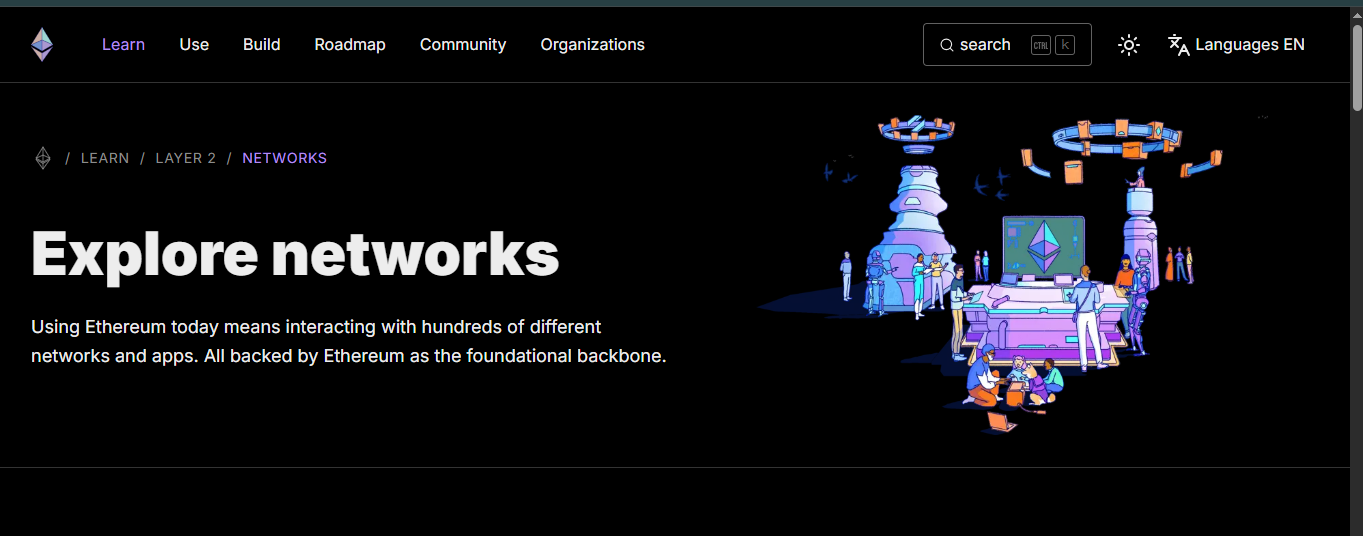
Source: Ethereum Layer 2 page
Optimistic and ZK Rollups
Most Layer 2 networks use rollups. A rollup bundles hundreds of transactions into one Layer 1 transaction, so the fee is shared by many users. Execution happens in the rollup, while the data is posted to Layer 1. Optimistic rollups assume transactions are valid and use fault proofs when someone raises a challenge. Zero-knowledge rollups run the math offchain and send a validity proof to Mainnet. A guide to rollup types goes deeper on the trade-offs.
How Have Blob Upgrades Made Layer 2 Networks Cheaper?
Rollups pay Ethereum to store their data. That cost is the main fee they pass on to users. Ethereum has therefore worked on cheaper data space.
Blobs, Pectra, and Fusaka
The Ethereum Foundationprotocol update for 2026 lists the steps so far. The Pectra upgrade in May 2025 doubled blob throughput. Fusaka followed in December 2025 and brought PeerDAS. The post cites an 8x rise in theoretical blob capacity. Two later forks began ramping the target up from 6 blobs per block. The gas limit also rose from 30 million to 60 million.
What Glamsterdam Could Add
Glamsterdam is the next major upgrade. The same post lists parallel execution, enshrined proposer-builder separation, and more blob scaling as planned parts. The ethereum.org roadmap page lists it as testing on testnets in late November 2026, with no mainnet date set. So Layer 2 networks in 2027 depend on a timeline that can still shift. A piece on Ethereum gas fees shows how these costs reach users.
Why Does Interoperability Matter in 2027?
Many chains means many islands. Moving between them is slow and risky today. Both the Ethereum Foundation and Optimism treat this as a core goal.
The 2026 Scale and UX Tracks
The 2026 plan has three tracks: Scale, Improve UX, and Harden the L1. Scale aims at a gas limit toward and beyond 100 million. Improve UX covers native account abstraction and links between L2s. The post says the Open Intents Framework has reached production. These steps could make Layer 2 networks feel like one system to a normal user.
The OP Stack Superchain
The Optimism Superchain design describes a network of chains that share bridging, governance, upgrades, and a messaging layer. All of them run on the OP Stack. The page says cross-chain messaging is still in development and open for testing. It also calls the Superchain a concept and an in-flight project. Fault proofs still rely on a trusted set of attestors for now, with stronger proofs planned.
Topic
Official detail
Source
L1 speed
About 15 transactions per second
ethereum.org
Fusaka
8x theoretical blob capacity
Ethereum Foundation
Gas limit
30 million to 60 million
Ethereum Foundation
Superchain interop
In active development, open for testing
Optimism docs
What Risks Should Users Know?
Security is inherited in theory. In practice, many projects are young. The ethereum.org page warns that no Layer 2 is as battle tested as Layer 1 Mainnet. It adds that many L2 technologies only went live in 2021. Sidechains and validiums also exist. They connect through bridges but do not take their security from Ethereum. Users should check which design a network uses before moving funds. Young code and trusted parts are good reasons to start with a small amount and test a withdrawal first. A guide to crypto seed phrase wallet safety covers the basics.
Is the Next Big Layer 2 Rally Coming?
No official source answers that. The Ethereum and Optimism pages describe capacity, design, and plans. None of them forecasts a token price or links upgrades to demand. Cheaper data space can lower fees, but low fees alone do not create buyers. Anyone asking about a rally should separate three things. Network use is one. Token value is another. Market mood is a third. Layer 2 networks may grow in use and still see weak token prices.
What Should Readers Watch in 2027?
Four signs stand out. The first is the Glamsterdam date and what it delivers for blobs. The second is the next blob target changes after Fusaka. The third is progress on cross-L2 messaging. The fourth is proof upgrades that cut the need for trusted parties. Official posts from Ethereum and Optimism offer the cleanest updates.
Final Thoughts on Layer 2 Networks
Layer 2 networks are the main way the base chain plans to scale. Blob upgrades have cut data costs. Further work on gas limits and cross-chain links is planned for 2026 and beyond. Risks remain, since young systems still lean on trusted parts. Readers should follow official updates and avoid any claim that treats a rally as certain.
Disclaimer: This article is for general information only and is not financial, investment, or technical advice. Crypto prices are volatile, and investors may lose their full investment.