Lighter’s Guardian mechanism helped recover affected customer funds. Withdrawals have resumed, with pending requests being processed. Unofficial signing code exposed API private keys through
- Lighter’s Guardian mechanism helped recover affected customer funds.
- Withdrawals have resumed, with pending requests being processed.
- Unofficial signing code exposed API private keys through nonce reuse.
- Additional restrictions will limit how trading credentials can be used.
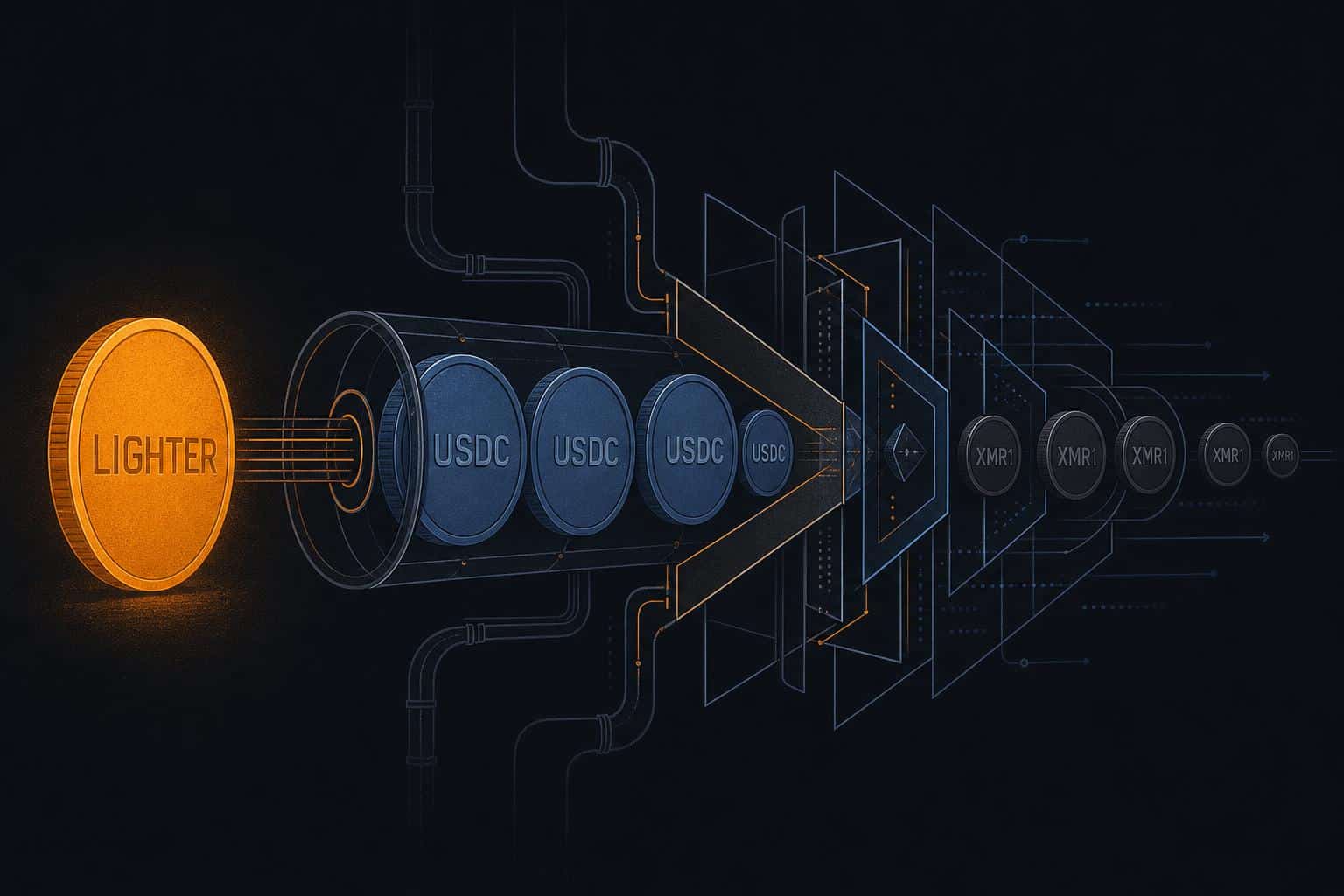
Lighter has returned approximately 5 million USDC to an affected trader following a security incident, with withdrawals back online after an emergency intervention.
The decentralized trading platform detailed the recovery in its November 16 incident report. Its smart contract-based Guardian mechanism temporarily suspended withdrawals, allowing the Security Council to intervene before the affected assets were returned.
The recovery offers a rare concrete example of an emergency control being used to restore funds following a compromised trading account. It also raises a practical question for traders using automated strategies: how much protection remains when the vulnerability sits outside the exchange’s official software?
How Lighter’s Guardian Enabled the Recovery
The Guardian mechanism provided the initial containment measure. By pausing withdrawals, it created an opportunity for the Security Council to act while the affected funds remained recoverable.
The distinction between stopping an attack and reversing its financial consequences is important. Suspending withdrawals can restrict further asset movement, but returning funds requires an additional recovery process and sufficient control over the assets involved.
Lighter reported that both steps were completed for the affected trader.
The platform has not established, in the information provided, that every potentially compromised account has been secured or that the returned amount represents the incident’s total financial exposure.
For users evaluating the platform’s security model, the relevant feature is the combination of automated emergency restrictions and Security Council intervention. Such arrangements can provide recovery options that would be unavailable after assets move irreversibly beyond the platform’s control.
They also introduce a governance consideration: users depend on the rules governing when emergency authority can be exercised and who can authorize it.
The Signing Error That Exposed Trading Accounts
Lighter’s investigation identified nonce reuse in unofficial signing code as the entry point.
A cryptographic nonce is intended to be unique for each signature. When the same nonce is reused with the same key across different messages in vulnerable signature schemes, an observer can mathematically reconstruct the private key.
The attacker exploited that weakness to obtain API credentials from publicly available signatures. Those credentials were then used to create a public pool through a compromised account, move assets into it and redeem the pool shares from an attacker-controlled account.
Lighter said its official SDKs generate nonces safely and were not affected. The company advised traders running automated strategies or trading agents to use its official software libraries.
The incident demonstrates why API key permissions matter beyond their ability to place orders. An attacker who cannot directly withdraw through an API may still find another route if the credentials authorize transfers into structures from which assets can be redeemed.
Why the Reported Losses Differ
The recovery announcement addresses only part of the financial picture.
In a separate on-chain investigation, Bitquery identified a withdrawal of 10,393,057 USDC from Lighter’s Ethereum contract at 10:11 UTC on November 16.
The funds were subsequently exchanged for ETH, with portions routed toward Hyperliquid. Bitquery also discussed a second reported amount of approximately $5.09 million that had not left Lighter when its researchers examined the blockchain. Bitquery
That distinction offers a plausible explanation for the differing figures. The assets recovered through Guardian may correspond to the second reported amount, while the larger withdrawal had already moved beyond the platform.
However, Lighter has not publicly established that exact reconciliation in the material reviewed. The two amounts should therefore not be combined into a confirmed total loss, nor should the recovered funds be described as the entire incident proceeds.
The important positive development is narrower and verifiable: Lighter’s emergency controls enabled the return of assets before they could be withdrawn from the platform.
Security Changes Already in Place
Lighter has responded by requiring wallet signatures for public-pool transfers and making API key signatures non-public.
The first measure introduces an additional authorization requirement at the point exploited by the attacker. The second reduces public exposure of the signature material that was used to reconstruct vulnerable credentials.
The platform also plans to introduce IP allowlists, configurable permissions and spending limits for individual API keys, and monitoring to identify credentials potentially exposed through nonce reuse.
These measures address different stages of the attack. Safer signing protects the private key itself, while narrower API permissions can restrict the damage if a credential is compromised.
For professional trading firms, that separation matters. Automated execution requires software access to accounts, but trading permissions need not automatically confer unrestricted authority over internal asset transfers.
Lighter’s recovery shows the value of having an emergency intervention mechanism available. Its next task is reducing the likelihood that a compromised trading key can reach that emergency stage in the first place.
The post Lighter Returns 5M USDC as Security Safeguards Limit Damage appeared first on ETHNews.