<!doctype html> LlamaRisk Flags 10%-36% APRs in Frozen Aave Stablecoin Reserves Frozen Aave Stablecoin Reserves Saw 10%-36% Borrowing APRs, LlamaRisk Says For Southeast Asian users with posit
<!doctype html>
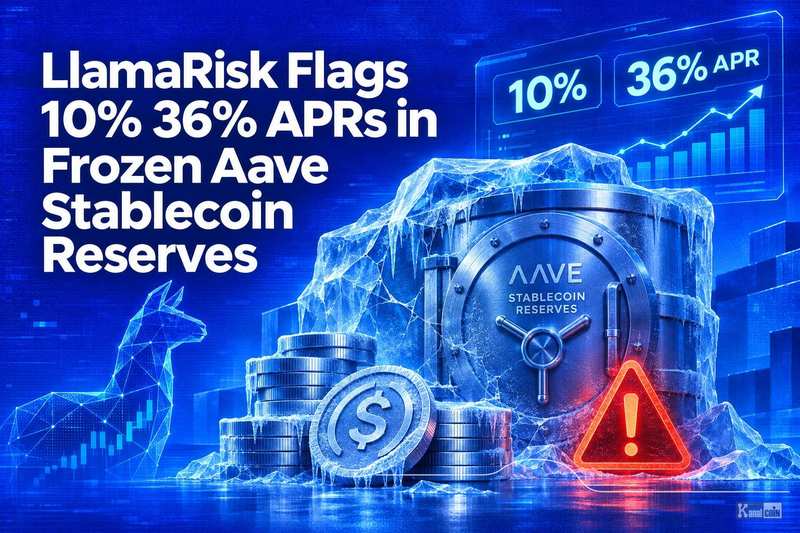
LlamaRisk Flags 10%-36% APRs in Frozen Aave Stablecoin Reserves
Frozen Aave Stablecoin Reserves Saw
10%-36% Borrowing APRs, LlamaRisk Says
For Southeast Asian users with positions on global DeFi protocols, the reported Aave reserve issue puts the status of outstanding borrowing into focus. It is a narrow protocol-risk report: the available evidence concerns major frozen stablecoin reserves and continuing debt accrual, rather than a finding about all Aave markets, regional exchanges or every holder of the AAVE token.
TL;DR
- LlamaRisk reported a 10%-36% borrowing-APR range.
- The finding concerns major frozen Aave stablecoin reserves.
- Outstanding debt continued to accrue, according to the report.
Frozen Aave stablecoin reserves recorded elevated borrowing costs
What LlamaRisk reported
CryptoSlate’s report on LlamaRisk’s findings said borrowing APRs in major frozen Aave stablecoin reserves ranged from 10% to 36%. The same report said debt kept accruing. The supplied research does not contain a reserve-by-reserve list, a debt total or a timestamped rate table, so those details are not established here.
That scope matters for readers in Jakarta, Bangkok, Manila and Singapore. The report describes affected reserves, not a protocol-wide borrowing condition. It also provides no evidence of comparable terms for balances held at local platforms, a distinction worth keeping separate from Kanalcoin’s separate coverage of AAVE price movement.
Which reserves are in scope
The reporting describes the reserves as major, stablecoin-denominated and frozen. It does not identify the tokens in the research supplied for this article. Nor does it document the precise handling of deposits, withdrawals, collateral settings or borrower actions beyond the reported freeze and continued debt accrual, according to the cited account. For related coverage, see Why Is Aave (AAVE) Price Surging Today?.
The supplied report places the episode in the context of a Binance hack. Readers looking for the separate event context can consult Kanalcoin’s report on market reaction after the Binance hack and its coverage of the FBI’s attribution and flagged crypto addresses. Those internal reports are context, not independent confirmation of LlamaRisk’s Aave reserve findings.
Frozen status did not end reported debt accrual
Outstanding debt versus new activity
The central observation is limited but important: a reserve was described as frozen while debt associated with it continued to accrue. The CryptoSlate report does not show that new borrowing occurred, and the research brief does not establish a technical cause for the accrual. It is therefore more accurate to describe existing borrower debt than to claim that users could open fresh loans. Context on this theme: South Korea Regulator Urges Crypto Exchanges to Hold More Customer Assets.
APR means annual percentage rate, an annualized measure of borrowing cost. In this case, the reported 10%-36% range is relevant as a measure attached to the affected reserves, not as a forecast for the AAVE token or a reading on every Aave lending pool. That is the boundary of the available evidence.
The research package also lists DefiLlama’s pools dataset as a reference layer, but supplies no preserved pool snapshot or sourced statistic from it for this episode. It cannot therefore substantiate an additional rate, balance or cross-protocol comparison in this report.
Questions tied to the documented finding
For a borrower in an affected reserve, the report points to questions worth checking against current protocol information: whether debt remains outstanding and whether interest is continuing to accrue. These are monitoring questions derived from LlamaRisk’s reported observations, not financial advice or proof that every Aave stablecoin reserve has the same condition.
For Indodax, Tokocrypto, Upbit KR and Coins.ph users, the research brief provides no exchange response or Southeast Asian regulatory action. The documented report supports attention to externally hosted DeFi positions, but it does not support claims about local customer exposure, exchange operations or regulatory outcomes. The practical ASEAN takeaway is to distinguish a documented reserve-level issue from broader claims that the record does not prove.
Limits of the available record
The finding is attributed to LlamaRisk through the available report. The research supplied for this article includes neither a primary Aave governance record nor a reserve dashboard snapshot. Readers should treat this as a focused account of frozen stablecoin reserves and seek current, official protocol information before acting on an affected position.
Disclaimer: This article is for informational purposes only and does not constitute financial or investment advice. Cryptocurrency and digital asset markets carry significant risk. Always do your own research before making decisions.
Read original article on kanalcoin.com