Local stablecoins, supposed to reduce dependence on the dollar, might instead accelerate its dominance. According to the IMF, their adoption on the same blockchains as USDT/USDC facilitates t
Local stablecoins, supposed to reduce dependence on the dollar, might instead accelerate its dominance. According to the IMF, their adoption on the same blockchains as USDT/USDC facilitates the flight to the dollar. A counterproductive effect that raises questions. What if the solution became the problem?
In Brief
- Local stablecoins amplify dollarization through their interoperability with USDT/USDC.
- Tether (USDT) dominates. Its liquidity and global adoption make it the undisputed king of Stablecoins, despite its risks.
- Should we regulate, adopt, or resist this monetary revolution?
Local Stablecoins Boost Dollar Demand: The IMF Paradox
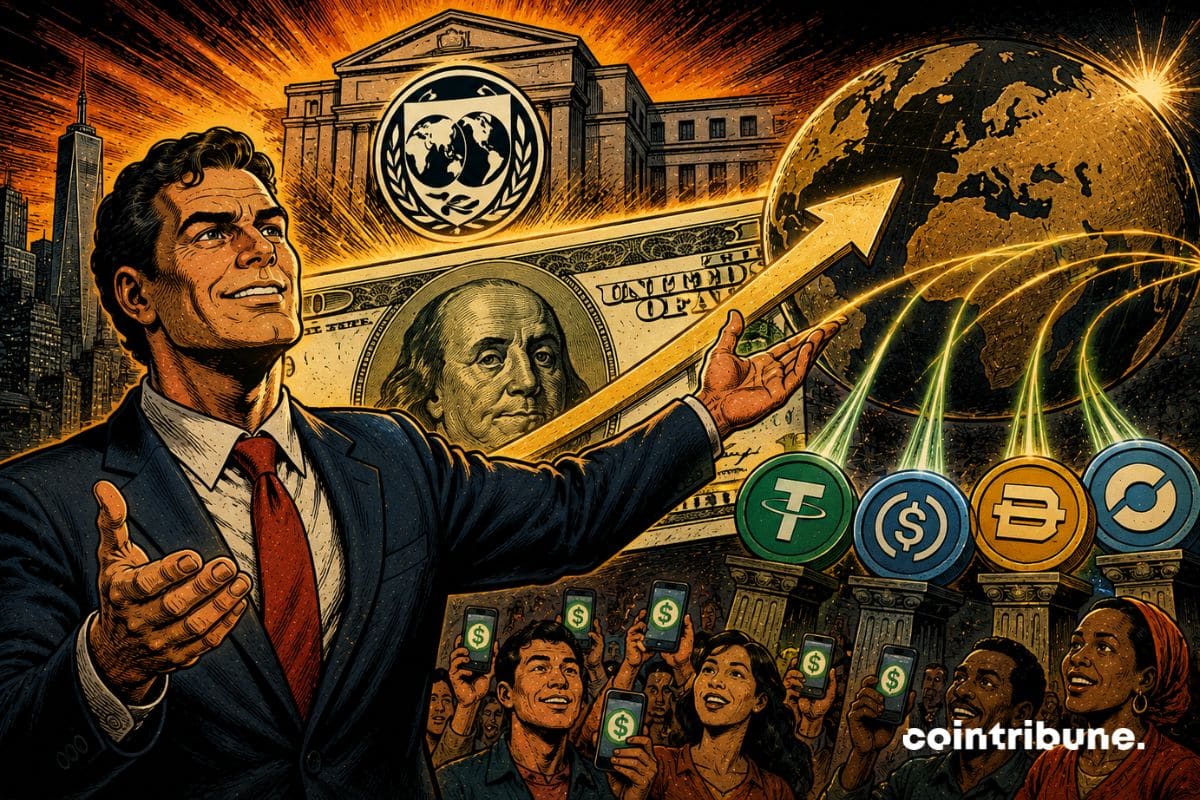
The IMF sounds the alarm. Stablecoins pegged to local currencies, designed to limit dollarization, could instead amplify it. Why? Because once on the same blockchain (Ethereum, Tron, etc.), users can instantly convert these stablecoins to USDT or USDC via DEXs like Uniswap. Result: instead of strengthening the naira, the cedi, or the CFA franc, these assets open a back door to the dollar.
Dan Katz, deputy director of the IMF, explains that in economies like South Africa, where stablecoins in rand struggle to take off, users massively prefer dollar-backed tokens for their liquidity and global acceptance. Worse, this interoperability reduces the effectiveness of currency controls, depriving central banks of essential levers. An irony for countries trying to protect their monetary sovereignty. Are local stablecoins a solution… or a Trojan horse for the dollar?
Your 1st cryptos with BitpandaThis link uses an affiliate program.Tether (USDT): The Undisputed King Benefiting from the Paradox?
If local stablecoins struggle to establish themselves, Tether (USDT) reaps the benefits. With a market capitalization exceeding 110 billion dollars, USDT dominates emerging markets, where it serves as a safe haven against inflation and unstable currencies. The irony is that the more countries try to promote their own stablecoins, the more users turn to USDT for its unmatched liquidity and global adoption.
In Africa, Latin America, or Southeast Asia, USDT is the de facto currency of cross-border trade, often used to circumvent currency restrictions. Yet, its lack of transparency and controversial links with certain malicious entities make it a risky asset. The IMF warns. If local stablecoins fail to capture demand, Tether could become the symbol of a dollarization 2.0, even harder to control. A scenario that would strengthen dollar dependence… while eroding state authority.
Local stablecoins, meant to free emerging markets, could instead chain them further to the dollar. Between innovation and systemic risk, a debate is essential: should we regulate, adopt… or resist this monetary revolution?