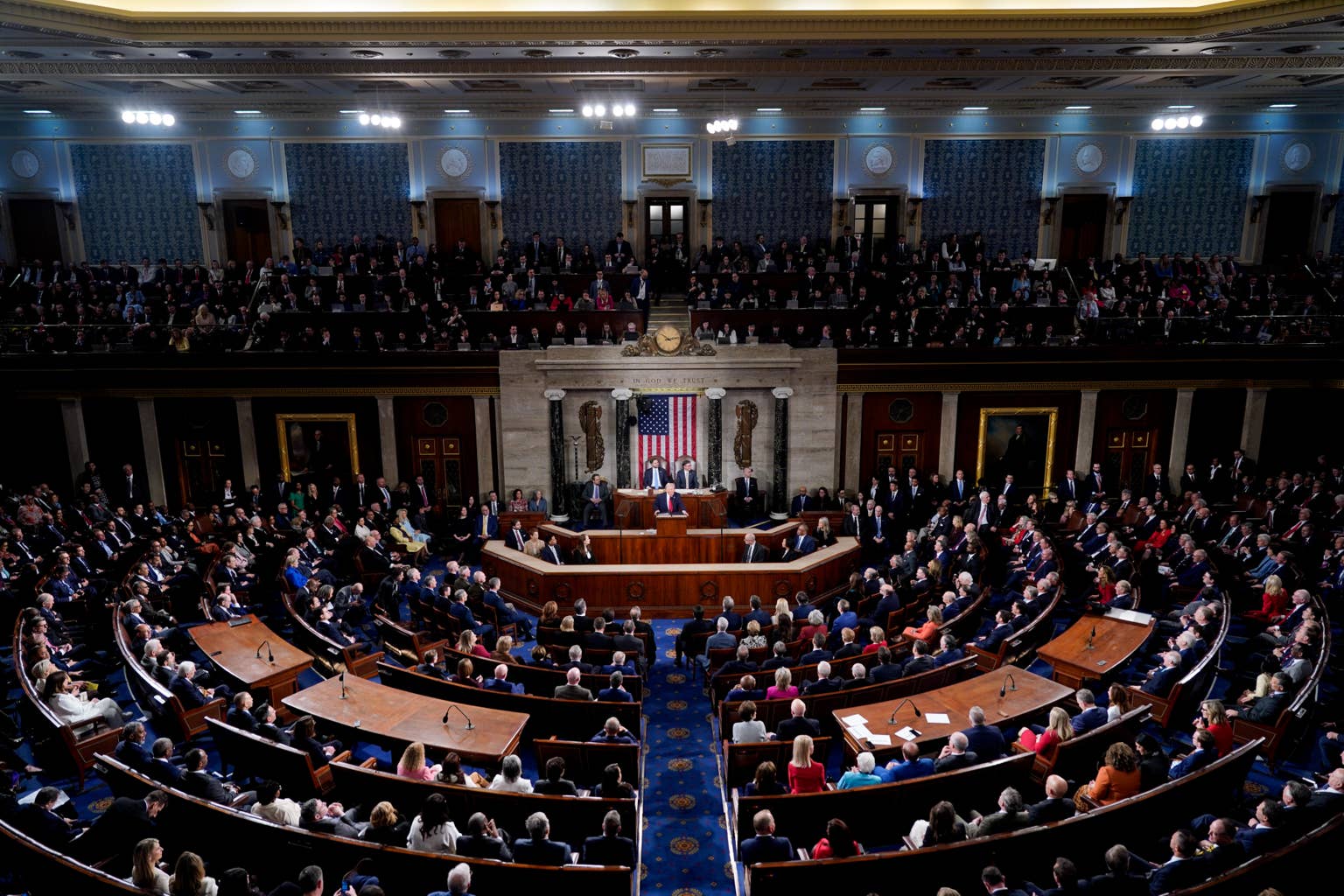
For two years, the crypto industry has worked to bend Washington its way. It poured money into campaigns, won its first federal law and found a champion in the White House. Tuesday’s midterms
For two years, the crypto industry has worked to bend Washington its way.
It poured money into campaigns, won its first federal law and found a champion in the White House. Tuesday’s midterms put the biggest item on its agenda on a short clock.
Democrats won control of both the House and Senate on Nov. 3, according to Associated Press projections.
The current Congress, which has spent more than a year on the CLARITY Act, ends on Jan. 3, 2027. Any bill that isn’t law by then dies and must be reintroduced from scratch.
Related: Inside the five-month plot that led to Binance's $6.3B heist
A rulebook that sailed through the House
The Digital Asset Market Clarity Act tries to settle a question crypto has faced since Bitcoin launched: who regulates it?
The bill sorts tokens into two groups. Tokens that behave like investments in a company would fall under the Securities and Exchange Commission (SEC).
Tokens that behave like commodities, closer to gold or oil than to stock, would go to the Commodity Futures Trading Commission (CFTC). Exchanges, brokers and custodians would get clear paths to register.
The House passed the bill 294 to 134 on July 17, 2025, with 78 Democrats voting yes, according to the House Clerk’s roll call.
The next day, President Donald Trump signed the GENIUS Act, the first major U.S. crypto law. It sets rules for stablecoins, digital tokens pegged to the dollar.
The Senate was harder.
The Agriculture Committee, which oversees the CFTC, advanced its version on January 29, 2026 without Democratic support.
The Banking Committee followed on May 14, voting 15 to 9. Chairman Tim Scott, R-S.C., said the vote showed “Washington can still work together.”
That spirit didn’t reach the floor. On Sept. 15, the Senate voted 49 to 50 to begin debate, 11 votes short of the 60 required.
Every Democrat who voted opposed it. So did four Republicans: Susan Collins, Josh Hawley, Jerry Moran and Thom Tillis. Collins warned the bill could cause “community banks and credit unions to lose deposits.”
Her concern points to one of the fights that stalled the bill.
Banks don’t want crypto platforms paying customers rewards on stablecoins, because those rewards could pull money out of savings accounts.
Trump’s turn from critic to coin issuer
The other fight traces back to the president.
- By July 2024, Trump was courting crypto voters at the Bitcoin Conference in Nashville.
- His family launched the crypto venture World Liberty Financial that year. The $TRUMP memecoin arrived days before his inauguration in January 2025.
That change of heart helped the industry, but it also gave Democrats a reason to dig in.
In July, seven Senate Democrats who had been negotiating the bill, led by Sen. Mark Warner of Virginia, said the Republican draft “falls short.”
They said provisions “addressing ethics for elected officials, consumer protection, illicit finance, conflicts of interest and market integrity must be strengthened.” No deal was reached before the September vote.
Popular on TheStreet Roundtable:
One lame-duck window, then a Warren-led committee
The bill isn’t dead yet.
Tillis voted no specifically so he could file a motion to reconsider, a Senate procedure that lets leaders bring the bill back without starting over. That motion is still pending.
Leaders could try again in the lame-duck session, the weeks between the election and the new Congress.
But the math hasn’t changed: the bill still needs 60 votes, and the Democrats who blocked it in September now have little reason to compromise before they take control.
In January, Democrats take the committee gavels. Sen. Elizabeth Warren, D-Mass., the Banking Committee’s top Democrat and one of crypto’s sharpest critics, would be in line to chair it. Rep. Maxine Waters, D-Calif., would be in line to lead the House Financial Services Committee.
A reintroduced bill would have to go through committee hearings and floor votes in both chambers again. A Democratic Senate would also vote on future nominees to the SEC and CFTC.
Regulators hold the pen for now
Without a law, crypto rules will keep coming from regulators. The GENIUS Act stays in force.
The SEC and CFTC can keep writing guidance and rules, and the two agencies have been coordinating through an effort called Project Crypto.
That matters for companies such as Coinbase, Robinhood and Circle, whose businesses depend on how exchanges and stablecoins are treated.
Agency rules are easier to reverse than laws, which is why the industry pushed so hard for Congress to act.
The deadline is now fixed. If the CLARITY Act doesn’t pass by Jan. 3, crypto will start over with a Congress run by the party that blocked it.
The Roundtable 100
If you follow our market coverage, don’t miss the Roundtable 100. Updated every Friday, it's a power ranking of the 100 most investable tech stocks, including digital assets. Check out the latest RTB 100 rankings at roundtable100.com.
Related: Bitcoin, XRP, crypto stocks surge after GOP loses midterm 2026