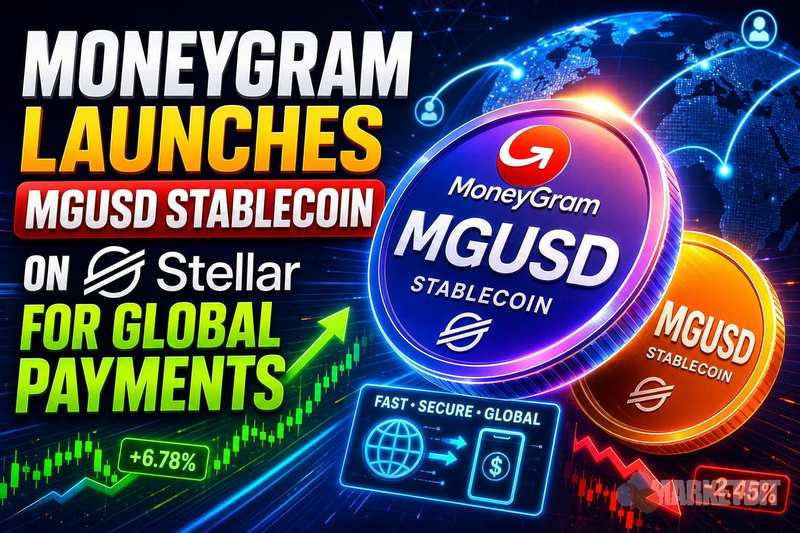
MoneyGram has launched MGUSD, a stablecoin built on the Stellar blockchain, designed to power its global payments network with faster, blockchain-based cross-border transfers. The payments gi
MoneyGram has launched MGUSD, a stablecoin built on the Stellar blockchain, designed to power its global payments network with faster, blockchain-based cross-border transfers.
The payments giant announced the launch of MGUSD as a purpose-built stablecoin tied directly to its existing remittance and settlement infrastructure. The move positions MoneyGram as one of the first legacy payments companies to issue its own stablecoin rather than simply integrating third-party digital assets.
What to Know
- What: MoneyGram launched MGUSD, a stablecoin on the Stellar network
- Why it matters: A major payments company is issuing its own stablecoin to settle real-world transfers
- The network: MGUSD runs on Stellar, a blockchain built specifically for fast, low-cost payments
Why Stellar for MoneyGram's stablecoin
MoneyGram's choice of Stellar is not new. The two companies extended their partnership earlier this year to scale real-world stablecoin utility globally. Stellar was originally designed for cross-border payments, offering low transaction fees and fast settlement times compared to traditional banking rails.
By issuing MGUSD on Stellar rather than a general-purpose chain like Ethereum, MoneyGram is optimizing for the speed and cost profile that remittance customers expect. Stellar's architecture processes transactions in seconds, a critical requirement for a network that handles millions of transfers across more than 200 countries.
The integration suggests MoneyGram views blockchain settlement not as an experimental add-on but as core infrastructure. This aligns with a broader trend of traditional financial companies moving beyond pilot programs into production-grade crypto deployments, similar to how regulated platforms like Kalshi are expanding into crypto derivatives.
What MGUSD signals for stablecoin adoption
A company with MoneyGram's scale issuing its own stablecoin marks a shift from speculative token launches to utility-driven digital assets. MGUSD is not competing for DeFi trading volume; it is built to move money between people across borders.
The distinction matters. Most stablecoins today circulate primarily on exchanges and in decentralized finance protocols. MGUSD, by contrast, is designed to function within an existing payments network that already serves consumers who may never interact with a crypto wallet directly.
For the remittance industry, a stablecoin-powered settlement layer could reduce the reliance on correspondent banking networks that add cost and delay to international transfers. As industry figures have argued, crypto's next phase of growth likely depends on integration with established financial infrastructure rather than standalone speculation.
Whether MGUSD gains meaningful traction will depend on regulatory approvals across MoneyGram's operating markets and user adoption at the agent level. The launch comes at a time when major digital assets remain under pressure, making real-world utility a more compelling narrative than speculative price action.
The launch itself represents a concrete step by a major payments brand to put stablecoin technology into production for everyday cross-border transfers.
Disclaimer: This article is for informational purposes only and does not constitute financial or investment advice. Cryptocurrency and digital asset markets carry significant risk. Always do your own research before making decisions.
Read original article on marketbit.net