Quick answer A non-custodial crypto card lets users spend crypto directly from a wallet they control, rather than depositing funds into a platform's custodial balance first. In 2026, this mod
Quick answer
A non-custodial crypto card lets users spend crypto directly from a wallet they control, rather than depositing funds into a platform's custodial balance first. In 2026, this model has moved from a niche feature to an industry expectation, driven by maturing account-abstraction technology and growing user awareness of custody risk.
Table of contents
- What changed in the crypto card market
- Custodial vs. non-custodial cards, explained
- Why account abstraction made this possible
- What to check before choosing a card
- FAQ
What changed in the crypto card market
For most of the last decade, crypto debit cards worked through a simple but limiting structure: users deposited crypto into a provider's platform, the provider converted it to fiat, and a card drew from that internally held balance. This is functionally identical to keeping funds on a centralized exchange — the provider, not the user, controls the assets between deposit and spend.
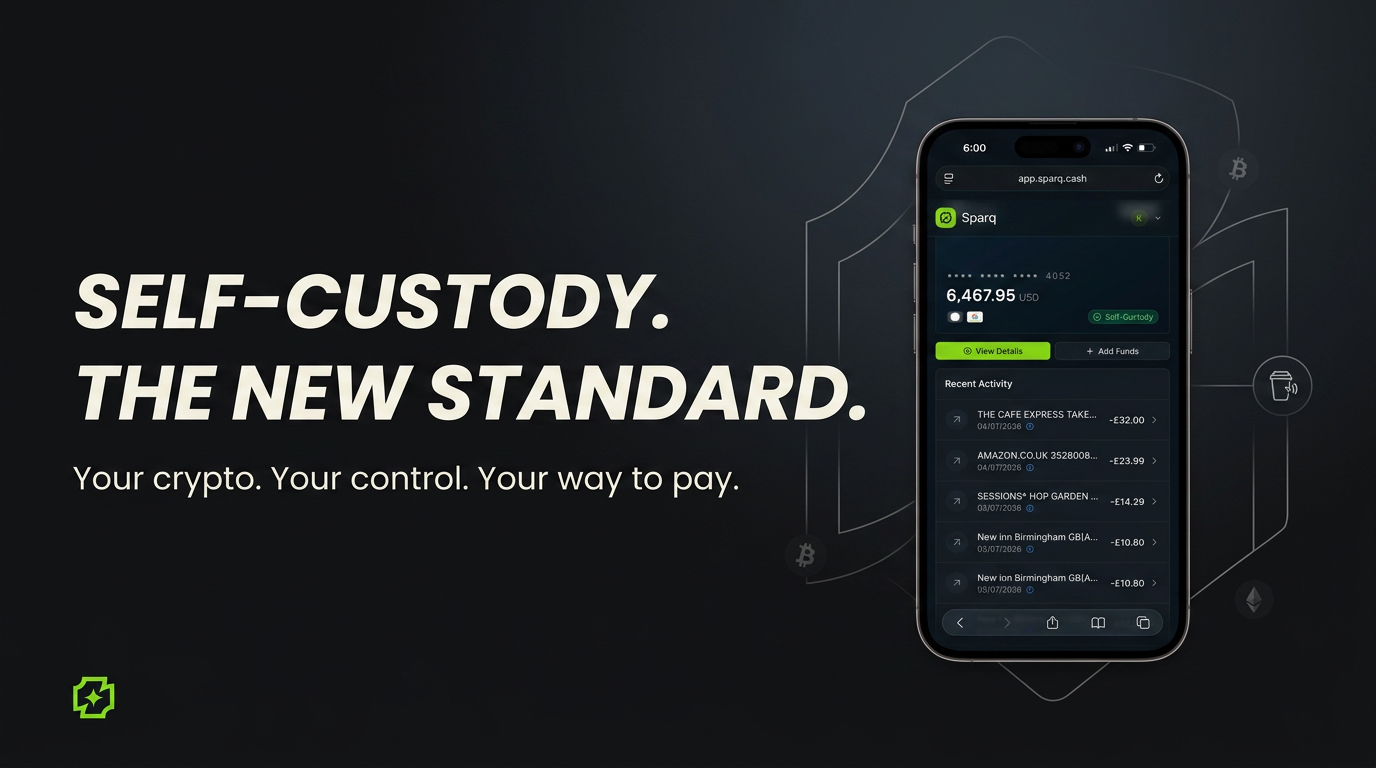
Through 2025 and into 2026, several providers shifted toward non-custodial architectures. Rather than pooling user funds, these designs keep crypto in a smart account the user controls, converting and moving value only at the moment of an actual transaction. MetaMask's card and Bleap are among the more visible examples; smaller providers such as Sparq have built virtual card products around the same non-custodial principle.
Custodial vs. non-custodial cards, explained
Custodial card Non-custodial card Who holds funds Provider's platform User's own smart account Conversion timing On deposit At point of transaction Exposure if provider is compromised Full balance at risk Limited to what's actively being spent Typical UX Simple, exchange-like Improved via account abstraction, no manual seed phrase handling required
Neither model eliminates regulatory obligations — KYC and AML requirements generally apply either way, since card issuance runs through licensed payment rails like Visa or Mastercard regardless of custody structure.
Why account abstraction made this possible
Non-custodial crypto products historically had a UX problem: managing private keys or seed phrases for every transaction was too much friction for everyday spending. Account abstraction — smart contract wallets that can batch signing, recover access, and automate transaction logic — closed that gap. It's what allows a card issued today to be genuinely non-custodial without asking a user to sign a manual transaction at checkout.
This technical maturity, more than marketing, is the real reason the shift accelerated in 2026 rather than earlier.
What to check before choosing a card
- Custody model — confirm whether funds sit in a platform balance or a self-custodied smart account.
- Supported assets — most cards focus on BTC, ETH, and stablecoins like USDT/USDC; broader multi-chain support varies by provider.
- Geographic coverage — non-custodial cards are often regionally limited (EEA-only, US-excluded, etc.), so availability should be confirmed directly.
- Fee structure — FX spreads and conversion fees can differ meaningfully between custodial and non-custodial models.
- Compliance status — PCI DSS compliance and clear KYC/AML policies are reasonable baseline checks for any provider, regardless of custody type.
FAQ
Is a non-custodial crypto card safer than a custodial one?It reduces one specific risk — platform-level custody failure — but doesn't eliminate others, like smart contract risk or user error. It's a different risk profile, not a guarantee of safety.
Do non-custodial cards still require KYC?Generally yes. Card issuance through Visa/Mastercard rails typically requires KYC/AML compliance independent of how custody is structured on the crypto side.
Which cryptocurrencies do these cards usually support?Most current non-custodial cards prioritize Bitcoin, Ethereum, and major stablecoins (USDT, USDC), with broader altcoin support varying by provider.