Nvidia shares have fallen roughly 48% from their early-October peak, as leadership uncertainty and a wider retreat in AI-linked shares shook Wall Street. Nvidia fell about 14% on November 20,
Nvidia shares have fallen roughly 48% from their early-October peak, as leadership uncertainty and a wider retreat in AI-linked shares shook Wall Street. Nvidia fell about 14% on November 20, but the decline reflects weeks of selling, not a single-day collapse.
Why it matters
The selloff extended beyond Nvidia: the Nasdaq turned negative for 2026, while crypto markets also recorded losses. It raises questions about AI valuations, but the available evidence does not establish that the industry’s growth has ended.
What we know
Nvidia stock crash is not a one-day plunge
Le Monde reported on November 21 that Nvidia had fallen roughly 48% from its early-October peak. Le Monde also reported that more than $2.8 trillion in market capitalization had been erased over 45 days. The Associated Press reported Nvidia shares fell about 14% on November 20 and more than 30% since the leadership crisis began earlier that month.
Nvidia announced on November 12 that Jensen Huang had resigned as CEO, president and board member, effective immediately. The company named CFO Colette Kress interim CEO while the board searches for a permanent successor. The board said it expected operations, customer commitments and the product roadmap to continue without interruption. Nvidia’s announcement of the CEO transition gave no reason for Huang’s resignation.
The selloff came despite strong results. Nvidia said on November 17 that fiscal third-quarter 2027 revenue reached $115.8 billion, up 103% year over year. Data Center revenue was $107.6 billion, up 110%. The company forecast fourth-quarter revenue of $130 billion, plus or minus 3%, assuming no Data Center compute revenue from China, according to its financial results announcement.

Nvidia named CFO Colette Kress interim CEO after Jensen Huang’s resignation.
What is still unclear
The supplied reporting gives no public explanation for Huang’s departure, and Nvidia has not named a permanent successor. The board expects business to continue normally, but a leadership change at a company central to the AI hardware market creates uncertainty about strategy and execution. It is a risk to assess, not proof that the product roadmap has changed.
Regulatory scrutiny is another open question. Reuters reported on November 20, citing two people briefed on the matter, that SEC enforcement staff were examining potential accounting issues at Nvidia. The SEC declined to comment, and Nvidia did not immediately respond. Reuters said it could not establish when the inquiry began or what it covered. An inquiry is not evidence of wrongdoing, and the report does not say the SEC has reached a finding.
The broader issue is whether AI spending can generate returns that justify high expectations for chip and computing suppliers. The reports describe disagreement, not a settled verdict. Anthropic’s IPO did not halt the November 20 rout: the Associated Press reported its shares fell 8.5% that day, as Nvidia and other AI-linked chip stocks also sold off.

The November 20 selloff extended beyond Nvidia to the wider US stock market.
How markets and analysts reacted
The retreat reached well beyond Nvidia. Reuters, as reported by Investing.com, said the S&P 500 fell 3.7% on November 20. The Nasdaq dropped 5.3%, turned negative for the year and recorded a 10% weekly decline, its largest since 2020. The AP also described a broad selloff in AI-linked chips and stocks.
Analysts disagreed about what the decline means. Reuters quoted LPL Financial strategist Lawrence Gillum saying he did not view it as a bubble bursting. The AP quoted Baird strategist Michael Antonelli, who said expectations of unlimited AI spending were being repriced, while cautioning that this did not necessarily mean the broader bull market was over. Neither view settles whether current valuations are sustainable.
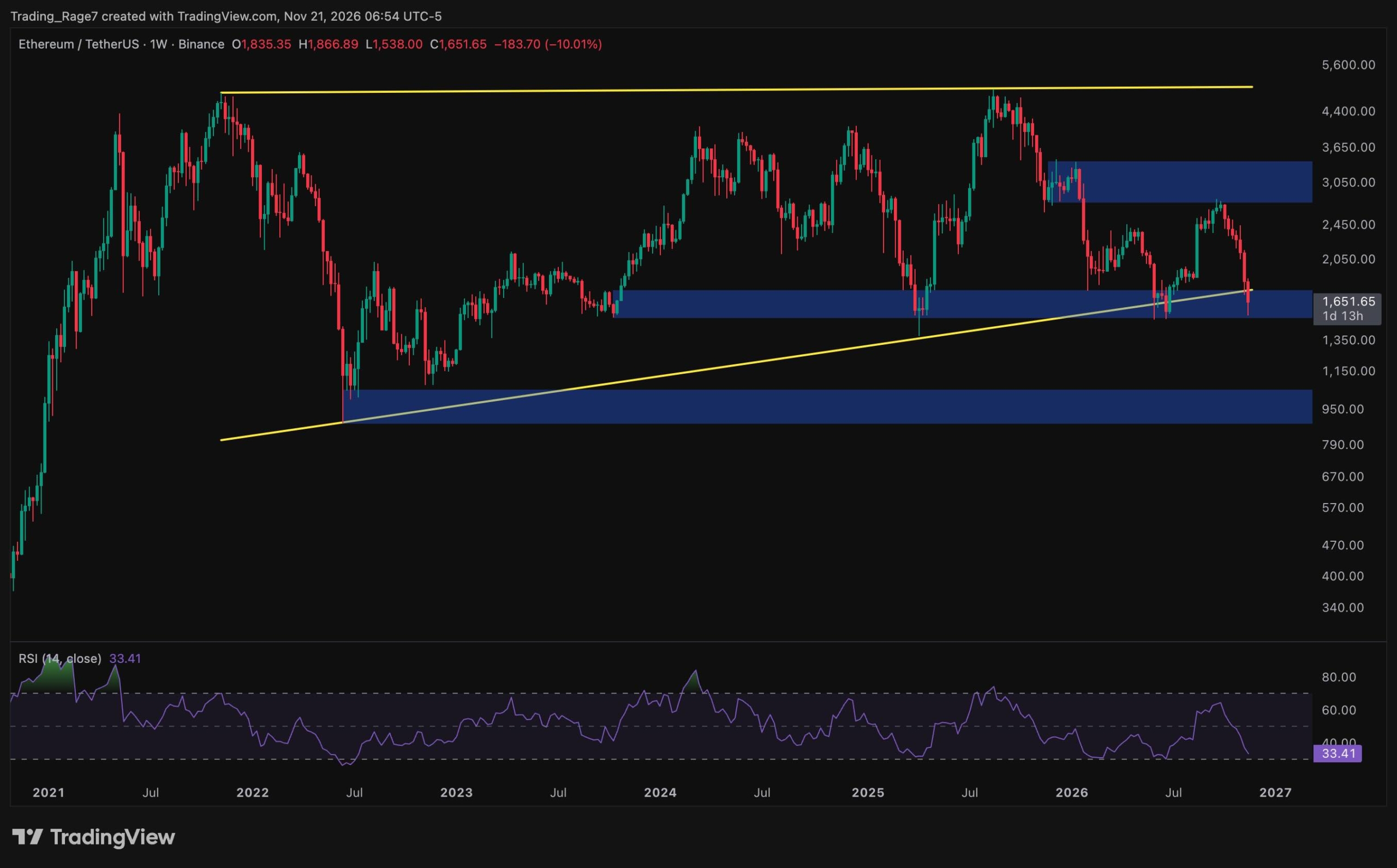
Crypto weakened alongside equities. Decrypt reported that Bitcoin had slipped below $60,000. In a CoinGecko snapshot at 14:13 UTC on November 21, Bitcoin was $60,375, down 2.33% over 24 hours and 9.69% over seven days. Ethereum was $1,694.98, down 3.06% over 24 hours and 10.48% over seven days. Alternative.me’s Crypto Fear & Greed Index stood at 12, classified as Extreme Fear, on November 21.
Asset
Price, Nov. 21 at 14:13 UTC
24-hour change
7-day change
Bitcoin
$60,375
-2.33%
-9.69%
Ethereum
$1,694.98
-3.06%
-10.48%
The figures show losses in both stocks and crypto during the same period, but the supplied reporting does not establish a connection between the declines.

Crypto markets also faced losses during the wider risk-off period.
What the Nvidia stock crash means for investors
The immediate tension is between Nvidia’s reported growth and changing market expectations. Revenue more than doubled year over year, yet the stock has fallen sharply from its peak. Investors may be reassessing both current sales and how much future growth was already priced in. Strong results do not prevent a share price from falling when expectations or perceived risks change.
What to watch after the Nvidia stock crash
Key developments include Nvidia’s search for a permanent CEO, any further information about the SEC inquiry and whether upcoming results support its revenue outlook. Investors will also watch whether AI infrastructure demand remains broad and spending produces durable business returns. The supplied reporting does not answer those questions.
For crypto holders, the snapshot shows how quickly prices can move during wider financial stress. Digital assets are volatile and can lose value, as the reported price declines illustrate. This is context, not a prediction that stocks and crypto will keep moving together.
Bottom line
The Nvidia stock crash is a severe retreat from a peak, but does not by itself prove the AI industry has entered a lasting bust. The leadership change and reported SEC scrutiny add uncertainty even as Nvidia’s latest revenue figures show rapid growth. Investors will be watching the succession process and whether AI spending supports the expectations built into valuations.
Related Articles
Sources
This article is for informational purposes only and does not constitute financial or investment advice. Cryptocurrencies are highly volatile; always do your own research before investing.
Read More:Nvidia stock crash puts the AI boom under pressure">Nvidia stock crash puts the AI boom under pressure