GhostSwap is drawing attention as a simpler alternative to traditional crypto exchanges. The platform lets users exchange digital assets without opening a full trading account. Users choose a
GhostSwap is drawing attention as a simpler alternative to traditional crypto exchanges. The platform lets users exchange digital assets without opening a full trading account.
Users choose a coin pair, enter a destination wallet address, and send funds to a temporary deposit address. The converted asset is then sent to the receiving wallet.
According to the company, this is a non-custodial solution, whereby funds belonging to the customer are not held in long-standing balances on the platform. Such a method can attract customers that want quick and simple solutions.
How GhostSwap Handles Cross-Chain Crypto Swaps
GhostSwap says it supports more than 1,600 digital assets across major blockchain networks. These include Bitcoin, Ethereum, Solana, Polygon, Monero, and Zcash. The service also supports cross-chain swaps.
The company offers a Telegram bot and a public API. The API gives developers access to quotes, address checks, and swap creation tools. It reports more than $750 million in processed swaps and about 1.5 million users. These figures are self-reported.
GhostSwap works as an instant swap service. It is not a full trading exchange. Users cannot hold balances, place limit orders, use leverage, or trade through an order book. Each request is handled as a wallet-to-wallet conversion.
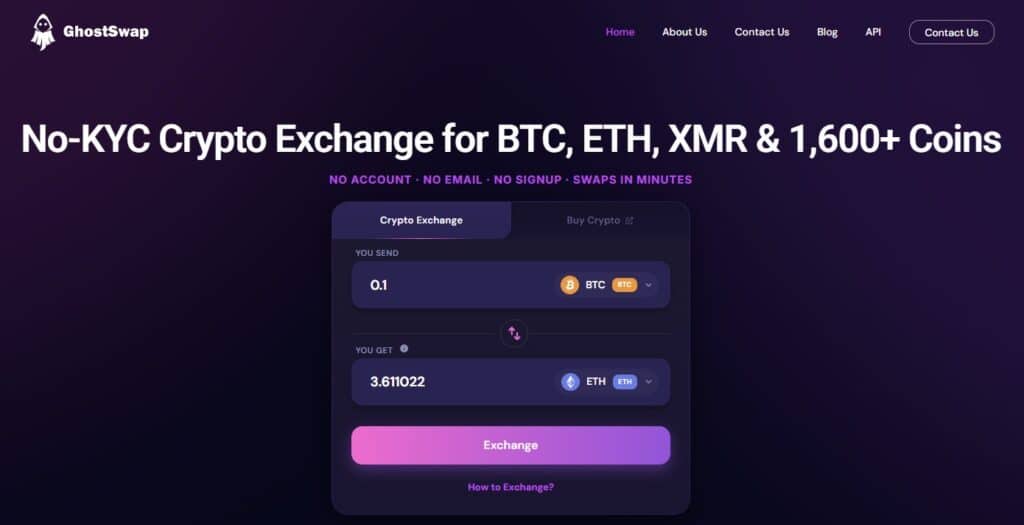
The process starts when a user selects the asset to send and the asset to receive. The user then enters a destination wallet address.
The platform creates a temporary deposit address. The user sends the source coin from a personal wallet. After blockchain confirmation, the service routes the transaction through available liquidity sources.
Source: GhostSwap
The new asset is sent to the destination wallet. Users can track progress through a status page or the Telegram bot. This structure removes several steps found on centralized exchanges. It also removes the need to manage another password or stored balance.
Privacy and KYC Limits
GhostSwap promotes standard swaps without routine KYC. Users are not normally asked for a name, phone number, email address, or identity document.
That does not mean every transaction is fully private or free from review. Public blockchains record transaction activity. Bitcoin and Ethereum transfers can often be viewed through blockchain explorers.
The service may also use third-party screening tools. A transfer linked to a flagged address may be delayed, rejected, or refunded. Extra information may be requested. No-account access should not be confused with complete anonymity.
Asset Support and Fees
GhostSwap lists Monero and Zcash among its supported assets. This is notable because some large exchanges have limited or removed privacy-focused coins.
Monero may be used as a sending or receiving asset on supported pairs. Zcash may also be available across several routes.
Liquidity can vary. Major assets often have deeper markets. Smaller coins may carry wider spreads, higher minimum amounts, or fewer routes.
The platform states that its baseline fee is 2%. The charge is built into the quoted exchange rate. Blockchain network fees may apply separately. A 2% fee may also be higher than spot-trading costs on a large exchange.
Speed and Security Risks
The company says many swaps finish within 30 minutes. Actual times depend on network congestion and confirmation rules.
Fast networks may complete transfers within minutes. Bitcoin-based swaps may take longer during busy periods. A non-custodial model may reduce the risk of leaving funds on an exchange. It does not remove all danger.
Crypto transfers are usually irreversible. A wrong wallet address can lead to permanent loss. The selected network must also match the receiving wallet.
Users should verify the official website and Telegram bot. Fake links and impersonation scams remain common in crypto. A small test transfer may help before a large swap. Users should never provide private keys or recovery phrases.
Telegram Bot and Developer API
GhostSwap uses its Telegram bot to serve mobile users. The bot allows them to choose a pair, enter an amount, provide a wallet address, and receive a deposit address.
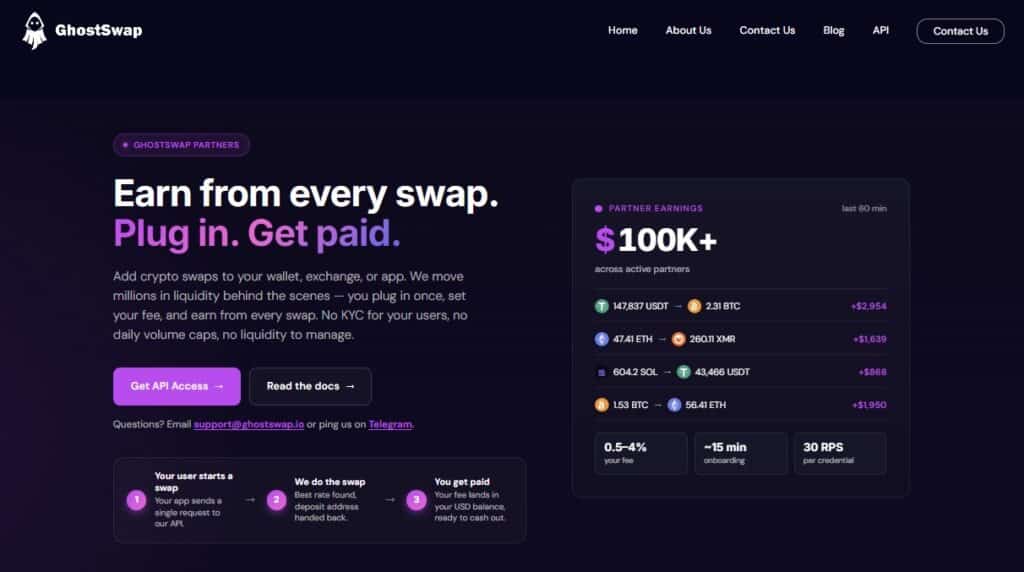
The API is aimed at developers and businesses. It supports price quotes, address validation, and transaction creation.
These tools may help wallets and apps add swap functions without building their own liquidity systems. Business users still need strong security controls. They must prepare for failed deposits, network delays, and support requests.
Source: GhostSwap
Limits Keep It Outside Full Exchange Trading
GhostSwap is not designed for professional trading. It does not offer advanced charts, stop orders, leverage, or order books. Users cannot set a target price and wait for execution.
Each conversion carries a service fee and network cost. This may make frequent trading expensive. The service also depends on outside liquidity providers. Some pairs may not always be available.
Compliance reviews can delay certain transfers. Local laws may also affect access to privacy coins and account-free services.
Conclusion
The GhostSwap provides a more convenient way to make crypto-to-crypto conversions without creating an account on any other crypto exchanges. The advantages of the platform include a wide range of assets, cross-chain swaps, privacy coins, Telegram bot, and developer API.
The disadvantages of the platform include high commission rates, lack of trading instruments, network delays, and potential compliance procedures. The users are advised to compare rates, check all addresses, know local regulations, and start from a small volume.
Appendix: Glossary of Important Terms
Non-Custodial Service: A type of service where users remain owners of their funds and private keys.
Cross-Chain Swap: An exchange of digital assets between two blockchains.
KYC: Identity verification procedure, or “Know Your Customer.”
Wallet Address: Unique address of a wallet, which allows transferring cryptocurrency.
Liquidity Provider: Digital assets supplier for completing crypto swap.
Network Fee: A fee collected from users on a blockchain to pay miners or validators.
Privacy Coin: Cryptocurrency with advanced transaction privacy.
Frequently Asked Questions About GhostSwap
1- Does the Service Require an Account?
Standard swaps work without a stored user account. A destination wallet address is still required.
2- Does It Require KYC?
Routine KYC may not apply to standard swaps. Flagged transfers may face extra checks.
3- How Long Does a Swap Take?
Some swaps finish within minutes. Network congestion can cause delays.
The company states that its baseline fee is 2%. Network fees may apply separately.
Reference
CryptoNews
Read More:One Wallet, No Account: How GhostSwap Swaps 1,600+ Digital Assets">One Wallet, No Account: How GhostSwap Swaps 1,600+ Digital Assets