OpenSea is the broadest choice for discovery, Blur is the sharper tool for active Ethereum NFT traders, and Magic Eden is the more relevant comparison for Solana collections and gaming assets
OpenSea is the broadest choice for discovery, Blur is the sharper tool for active Ethereum NFT traders, and Magic Eden is the more relevant comparison for Solana collections and gaming assets. The answer changes by user type, so the comparison needs workflow evidence rather than one universal winner.
A buyer browsing art needs different evidence than a trader managing bids or a game studio testing marketplace fit. The wider field of best NFT marketplaces covers more specialized venues, while NFT analytics tools help compare collection activity before fees, royalties, and spread are applied to the completed trade.
OpenSea vs Blur vs Magic Eden: Feature-by-Feature Comparison
The three marketplaces overlap in basic buying and selling, but they organize the decision differently. OpenSea begins with broad discovery, Blur begins closer to the order book, and Magic Eden is more useful when the collection's ecosystem or gaming context is part of the purchase.
The comparison below reflects the public product surfaces checked on July 31, 2026. Fees, royalties, supported collections, and checkout routes can change, so the transaction preview remains authoritative for an individual trade.
Comparison factorOpenSeaBlurMagic EdenBest fitFirst-time buyers, broad collectors, and users comparing several asset categoriesExperienced Ethereum traders managing bids, sweeps, and portfoliosSolana collectors, ecosystem-native users, and buyers exploring game-linked assetsCurrent focusGeneral-purpose discovery across collections, drops, NFTs, and token activityEthereum trading terminal organized around collection prices and executionSolana NFT marketplace organized around collections, offers, and ecosystem activityDiscoveryStrong collection, item, trait, and activity contextEfficient after the trader has identified the target collectionStrong collection-led browsing inside the Solana ecosystemTrading styleApproachable single-item flow with advanced tools available separatelyCollection bids, executable asks, sweeping, and rapid multi-item actionsListings, top offers, bulk actions, and collection market dataGaming fitBroad game-asset discovery without proof of in-game utilityUseful for liquid Ethereum game collections and professional tradersStrongest fit when the game and player community are active on SolanaCost reviewConfirm marketplace charge, royalty, and network cost in the transaction previewPublic marketplace promotes 0% marketplace fees; gas, spread, and royalties still matterConfirm buyer, seller, royalty, and network terms for the exact collectionMain limitationBroad visibility does not guarantee the best executable price for a specific collectionSteeper learning curve and less context for casual buyersCurrent Solana focus is narrower than older descriptions of its historical multichain reach
OpenSea
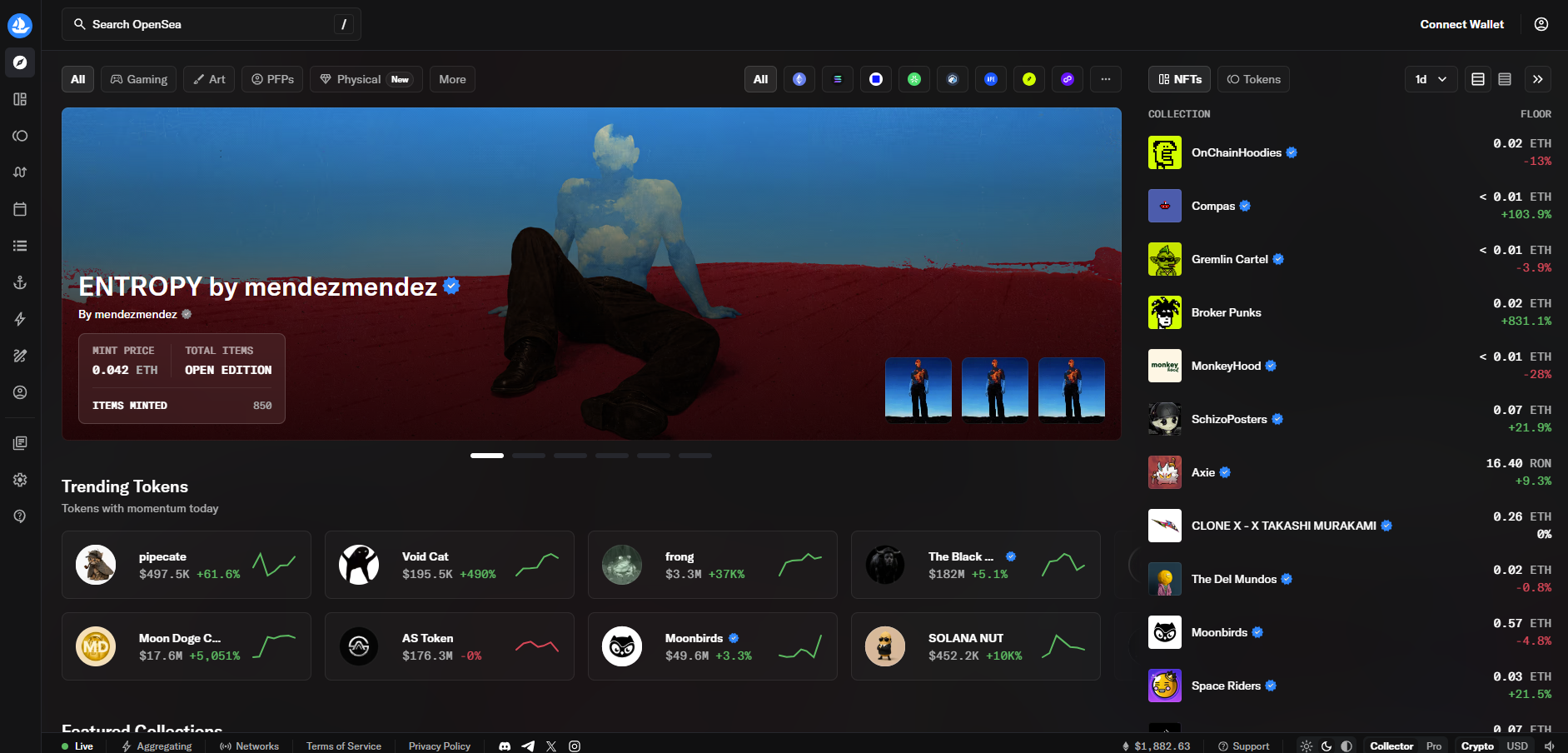
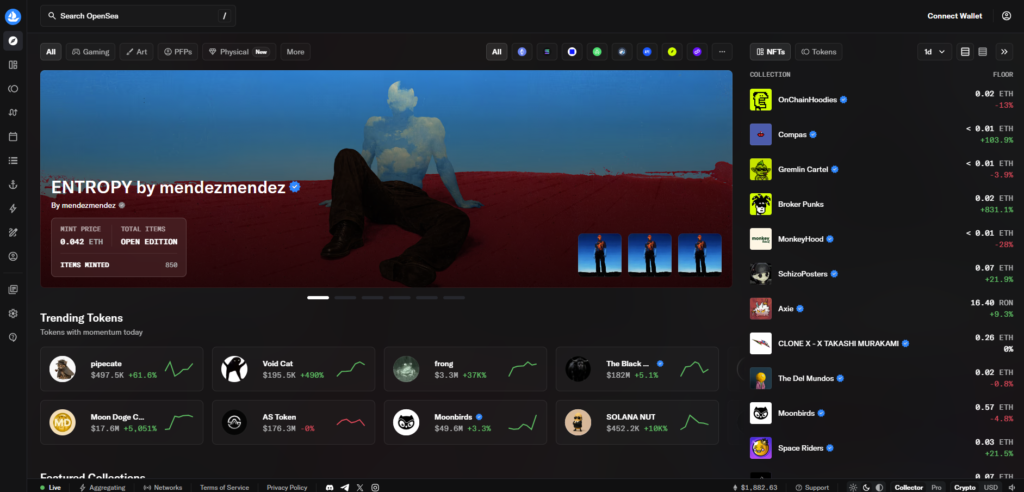
OpenSea fits the reader who enters through search, category browsing, or a collection page rather than a bid terminal. The OpenSea marketplace gives a generalist path from collection identity to trait filters and an individual item, which is useful when the buyer still needs context before deciding whether to trade.
Its weakness appears when a user assumes visibility equals the best price. The same collection may have more competitive bids on a trading-oriented venue, while a gaming asset may require utility information that a generic item page does not carry. OpenSea should win this comparison only when broad discovery and a more forgiving browsing path matter more than specialized execution.
 Source: opensea
Collection and item pages make OpenSea useful for checking contract identity, creator presentation, traits, sale activity, and individual listings before purchase. Users who need denser market information can move into its professional collector surface, but advanced trading is not forced into the first-time buyer journey.
The transaction preview remains more important than the marketplace brand. Fees and royalties can vary by action or collection, while a completed onchain transfer cannot simply be reversed by customer support. Buyers should verify the wallet request and total checkout cost; creators should inspect how the collection page presents provenance, royalties, and official links.
Key features
- Discovery across art, collectibles, game items, drops, and NFT categories.
- Collection and item pages with contract identity, creator links, traits, listings, and activity context.
- Trait filtering and sale history for comparing individual assets inside a collection.
- A professional collector surface for users who need denser market and portfolio information.
- Wallet-based transaction review that shows the final action before the buyer signs.
Blur
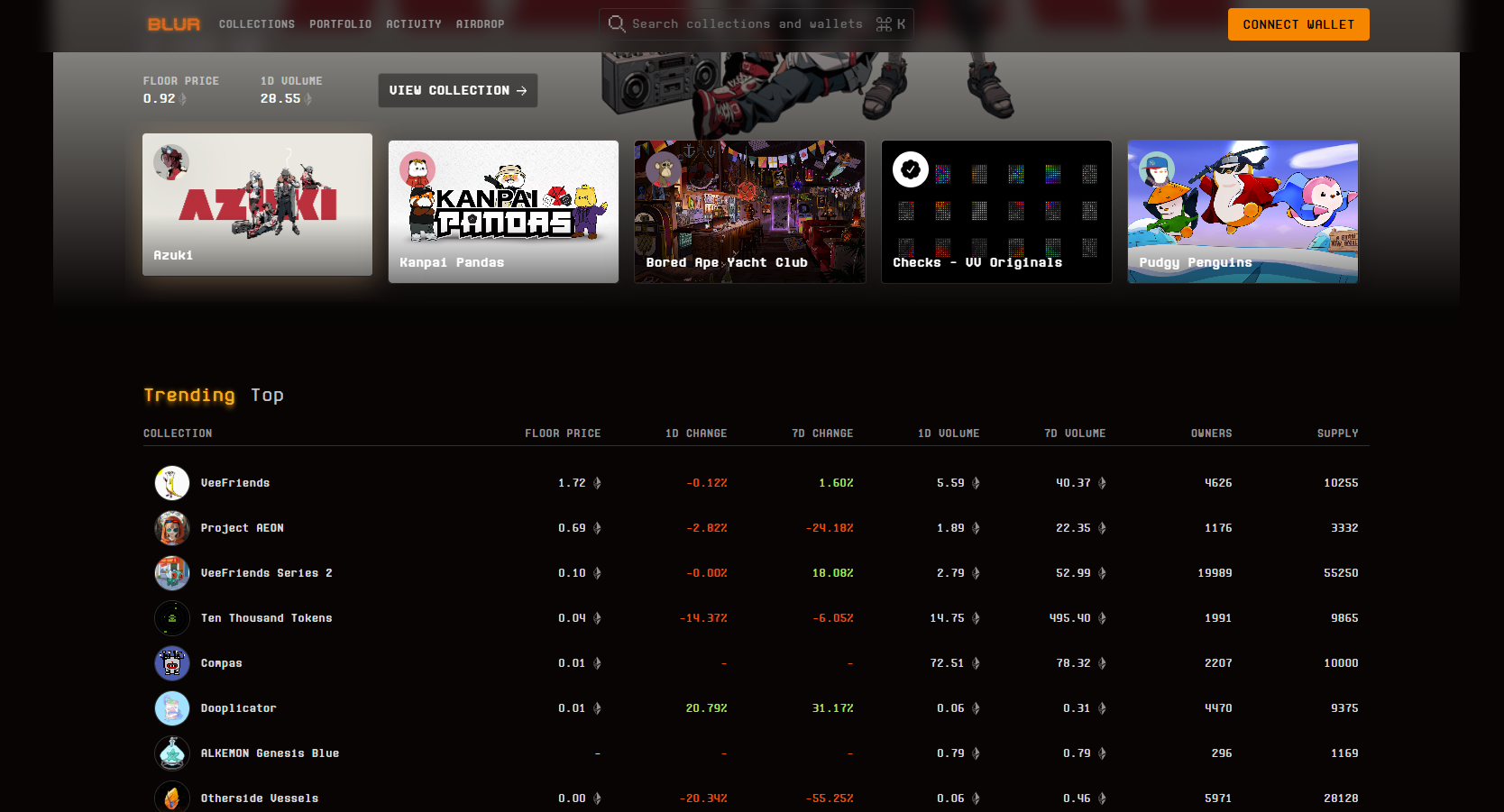
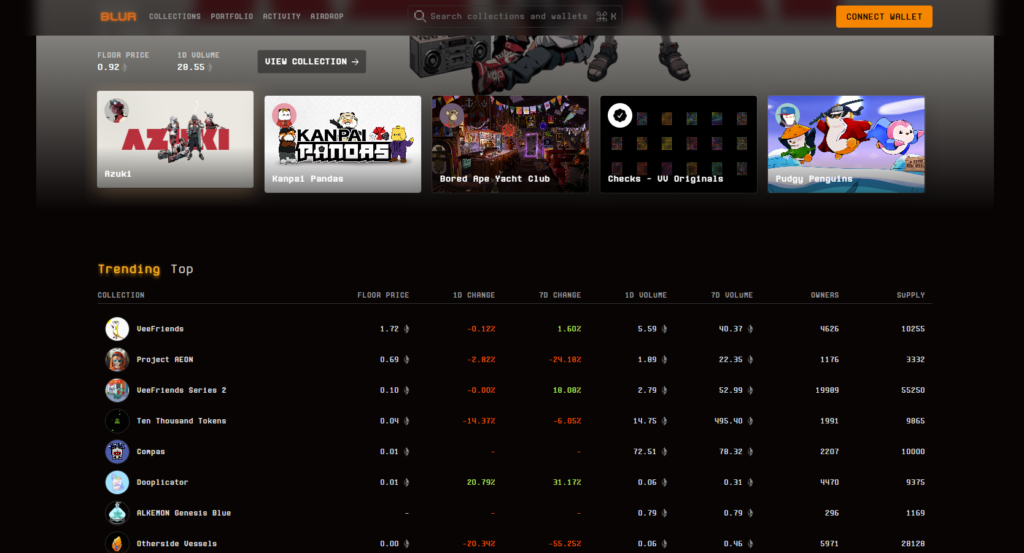
Blur is the stronger tool when the user already knows the collection and wants to place bids, sweep several items, or manage a position quickly. The Blur marketplace compresses price and execution information into a denser workspace, reducing navigation for an experienced trader.
That advantage disappears for readers who cannot distinguish a collection-wide bid from an item-specific offer or who treat the displayed floor as guaranteed liquidity. Blur should be tested with a real collection: record the best funded bid, the first executable ask, the spread between them, estimated network cost, royalty treatment, and the exact signature requested.
 Source: blur
Blur places floor prices, bids, listings, activity, and portfolio positions close to execution. Collection-wide bids and sweeping reduce repeated navigation when a trader wants several items, while funded bid depth gives sellers a clearer immediate-exit signal than a floor listing that may never sell.
The public marketplace promotes 0% marketplace fees, but that does not make every trade free or profitable. Ethereum gas, bid-ask spread, creator royalties, and the price impact of sweeping several items still affect the outcome. Support cannot undo a mistaken signature, so the faster workflow requires stronger collection verification and wallet discipline.
Key features
- Collection-wide bids for traders targeting several eligible items rather than one token.
- Sweeping tools for purchasing multiple NFTs from the same collection.
- Floor, executable ask, funded bid, and spread information positioned close to the trade.
- Portfolio and activity views designed for active Ethereum collection management.
- A public marketplace proposition centered on rapid execution and 0% marketplace fees.
Magic Eden
Magic Eden belongs in the comparison when the collection's ecosystem matters as much as the trade. A player may arrive through a game community, search for a usable item, and care about traits or rarity only because they affect gameplay. The Magic Eden marketplace should be checked for the target collection and current chain support before the platform is recommended.
Its gaming association does not guarantee in-game compatibility. The buyer still needs to match the contract and token identifier with the game's official inventory rules, confirm transfer restrictions, and understand whether the item remains useful after a season or account change. The collection should explain why its NFT utility matters before checkout; game artwork alone is not enough.
 Source: magicede
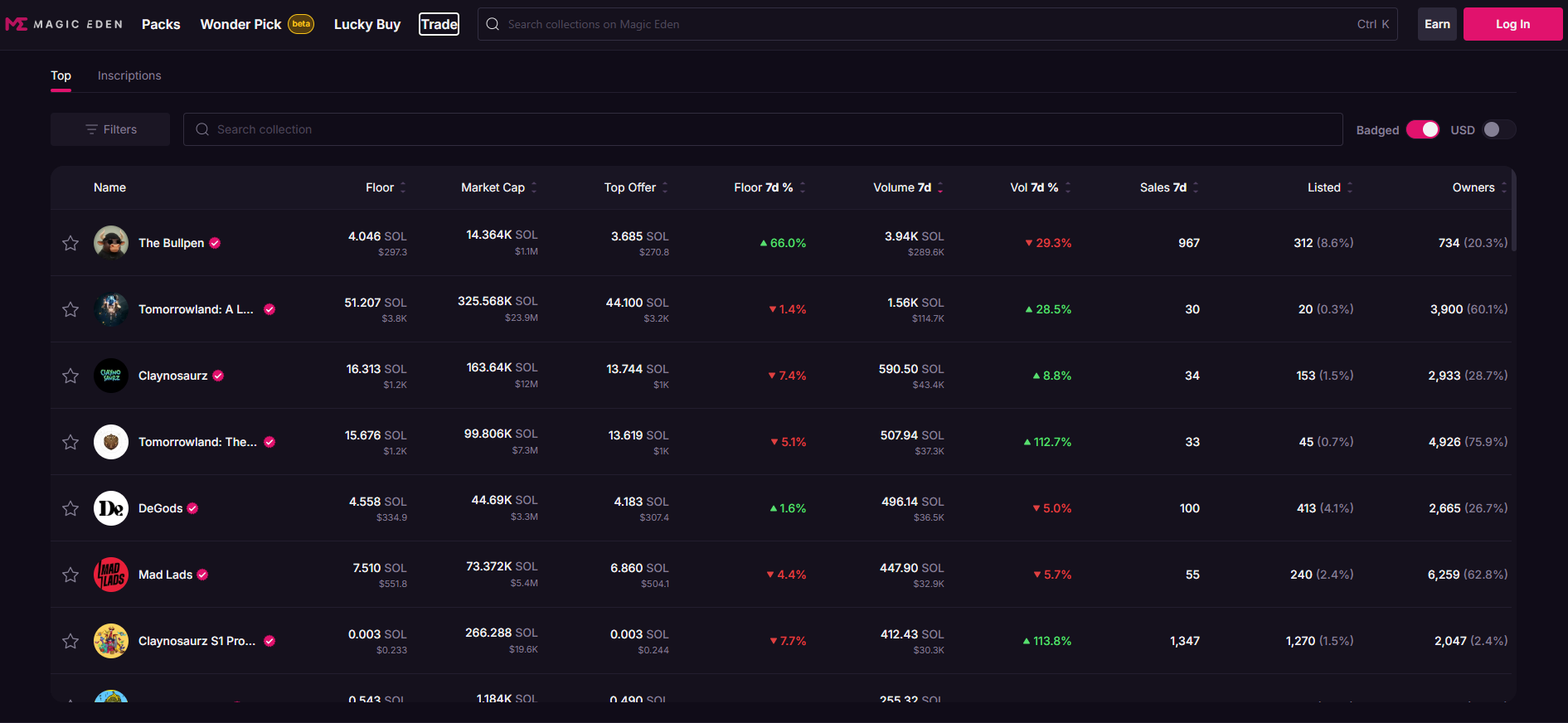
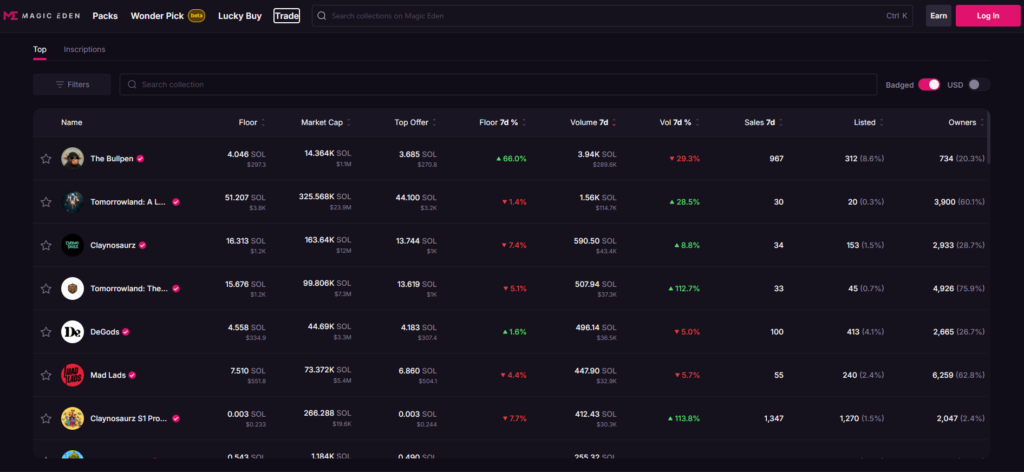
Magic Eden places collection floor, top offer, volume, sales, and listed supply in the same market view. Bulk listing and sweeping support more active users, while the collection-led layout remains easier to connect with an ecosystem or gaming community than a terminal designed primarily for Ethereum traders.
The current marketplace is centered on Solana, so older claims about broad multichain coverage should not guide a new purchase. Buyers must confirm the collection, wallet, royalty treatment, and final checkout terms on the active product. Creators and studios remain responsible for explaining utility, season eligibility, and support after the NFT leaves the marketplace.
Key features
- Solana-focused collection discovery for ecosystem-native collectors and players.
- Collection views combining floor price, top offer, volume, sales, and listed supply.
- Bulk listing and sweeping for users managing several collection items.
- Marketplace discovery that keeps active collections and gaming communities close to the trading flow.
- Solana wallet checkout with collection-specific listings, offers, royalties, and transaction terms.
Buying experience on OpenSea, Blur, and Magic Eden
OpenSea gives a first-time buyer the clearest route from broad discovery to a collection page, trait filters, item history, and checkout. It is the strongest starting point when the buyer still needs to understand the asset before comparing prices.
Blur is faster after the buyer has already selected an Ethereum collection. Floors, bids, asks, and sweeping controls sit close together, reducing the number of screens required to purchase one or several items. That efficiency comes with less explanation and a denser wallet-signing flow.
Magic Eden is the strongest starting point for an active Solana collection. Its collection view keeps floor price, top offer, volume, sales, and listed supply together. A player buying a game item still needs the game's official inventory rules because marketplace ownership does not prove in-game compatibility.
Selling and active trading compared
OpenSea gives sellers broad visibility and recognizable collection pages, but the lowest listing does not reveal the amount a seller can receive immediately. The highest funded offer and final deductions matter more than the visible floor.
Blur provides the clearest active-trading advantage for eligible Ethereum collections. Collection bids, sweeping, portfolio data, and rapid order entry fit traders managing several assets. A seller can compare funded bids directly, while a buyer can see the spread between immediate purchase and immediate resale.
Magic Eden provides the corresponding market view for Solana collections. Top offers, listings, sales, volume, and listed supply help a seller judge current demand. NFT tracking tools remain useful after settlement when the asset must appear in another wallet or game inventory.
Fees, royalties, and transaction risk
Blur publicly promotes 0% marketplace fees, but Ethereum gas, bid-ask spread, and creator royalties can still change the result. Its speed also makes collection verification and signature review more important before a multi-item trade.
OpenSea and Magic Eden require the buyer or seller to read the exact transaction preview for the selected action and collection. The displayed floor should not be treated as total buyer cost or seller proceeds. Marketplace charges, royalties, network fees, and an accepted offer below floor all affect the final amount.
Risk appears differently on each platform. OpenSea's broad discovery can expose buyers to convincing imitation collections, Blur can magnify an incorrect order through rapid execution, and Magic Eden buyers can mistake marketplace ownership for game utility. Known NFT rug-pull risk factors should be checked before any valuable signature.
Creator and gaming collection fit
OpenSea is the strongest of the three for broad collection presentation and mainstream discovery. It gives creators more room to present items, traits, activity, drops, and official identity, but it cannot guarantee the strongest bids for every collection.
Blur is more useful after an Ethereum collection has active traders. Its value comes from liquidity and execution rather than launch storytelling. Creators should evaluate royalty treatment and funded demand instead of treating trading volume as evidence of a healthy collector community.
Magic Eden has the clearest gaming fit when the project and players are active on Solana. It can support discovery and trading, while the game's own site remains authoritative for utility, season access, rentals, and item restrictions established during the NFT minting process.
Best choice by user type
- First-time or broad NFT collector: OpenSea provides the clearest discovery and item-research path.
- Active Ethereum trader: Blur offers the strongest bid, sweep, portfolio, and execution workflow.
- Solana collector or player: Magic Eden keeps collection discovery and Solana market activity together.
- Ethereum creator seeking broad reach: OpenSea supports presentation, while Blur can add trader liquidity.
- Solana game studio: Magic Eden can provide marketplace discovery, but the game must own utility and player support.
Conclusion
OpenSea, Blur, and Magic Eden do not need one universal ranking. OpenSea is the clearer default for broad discovery, Blur is the sharper execution tool for an experienced Ethereum trader, and Magic Eden is the more relevant starting point when an active ecosystem or gaming collection drives demand.
The final decision should come from the same-collection test, not platform reputation. Match the contract, compare executable prices, calculate buyer total and seller net, inspect royalty treatment, and read the wallet request before signing. The marketplace that wins those checks for the current transaction is the right one for that job.
Frequently asked questions
Which marketplace is safest?
Safety depends on collection verification, wallet approvals, signature clarity, and user behavior. A broad marketplace is not automatically safer than a trading-focused one.
Which marketplace is best for gaming NFTs?
Magic Eden and infrastructure-focused options may be stronger for gaming assets, but the right answer depends on chain support and whether the item needs in-game utility.
Should creators care about trader tools?
Creators should care about liquidity, but they should also verify royalty policy, collection presentation, analytics, and support controls.
Can the same NFT have different prices across marketplaces?
Yes. Listings, bids, fees, and royalties can differ across venues even when the contract and token identifier are identical. Compare executable checkout and payout values rather than the displayed floor alone.
Disclaimer: This article is for research and editorial comparison purposes only. It does not constitute financial, investment, legal, or tax advice. NFT tools, marketplaces, fees, chain support, and live availability can change quickly, so verify current conditions on the official platform before making any decision involving funds, assets, or private keys.
Read original article on nftenex.com