The mix does not mean every memecoin is moving alike, nor does one day’s ranking explain why these tokens fell. It does, however, show that meme-linked trades were among the first parts of th
The mix does not mean every memecoin is moving alike, nor does one day’s ranking explain why these tokens fell. It does, however, show that meme-linked trades were among the first parts of the market to come under pressure during the session.
Three meme-linked names entered the bottom five
PENGU led the group, while PUMP lost 8.90% and PEPE fell 7.9%. The other two assets in the five-token list came from different parts of the market: LIT is an infrastructure token, while FET is linked to the AI sector.
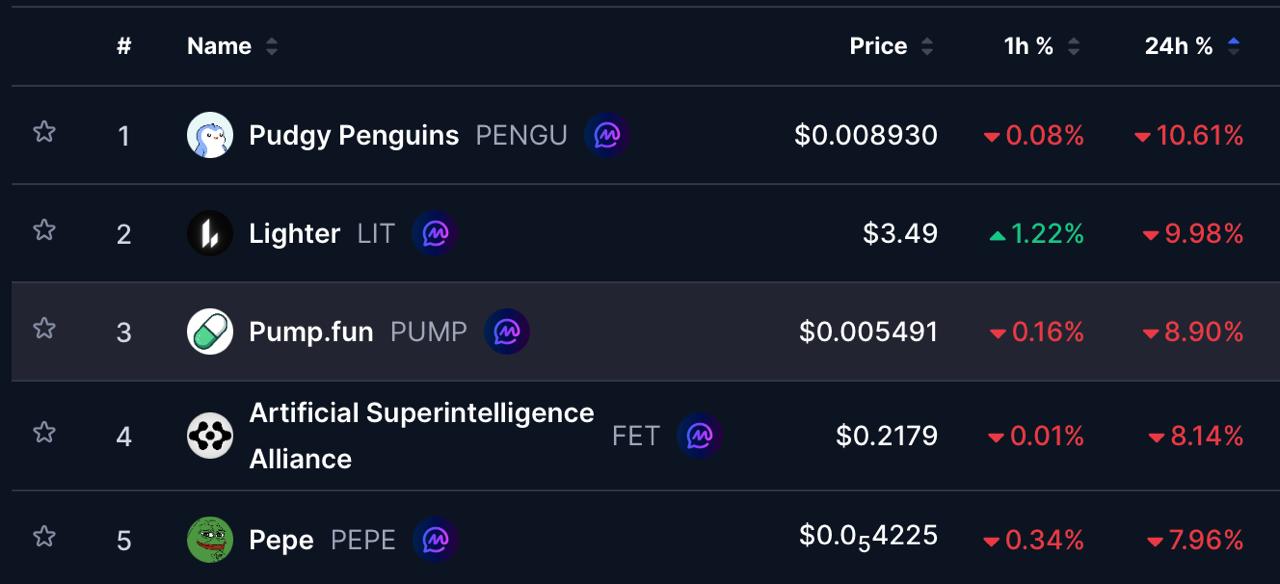
24-hour market changes at 12:05 UTC.
PUMP should not be described as a memecoin. Its place in the list is relevant for a different reason: pump.fun is a major venue for launching and trading meme tokens, so its token is closely connected to the same high-turnover market. Taken together, PENGU, PUMP and PEPE point to weakness across meme-related trading activity, although the daily ranking alone cannot establish a single catalyst.
Why meme-linked trades can move faster
Memecoins are not volatile simply because of their branding. Their prices are often shaped by attention, online communities, exchange listings and short-term trading momentum. Those forces can produce fast gains when demand is building, but they can reverse just as quickly once traders begin reducing exposure.
Bitcoin and Ether are also volatile assets, but their markets are generally deeper and supported by a broader mix of holders and use cases. Memecoins tend to have fewer conventional reference points for valuation. That can make a price decline self-reinforcing: falling prices weaken the momentum that attracted buyers in the first place.
A Bank for International Settlements working paper provides a useful explanation of the broader mechanism. It found that investor flows can move a cryptocurrency’s market capitalization by more than the value of the flows themselves, particularly when a large share of tokens is held as an investment rather than used for payments.
The research is not specifically about memecoins, so it does not explain PENGU’s or PEPE’s move on its own. It does show why assets driven largely by investor positioning and trading demand can react sharply when sentiment changes.
This pattern has appeared before
Memecoins were also among crypto’s strongest themes during 2024. Coinbase Institutional’s 2025 market outlook, citing DefiLlama data, said meme tokens were the year’s best-performing crypto sector by market-cap growth. It also linked elevated memecoin trading to the rapid rise of Telegram trading bots and their revenue.
Solana played a major role in that expansion because its low-cost, fast transactions made frequent trading and token launches easier. Our recent analysis of Solana’s DEX activity shows why daily trading rankings need to be read alongside longer-term volume and participation data.
The downside has been just as clear. An ESMA report on the UCITS Eligible Assets Directive includes a crypto-risk annex that compares Bitcoin’s 40-day annualised volatility with Dogecoin, Shiba Inu and PEPE. Its data illustrate how major meme tokens have historically experienced sharper swings than Bitcoin.
READ MORE:
 NEAR Staking Comes to a U.S. ETF
What would make the decline more meaningful
The key question is whether the weakness remains concentrated in these names or lasts after Bitcoin, Ether and the broader altcoin market stabilise. Continued underperformance, accompanied by declining trading activity and thinner liquidity, would point to a more sustained retreat from the meme trade.
If the tokens recover while the rest of the market remains steady, the bottom-five list may prove to be only a volatile session rather than a wider shift. For now, it is a reminder that meme-linked assets can climb rapidly when risk appetite is strong, and often lose ground first when that appetite fades.
This article is for informational purposes only and does not constitute financial, investment, or trading advice. Cryptocurrency markets are highly volatile, and readers should conduct their own research before making any investment decisions.
The post PENGU Falls 11% as Memecoins Fill 3 of Crypto’s 5 Biggest Losses appeared first on Coindoo.