Big money rarely touches brand-new blockchain tech without a security blanket. For institutional funds curious about tokenized credit, that blanket usually looks like an established, audited
Big money rarely touches brand-new blockchain tech without a security blanket. For institutional funds curious about tokenized credit, that blanket usually looks like an established, audited custody desk.
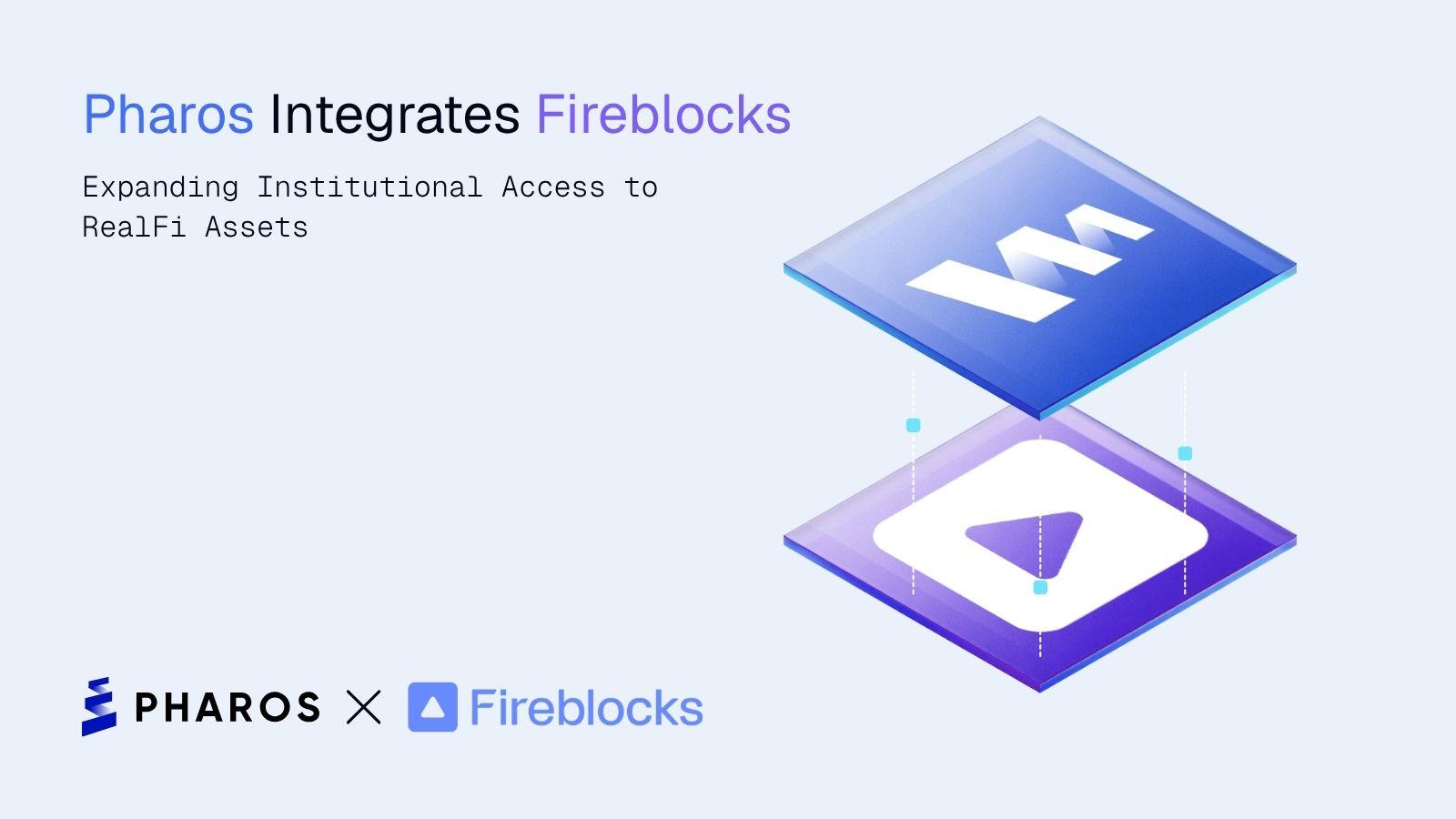
Pharos Network took a direct swing at that adoption bottleneck on November 10, 2026, by plugging its network straight into Fireblocks. The move lets asset managers, hedge funds, payment processors, and exchanges store and shift Pharos-based assets without writing new custody playbooks from scratch. It is a plumbing upgrade. Instead of asking corporate treasurers to run bespoke key-management rigs, Pharos simply linked its ledger to the software those desks already open every morning.
A New Conduit for High-Yield Credit
The initial lineup focuses heavily on yield-bearing, real-world credit. Assets clearing the threshold on day one include the Raffaello NYLIM HYB Vault (pRNH), the NYLIM Anemoy fund, and Axil Prime Credit (APC) issued via the R25 Protocol, alongside Pharos's own native token, $PROS.
Pharos reports that its platform oversees roughly $241.64 million across its tokenized asset pool. That tally represents the aggregate value of onchain real-world products reported by the team, not independent daily trading turnover or liquid market depth. Still, it provides a sizable baseline pool for Fireblocks desks looking for onchain credit exposure.
Governance Built for Enterprise Workspaces
Institutions cannot just sign off on million-dollar transfers from a browser extension. They require strict signing thresholds, audit trails, and multi-tier approval trees.
Because Fireblocks runs on multi-party computation (MPC), firms touching Pharos assets can now deploy granular rule sets across their portfolios. Admins can whitelist specific smart contracts, enforce secondary approvals for outgoing wires, and split private-key authority across distributed teams. Nothing changes about their internal day-to-day workflow. The integration simply adds Pharos tokens to their existing policy engines, bypassing the cost of spinning up dedicated server nodes.
Operational Bridges Versus Real Market Demand
Plumbing is essential, yet access does not equal actual liquidity. The integration removes a painful operational hurdle, but it does not magically produce an influx of new capital or incoming trading orders.
For loan issuers on Pharos, the perk is obvious: an immediate audience of well-funded firms already on Fireblocks. For those buy-side firms, it resolves the friction of fitting exotic onchain paper into established compliance frameworks. But nobody is announcing fresh capital commitments yet. The deal provides the gateway; whether portfolio managers actually click "buy" remains an entirely different question.
Carving Out Space in the RealFi Landscape
Lately, Layer 1 chains love pitching tokenization, but very few have institutional custody lines ready on day one. Pharos is betting its future on becoming a purpose-built hub for credit products, payment settlement, and structured finance.
Partnering with Fireblocks helps normalize that pitch. It shifts the conversation away from experimental crypto tech toward conventional portfolio mechanics. Still, operational ease never replaces credit scrutiny. Risk officers must still inspect the real-world collateral backing every credit vault before allocating capital, regardless of which software holds the private keys.
Rollout Plans and What to Watch Next
Beyond technical wiring, both companies plan joint commercial campaigns to pitch the network to institutional allocators. Pharos co-founder and CEO Wish Wu framed the partnership as a practical upgrade, pointing out that institutions can now handle Pharos products through tools they already know inside out.
For now, neither side has released concrete timetables for subsequent asset batches or announced anchor institutional clients. The real test over the coming quarters will be simple: watching whether these custody pipes draw measurable trading volume, sustained liquidity, and fresh onchain debt originations.