Pi Network entered July 2026 at the weakest point in its public trading history. PI dropped to a fresh all-time low near $0.1110 on July 1, trading at approximately $0.1141 — down 95% from it
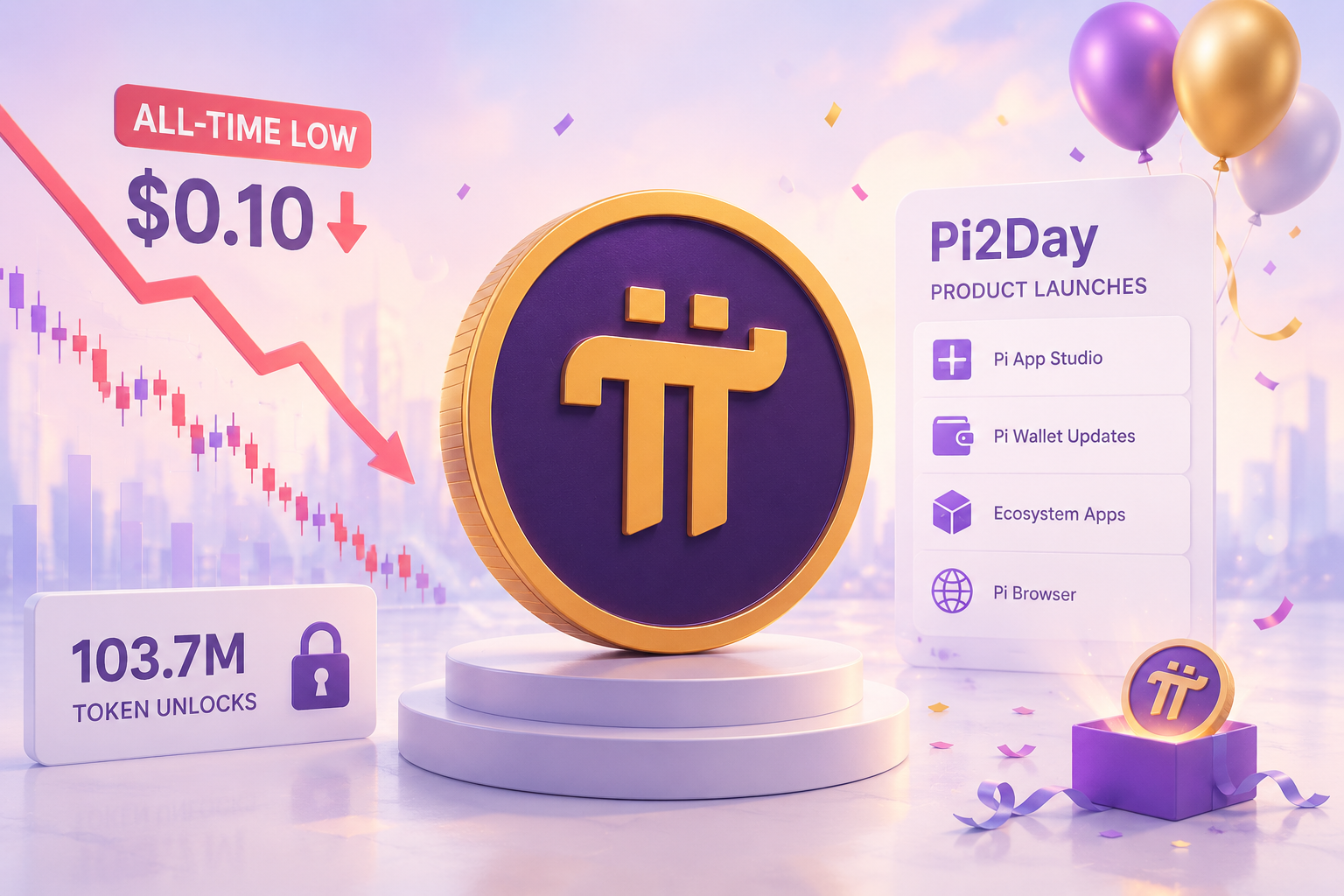
Pi Network entered July 2026 at the weakest point in its public trading history. PI dropped to a fresh all-time low near $0.1110 on July 1, trading at approximately $0.1141 — down 95% from its peak near $2.99 — with a market cap of roughly $1.35 billion. The RSI hit 27, its deepest oversold reading since the token began trading, and every major moving average sits above the current price in a bearish stack, with the 200-day EMA alone at $0.1968 — nearly double where the token is trading right now.
The painful part is that the new all-time low arrived on the same day the Pi Core Team launched three new products. Catalysts didn't move the market. Price went lower anyway.
The Supply Problem That Keeps Winning
The fundamental dynamic suffocating PI's price is straightforward: 103.7 million tokens unlocked in July alone, an increase of roughly 27 million over the prior month, with a further 127 million tokens scheduled to enter circulation within the next 30 days. That's a consistent, predictable wave of sell-side supply arriving into a market that hasn't developed enough utility demand to absorb it.
Daily unlock rates of over 4.6 million PI tokens represent structural selling pressure regardless of what the project announces in any given week. Until demand from product adoption and exchange access grows faster than new supply, the unlock schedule remains the dominant near-term variable for price direction.
The Pi2Day Products That Need to Change That Equation
The Pi Core Team's annual Pi2Day event on June 28 launched three products designed to shift PI from a distribution-only token to one with genuine utility demand.
PiVerify is the most commercially significant of the three. It's a verification tool with a fee-in-PI model — meaning users pay PI tokens to access the verification service. That structure creates real, structural token demand that exists independent of speculation. If PiVerify achieves meaningful adoption at scale, the recurring fee flow becomes a permanent demand mechanism rather than a one-time event. Until volumes show up in on-chain data, however, the model remains theoretical.
SoloHost is a permissionless framework inside Pi Desktop that lets developers build and list self-hosted apps for local AI and distributed computing, giving Pi's 420,000-plus node operators a way to run AI agents on their infrastructure. Pi Sign-in extends the ecosystem's identity layer to external platforms and developers. Both expand what the network can be used for — but external platform adoption takes time to build, and time is exactly what PI holders are running short of patience for.
What the Open Mainnet Timeline Means
The Pi Core Team has consistently pointed to 2026 as the target period for achieving Open Mainnet — the transition from the current enclosed network to a fully public one with unrestricted liquidity and exchange access. That milestone would unlock the full potential of the 47-million-person registered community that Pi has built through mobile mining since 2019.
A successful Open Mainnet launch would be the most significant fundamental catalyst in Pi's history. It would enable major exchange listings that Pi currently lacks, provide full token liquidity, and allow the utility products launched at Pi2Day to reach their full addressable market. Protocol v25 and v26 upgrades scheduled through 2026 are the technical groundwork being laid toward that goal.
The risk is equally clear. Further delays erode a community that has been waiting longer than any comparable crypto project for public tradability and real utility. Some of the project's 47 million registered users have been mining PI on their phones since 2019 — seven years of patience is a finite resource.
Where PI Stands Technically
Every major EMA sits above the current price: 20-day at $0.1272, 50-day at $0.1384, 100-day at $0.1530, and 200-day at $0.1968. PI is trading at the lower Bollinger Band near all-time lows. The RSI at 27 is technically oversold — a level that historically precedes bounces when a positive catalyst arrives — but oversold readings alone don't guarantee recovery when fundamental supply pressure keeps building daily.
The $0.10 psychological level is the line the market is watching. A sustained break below that level opens uncharted territory with no historical support to reference. Holding above it while PiVerify and SoloHost adoption data starts appearing on-chain is the bare minimum requirement for any bullish case to rebuild.
The collision between 103.7 million July unlocks and three new utility products is the most important test Pi Network has faced since it began public trading. The outcome will define the token's trajectory for the rest of 2026 more clearly than any single announcement could.