Two concepts. Two different protections. One important distinction. Imagine using a messaging app without providing your phone number, email address or real name. Would that make you anonymou

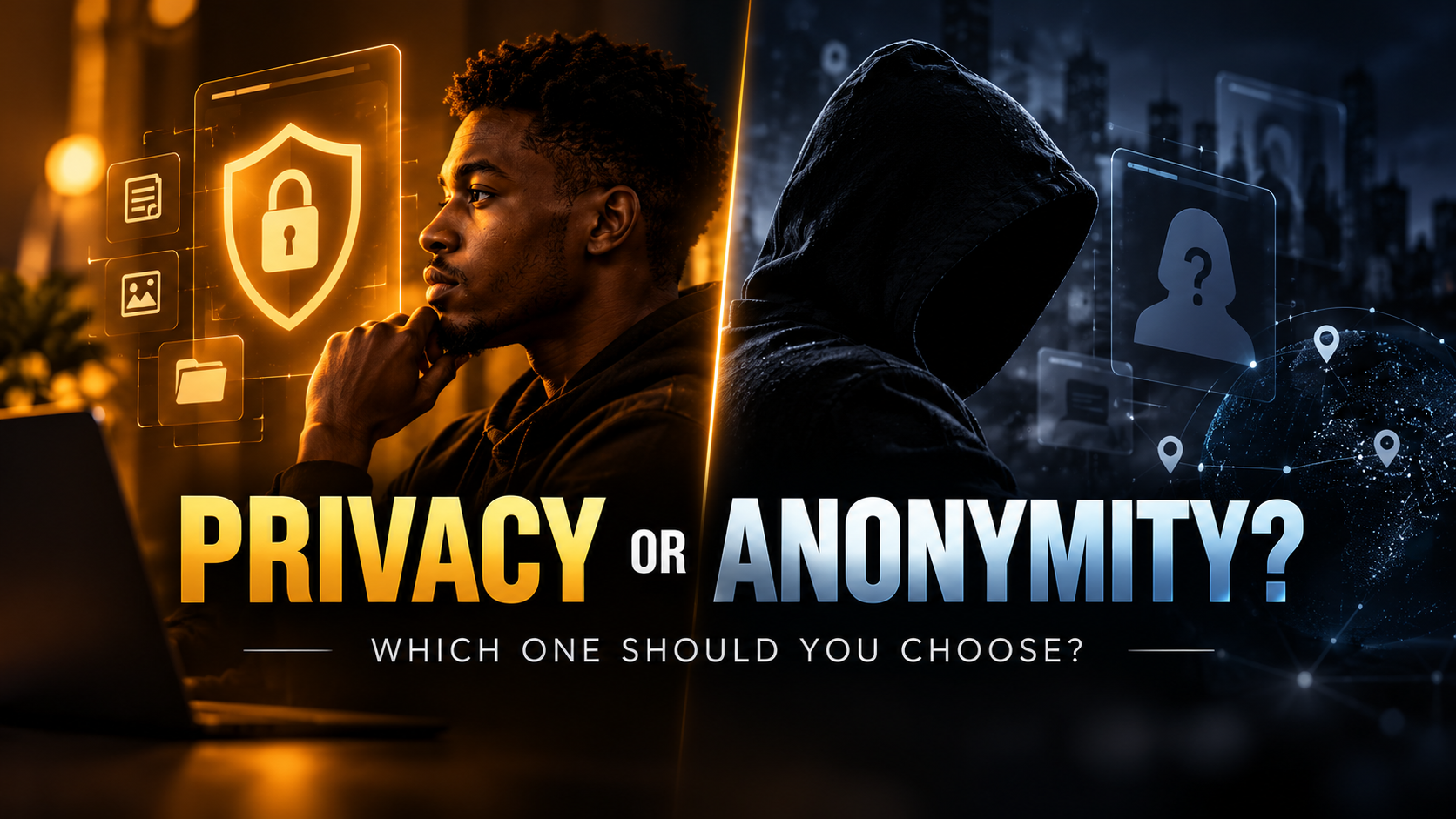
Two concepts. Two different protections. One important distinction.
Imagine using a messaging app without providing your phone number, email address or real name.
Would that make you anonymous?
Not necessarily.
We often use privacy and anonymity as if they mean the same thing. But in a world where our conversations, identities and financial transactions increasingly exist online, understanding the difference matters more than ever.
Especially in Web3.

Think about your home.
Your neighbors might know your name, recognize your face and know where you live. But that doesn't give them the right to enter your bedroom or read your private messages.
That's privacy.
You aren't hiding who you are. You're controlling what others can access.
The same principle applies online.
When you use an end-to-end encrypted messaging service, the content of your conversations is protected from unauthorized readers, even if the person you're talking to knows exactly who you are.
Privacy isn't about being invisible. It's about having boundaries.

Anonymity goes a step further.
Instead of controlling access to your information, it focuses on preventing an activity from being linked to your real identity.
Take the Tor network, for example.
Tor routes internet traffic through multiple relays, making it harder for websites to identify your original IP address.
But even Tor doesn't guarantee perfect anonymity. Logging into a personal account or voluntarily revealing identifying details can still expose who you are.
That's the important distinction.
Privacy protects information. Anonymity protects the connection between an activity and the person behind it.

Crypto provides an interesting illustration.
On Ethereum, transactions are publicly visible. Wallet addresses don't automatically reveal their owners' real names, but transaction histories and external information can sometimes connect those addresses to real people.
This is called pseudonymity, and it's different from anonymity.
Monero ($XMR), on the other hand, uses cryptographic techniques designed to conceal transaction senders, recipients and amounts.
Both networks demonstrate how differently blockchain systems can handle financial information.
But even strong financial privacy doesn't automatically protect your messages, browsing activity or digital identity elsewhere.
Protecting your money trail and protecting your digital life are two different challenges.
In 2018, fitness platform Strava attracted international attention after its global activity heatmap revealed patterns associated with sensitive military locations.
The map didn't need to publish private conversations or personal identities to raise security concerns.
Location and activity patterns were enough.
It's a reminder that even when names are absent, metadata can reveal sensitive information.
Your location history, communication patterns or transaction activity may tell a story about you without anyone reading a single private message.
Sometimes, what surrounds the data reveals almost as much as the data itself.

This distinction becomes particularly interesting when we look at decentralized communication.
Liberdus explores a model where users can create accounts without providing a phone number or email address.
It combines encrypted messaging with integrated cryptocurrency payments using $LIB, on decentralized infrastructure powered by Shardus.
That reduces the personal information required to get started.
But does it make users completely anonymous?
Not automatically.
According to Liberdus documentation, $LIB transactions can expose metadata such as the sending account, receiving account and amount transferred.
That doesn't automatically reveal someone's real-world identity, although accounts may become identifiable when linked to information available elsewhere.
The distinction matters: encrypted conversations protect message content, while reduced registration requirements limit the personal information users must provide.
Liberdus isn't about promising invisibility. It's about exploring communication with fewer mandatory personal identifiers and more user control.
Privacy and anonymity aren't competing ideas.
They protect different aspects of our digital lives.
Privacy helps determine who can access our information. Anonymity makes it harder to connect our activities to our identities. And pseudonymity lets us participate through identifiers that aren't necessarily our real names.
Depending on the situation, we may need one, the other or a combination of both.
The future of Web3 shouldn't simply be about faster transactions or more decentralized applications.
It should also be about giving people meaningful control over their digital presence.
Because ultimately, digital freedom isn't about hiding everything. It's about having the choice of what to reveal.
What matters more to you: privacy, anonymity, or the freedom to have both?