Quantum Computing: A Manageable Challenge for Cryptocurrency Security
You can also read this news on BH NEWS: Quantum Computing: A Manageable Challenge for Cryptocurrency Security As discussions about the future security of cryptocurrencies intensify, BlackRock
As discussions about the future security of cryptocurrencies intensify, BlackRock, the world’s preeminent asset management firm, has offered a hopeful outlook. Highlighting the debate between quantum computing developments and blockchain security, the firm suggests that upgrading to quantum-resistant cryptographic measures could be simpler than designing quantum computers capable of cracking existing encryption protocols.
How Real is the Quantum Threat?
Cryptocurrency circles worry about quantum computers that could undermine blockchain security, particularly for major cryptocurrencies like Bitcoin. The current landscape shows ongoing experiments with quantum-proof signature systems on specialized sidechains, as researchers brace for possible quantum threats. Yet, BlackRock advises that today’s quantum computers do not yet possess the capability or reliability needed to compromise Bitcoin’s security. The real challenge, they assert, is coordinating the move to quantum-resistant frameworks across Bitcoin’s decentralized network in a timely manner.
What Actions Are Being Taken?
Concrete actions have been initiated in response. In recent years, BlackRock made strides into digital assets by launching Bitcoin and Ethereum ETFs, marking significant mainstream investment acceptance. The company’s CEO, Larry Fink, has emphasized Bitcoin’s transformative potential, likening it to “digital gold.” Currently, BlackRock collaborates with major industry players to establish the Bitcoin Security Consortium, a $15 million initiative to bolster Bitcoin against quantum threats, including exploring standards like BIP-360.
Growing concerns about potential vulnerabilities have been articulated in BlackRock’s report, estimating that approximately 35% of existing Bitcoin may be open to future attacks, with 11% to 19% potentially inaccessible forever. Given these risks, BlackRock promotes proactive strategies to secure blockchain networks against quantum threats.
BlackRock underscores the need for prompt, widespread adoption of quantum-resistant cryptography.
BIP-360 is highlighted as a feasible strategy to transition Bitcoin to safer cryptographic standards.
The asset manager stresses the importance of coordinated efforts across the cryptocurrency industry.
Future security updates must consider both technological and governance aspects to thwart any quantum risk.
The initiative by BlackRock and global financial leaders to safeguard digital assets portrays their readiness to address potential threats and preserve the integrity and future prosperity of cryptocurrencies like Bitcoin. Their efforts reflect an awareness that quantum computing advancements require vigilance and prompt adaptation to maintain robust system security.
TLDR Keypoints XRP ETF investors have put in approximately $1.8 billion in cumulative contributions. The reported value of those ETF holdings now stands at approximately $1.48 billion. The ga
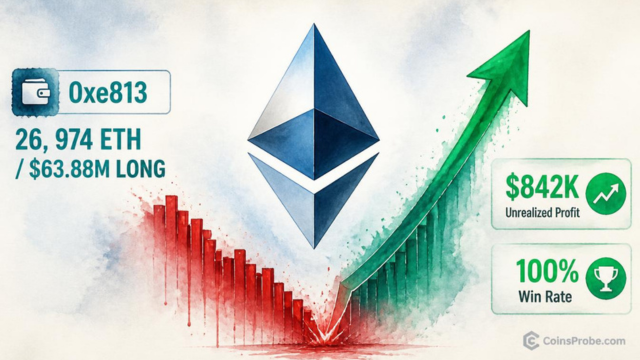
Key Highlights Wallet 0xe813 opened a 26,974 ETH long worth $63.88M immediately after ETH's liquidation-driven drop Position already shows $842K in unrealized profit — trader holds a 100% win
What the Official Media Digest Highlights This Time The latest Solana Weekly Update comes from the network’s official X account. The post, titled “This Week in Media 10/16-10/23,” went live o