This article was first published on TurkishNYR. Real estate tokenization is transforming the way people invest in property by putting ownership into digital form and making it possible to own
This article was first published on TurkishNYR.
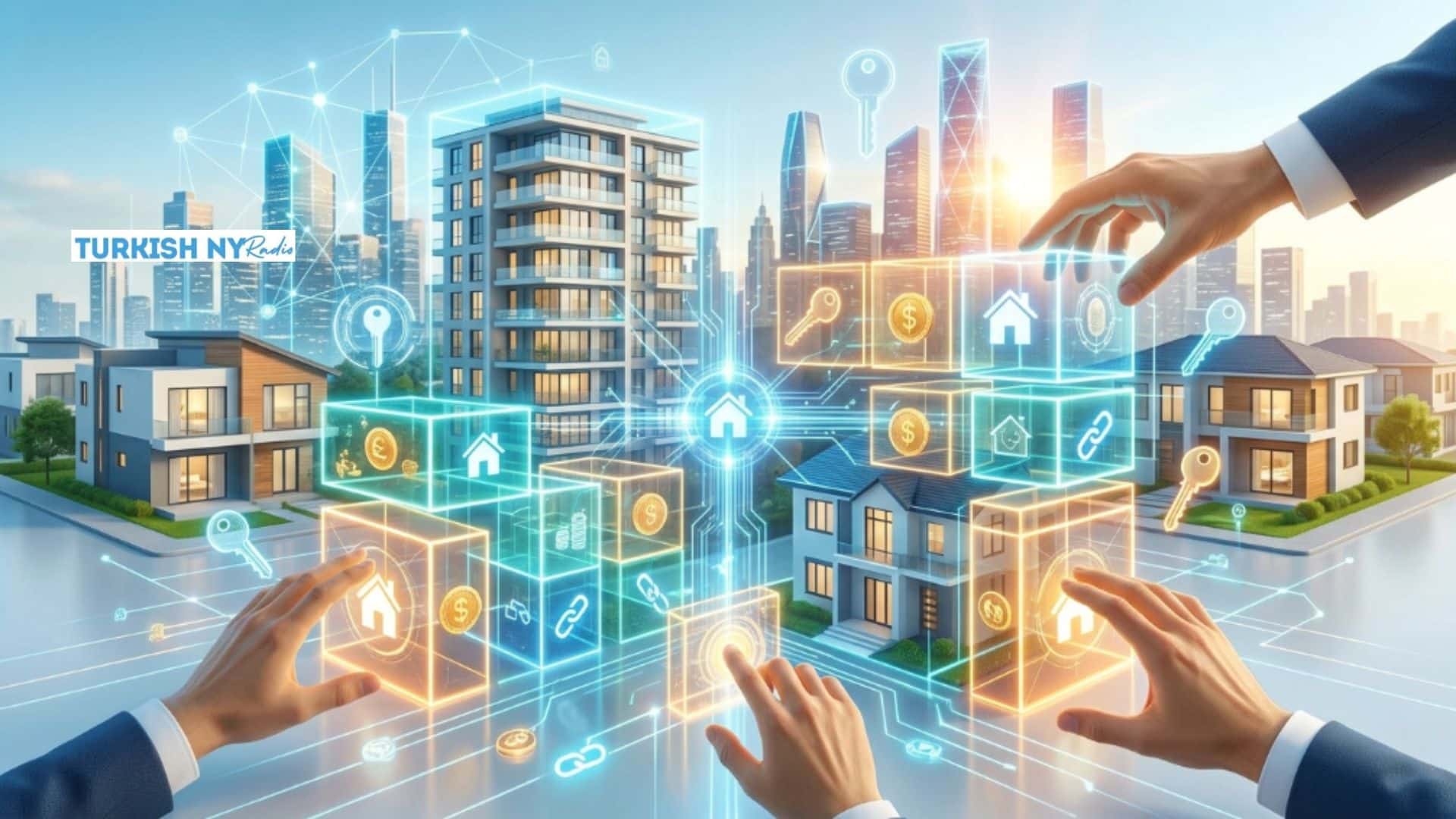
Real estate tokenization is transforming the way people invest in property by putting ownership into digital form and making it possible to own a fraction of an asset. As of 2026, this trend is really taking off. Startups and platforms are turning apartments, offices and even entire property portfolios into digital tokens.
Reports claim that the real estate tokenization market is going to grow from around $0.3 trillion in 2024 to $3 trillion by 2030.
Market Growth and Trends in 2026
Real estate remains one of the biggest sectors to have jumped on the tokenization bandwagon. Property tokenization lets people buy into a building without having to own the whole. Instead, they can buy a piece of it in the form of a digital token. This way, more people are able to get involved in the market.
According to a 2023 EY survey, a massive 80% of high-net-worth individuals and 67% of big institutional investors were already in or thinking about putting some of their funds into tokenized assets. Both groups said that real estate was their top choice.
In 2026 institutional portfolios are expected to hold around 5.6% in tokenized assets and wealthy investors around 8.6%.
Analysts project that real estate tokenization market is going to double to around $3-3.2 trillion by 2030. This implies a growth rate of around 50-60% per year from where things stand now.
Factors that are driving this growth include better blockchain infrastructure, growing numbers of secondary trading platforms and the fact that tokenization makes it easier for people to get into the market.
For example chainlink explains that tokenization lets anyone buy a piece of a property that was previously off-limits to them which means that barriers to entry are much lower.
Fractional tokens let people trade property shares almost in real-time, which makes it a lot easier to get in and out of the market.
 Real Estate Tokenization
What is Real Estate tokenization?
Real estate tokenization means converting the ownership of a property and turning it into a digital token on a blockchain. The token represents a fraction or a full share of the main asset, like a rental building.
Because these tokens are stored on a distributed ledger, it is easy for people to transfer them, trade them and automate the management.
What really happens is that the owner puts the property into a special kind of company or trust to hold it, and then issues blocks of digital tokens that represent the ownership or revenue share.
The process of tokenization works like this:
Asset Preparation: Check if the property is in good condition and work out how much it is worth. Owners often set up a special-purpose vehicle to hold the property.
Legal Structuring: Define investor rights and ensure compliance with securities laws in target jurisdictions.
Token Issuance: Use smart contracts to turn the property into a digital token (there are a few different standards that are popular, ERC-3643 and ERC-3644 being two of them)
Blockchain Integration: Put the token on a blockchain (Ethereum, Algorand, Stellar, etc) for transparency and tamper-proof records.
Onboarding New Investors: This is where Know Your Customer (KYC) and Anti-Money Laundering (AML) checks come in to whitelist approved buyers (on-chain whitelists block unverified wallets).
Secondary Trading: Once tokenized, shares can trade on regulated digital platforms or exchanges, vastly improving liquidity.
This technical backend is all taken care of by smart contracts which make sure the whole process runs like clockwork, handling token transfers, investors restriction and revenue distribution.
For instance, rental income can be automatically sent to token holders’ wallets proportional to their share. The net effect is a more efficient, 24/7 market for real estate.
The Benefits of Tokenizing Property and Fractional Ownership
Real estate tokenization comes with different advantages over traditional property investment
Fractional Ownership: A single $20 million building can be broken up into thousands of tiny little pieces. Investors can just buy one little slice (even if that slice costs less than $100). This really keeps things accessible for the average investor.
Increased Liquidity: There are secondary markets for all these tokens, so investors can buy or sell shares of property in a matter of minutes.
Global Access: Blockchain is borderless. So, an investor based in Mumbai can buy a piece of a New York skyscraper with ease, no local agents or banks needed. This means cross border investment opens up loads more opportunities and lets people spread their risk.
Automated Income Payment: Smart contracts can automatically pay out rental income or dividends to token holders. This kills the need for endless paperwork and manual accounting.
Transparency and Security: Every token transaction is recorded on an unchanging ledger. So property owners can go back and verify the history of a property at any time and the risk of title fraud is much lower.
Cutting Down On Costs And Time: Token sales can use streamlined legal frameworks (e.g. Reg D or Reg A+ in the U.S.) and faster settlements. The cumbersome paperwork and months-long closings of traditional deals are greatly reduced.
So in a nutshell, property tokenization really is democratizing real estate. It is turning “brick and mortar” into a tradable commodity like gold, which lets anyone, be they a retail or institutional investor, partake in the property world.
Regulatory and Legal Updates Worldwide
Regulation is the number-one question for anyone tokenizing property. Over the past two years, major jurisdictions have started to clarify their rules for tokenized property:
United States: As far as US law is concerned, real estate tokens get treated as securities (the Howey Test applies). The SEC’s Jan 2026 Statement on Tokenized Securities confirms that a tokenized security is simply a security recorded on blockchain.
So issuers typically comply by using existing exemptions (like Reg D and Reg A+) and dealing with registered brokers or Alternative Trading Systems. In March 2026, NASDAQ got SEC approval for a pilot which means they can now list tokenized securities on their exchange.
Meanwhile, the Uniform Commercial Code (UCC) Article 12 was updated to legally recognize “controllable electronic records,” paving the way for digital property titles.
European Union: The EU’s MiCA rules (Markets in Crypto-Assets) explicitly exclude securities-like tokens. Tokenized equity or debt (including property shares or bonds) fall under existing MiFID II/MiFIR and Prospectus Regulations.
For example, Germany’s BaFin confirmed that tokenized participations count as securities requiring a prospectus. France offers an optional visa via the AMF and has introduced a virtual asset service provider (VASP) regime.
In short, EU member states generally treat property tokens as investments: issuers need a licensed securities distributor or crypto-asset services license, full KYC/AML, and (for public sales) to publish a regulated prospectus.
United Kingdom: British regulators view tokens that give you equity or debt rights as securities. The FCA’s guidance (PS19/22) and ongoing legal reforms make clear that wallets, exchanges, or funds dealing in such tokens must be authorized.
The Bank of England’s Digital Securities Sandbox (launched Sept 2024) is a notable initiative: it lets firms test token issuance and trading under draft rules. Until full laws arrive (planned for post-Brexit), real estate tokenization in the UK is typically offered through licensed brokers or platforms, with standard AML and disclosure requirements.
Middle East (UAE): Dubai leads the way in the region. The Dubai Land Department ran a pilot; the REES initiative, which let property owners create tokens for fractional ownership and earlier this year.
Dubai’s Virtual Assets Regulatory Authority (VARA) updated their rules to include tokenized real-world assets as a new category they call an ‘Asset Referenced Virtual Asset (ARVA)’.
Now, VARA issuers do need to work with a VARA-licensed platform but they can still put their title up on the public registry. Abu Dhabi’s ADGM also has a detailed digital securities regime dating back to 2018, allowing tokenized funds within its market regulations.
Asia-Pacific: Singapore sees real estate tokens as capital markets products under their Securities and Futures Act – so all the usual investor protections kick in. MAS encourages innovation via Project Guardian and licensed platforms (e.g. ADDX is a MAS-licensed dealer/RMO offering tokenized securities).
Singapore also has fund structures (like VCC and eVCC) that let on-chain share issuance happen. Hong Kong is doing similar things by creating a special licensing regime for tokenized securities and funds (since 2023) but they tend to restrict these offerings to pro investors.
Either way, both Singapore and Hong Kong are keen to remind people that standard investor protections still apply, even for tokenized products.
Other: India in 2024 decided to allow tokenized ownership of development projects but with the caveat that it’s only for sophisticated investors. As for China and Brazil they’re a bit more cautious, with some flat bans on unregulated crypto investments.
To sum it all up, regulators around the world apply a straightforward rule of thumb : if a token represents a share of equity, debt or some form of profit share in property, it gets treated as a financial security or investment.
What that means for issuers is they have to navigate all the usual securities laws, registration or exemptions, licensed middlemen, anti-money laundering and know your customer checks, and in many cases a prospectus requirement.
The good news is that frameworks are maturing: 93% of G20 regulators now have crypto rules or plans, and bodies like IOSCO are working on cross-border standards.

Real Estate Tokenization
There’s now a decent sized ecosystem of platforms which are making tokenized real estate a reality. Major examples include: Tokeny, Securitize, Polymath, tZERO and Ondo Finance, which offer full-stack compliance and trading infrastructure for tokenized securities.
DigiShares and Propy are specifically focused on property. Then there are the investment side projects like RealT & Lofty, who are tokenizing individual rental homes into $50 tokens on whatever blockchain happens to make sense at the time (Ethereum and Algorand for those two).
On the investment side, projects like RealT and Lofty tokenize individual rental homes into $50 tokens on Ethereum and Algorand, respectively. For instance, RealT has fractionalized over $150 million of U.S. rental real estate by 2025.
Institutional offerings are also growing. Notably, RedSwan Digital Real Estate (a FINRA-regulated marketplace) announced the tokenization of $100 million in commercial property on the Stellar blockchain in Sept 2025.
The portfolio includes multi-family and hospitality assets, now offered to global investors with low minimums and 24/7 trading. This shows how established firms bring large deals on-chain. (RedSwan’s Stellar integration enables faster settlement and cross-border trading of these asset-backed tokens.)
Major Real Estate Tokenization Transactions (2025-2026)
Recent high-value deals reported in the industry.
DatePlatform / InitiativeAssets/DealValue (USD)Notes2025-09RedSwan (Stellar)Institutional-grade multi-family & hotel properties$100MPortfolio on Stellar2025E-Estate (US platform)Mixed commercial & residential real estate (via E-Estate platform)$100MTokenized RE portfolio (reported)2025RealT (Ethereum)U.S. rental homes (fractional tokens)$150MCumulative tokenized value2025Lofty (Algorand)U.S. single-family rentals (fractional tokens)$50MOnboarded 150+ properties2025tZERO (ATS)Regulated RE securities (private placements)$200MSecondary trading of tokenized RE2025HoneyBricks (EquityMultiple)Multi-family real estate investment$180MDeals closed for 3,500+ investors
Platforms like Zonix and Stegx are raking in hundreds of millions for real estate tokenization, while exchanges like tZERO’s ATS are handling big private offerings.
Meanwhile, projects like Blocksquare in Luxembourg are actually starting to work out EU-compliant models that tie blockchain tokens to land rights that have been officially registered.
Conclusion
Real estate tokenization is set for rapid expansion in 2026 and beyond. Blockchain and smart-contract innovations are finally coming together with clearer regulations to break down the old barriers to property investing.
Worldwide, regulators are starting to treat tokenized property as traditional securities (US, EU, Asia) or setting up frameworks (Dubai, Singapore) that will make it possible for people to own fractions of a property.
Institutional capital is flowing in, and big exchanges are prepping to list real estate-backed digital securities. Investors can now get into tokenized property with much lower minimums, enjoy more liquidity, and trust that compliance is built in.
Glossary
Blockchain: A distributed, immutable ledger technology. Each transaction (e.g. sale of a token) is recorded in a block that is chained to previous records, ensuring transparency and security.
Tokenization: The process of turning the rights to a real-world asset (like a house or a painting) into a digital token that lives on a blockchain.
Fractional Ownership: Taking a big asset and splitting it into smaller bits. So, instead of someone owning the whole house, they own one tiny bit of it.
SPV (Special Purpose Vehicle): A company or trust that is set up to own the property being tokenized.
RWA (Real-World Asset): A physical or off-chain asset (such as real estate, gold, or art) that is represented on-chain by a token.
Frequently Asked Questions About Real Estate Tokenization
What’s a “real estate token”, and how does this ‘fractional ownership’ thing work?
A real estate token is a digital representation of an ownership stake in a property on a blockchain (like a share in a house, office or development project). Fractional ownership means you can split the property into many tiny bits, so a $2M house could be divided into 2000 tokens worth $1000 each. Now investors can buy, sell or trade any of these tokens.
How is real estate tokenization regulated?
Generally, most countries treat property tokens as securities if they confer investment stakes. For instance, U.S. regulators apply the same securities laws to tokens as to stocks or bonds (filings under SEC rules, accredited investor checks). The EU’s MiFID rules similarly cover tokenized equity. Many platforms therefore operate under exemptions like SEC’s Reg D/A in the U.S. or publish a prospectus in the EU.
Some of the most popular blockchain platforms for property tokens are Ethereum, Polygon, Algorand, Stellar and Hyperledger, to name a few.
How can retail investors participate in real estate tokenization?
Investors typically need a digital wallet and account on a tokenized securities platform (which handles identity verification). Platforms like RealT, Lofty, or ADDX allow individuals to browse tokenized properties and invest as little as $50-$100 per share. Once approved, an investor can buy tokens representing property shares. Income (rent dividends) is usually paid in stablecoin or crypto.
ReferencesScienceSoft
Finextra
Chainlink
SEC
CAIA
Tokenizer
Zoniqx
Disclaimer: This article is for information only. It is not financial or legal advice. Do your own research or consult the experts if you’re thinking of making a financial decision.